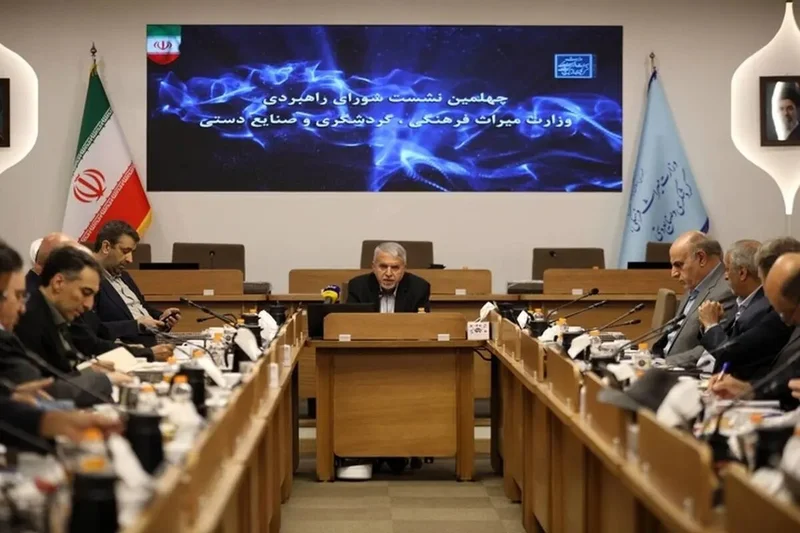
Safeguarding Iran, its values is shared national responsibility: tourism minister
TEHRAN – Iran’s Minister of Cultural Heritage, Tourism and Handicrafts Seyyed Reza Salehi-Amiri has identified safeguarding Iran and its values, protecting people’s security and livelihoods, and preserving the political system as three key priorities amid what he described as a “historic turning point.”
Speaking at the 40th meeting of the ministry’s strategic council in Tehran on Monday, Salehi-Amiri said the country was facing a sensitive period that required a responsible, strategic and national approach to its challenges.
“We are passing through a historic turning point; a historic juncture that puts a nation in sensitive moments.”
Medical tourism seen as key growth area
Salehi-Amiri also identified medical tourism as the country’s most important tourism opportunity, citing Iran’s medical and specialized treatment capabilities as well as the economic advantages of travelling to the country.
He said the government’s target was to attract 2 million medical tourists annually, generating 6 million euros in revenue, and stressed that achieving the target required the country’s existing capacities to be activated in a coordinated manner.
The minister said medical tourism also had an important family dimension because patients typically travel with relatives. As a result, accompanying family members can also use Iran’s tourism, cultural and service facilities, creating additional economic benefits.
Salehi-Amiri called for greater coordination among institutions involved in medical and health tourism, saying capacities and initiatives in the sector remained fragmented.
He said the Ministry of Cultural Heritage, Tourism and Handicrafts, the Ministry of Health and the Ministry of Foreign Affairs, along with other institutions, had begun joint efforts to address the issue.
“We have moved beyond coordination and entered the stage of cooperation,” he said, adding that inter-agency cooperation could help the country make more effective use of its health tourism potential.
Focus on regional markets
Salehi-Amiri said the ministry had taken several steps to expand medical tourism markets, including reaching an agreement with Indonesia.
He also pointed to the launch of a 400-bed hospital in Abadan, saying the facility could help attract medical tourists from neighboring Iraq and allow Iran to make greater use of regional markets.
Elsewhere in his remarks, the minister acknowledged that regional developments and the effects of war had affected the flow of medical tourists to Iran, but said the country had not halted its efforts.
“We have not stopped and continue to take important steps in this field,” he said, emphasizing the continuation of tourism initiatives and inter-agency cooperation.
AM