US does its robotics industry no favours by fencing it off from China
By banning Chinese humanoid robots, Washington is trying to buy its industry time, but the lack of competition is not a strength
Concession speeches follow a formula: the vocabulary of defiance, thanks to the faithful, a promise that the fight goes on. Last month, Brendan Carr, chairman of the US Federal Communications Commission (FCC), essentially delivered one on behalf of American robotics.
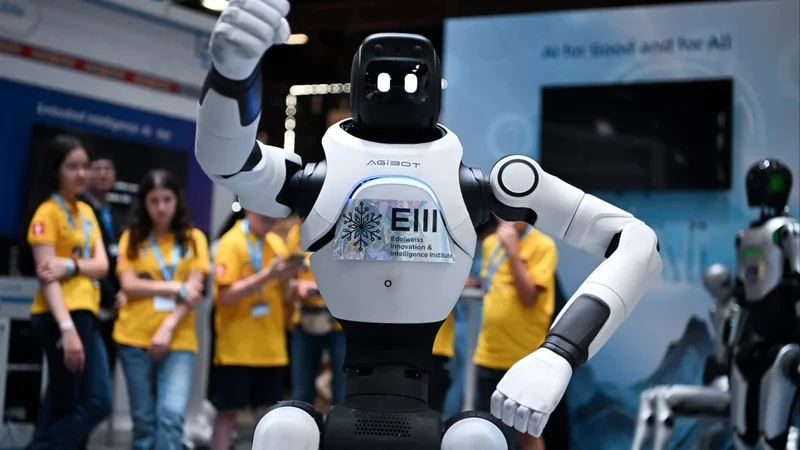
The unstated ground is arithmetic. Chinese manufacturers account for roughly 85 per cent of the global humanoid market. There is no established American industry to protect, only an infant to be raised behind a wall.
That’s the message the industry received. Evan Beard, CEO of Standard Bots, hailed the order as among the strongest technology-security actions in modern American history, vowing that foreign-subsidised machines would not “dominate US robotics as they did solar”.
The security case deserves a fair hearing. A networked machine with cameras, microphones and limbs, stationed in a factory or a care home, is a plausible platform for espionage and sabotage. But the order makes clear how seriously Washington takes its own warning: it exempts the federal government, which may keep buying the machines deemed too dangerous for ordinary citizens. A menace to every American except the American government is less a threat assessment than a tariff in uniform.
Which returns us to Beard and solar. Although Washington began walling out Chinese panels with anti-dumping duties under the Obama administration in 2012, China now controls over 80 per cent of every stage of global solar panel manufacturing. The wall decided who could sell to Americans but not who won the industry.