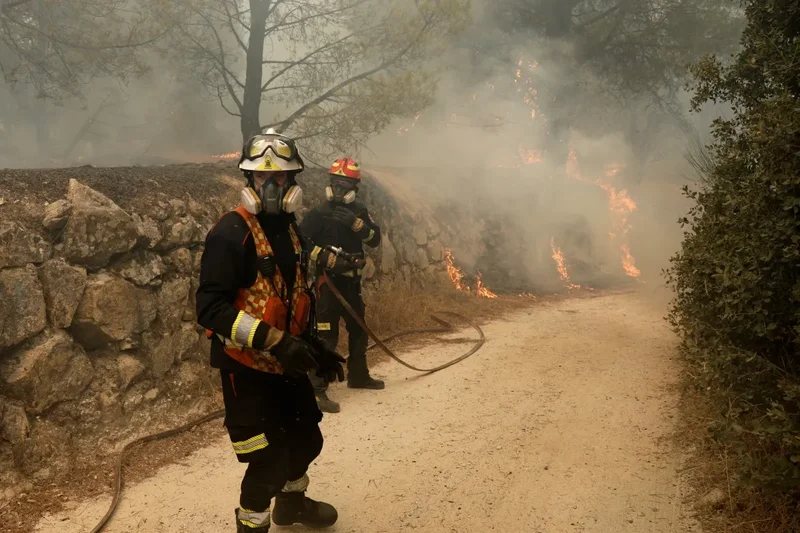
More than 600 firefighters backed by 26 water-dropping aircraft were battling the blaze which broke out last week in the Andalusian province of Huelva, said the region's minister for emergencies, Antonio Sanz.
"We are facing an extremely difficult, complex and dangerous wildfire, with the weather conditions continuing to offer us no respite. It is a long-distance race full of obstacles," he said.
"We have to be realistic: there is no forecast that the fire will be brought under control any time soon. There are still hours and probably days of intense work ahead."
MAPS: Where are the wildfires in Spain right now?
Crews worked through the night, carrying out controlled burns and creating mechanised firebreaks, but authorities said rugged terrain and weather conditions had slowed progress.
More than 20,000 hectares (50,000 acres) of land are currently enclosed by the fire, but authorities stressed this figure refers to the area contained within the fire line and does not mean all of it has burned.
IFNiebla la situación sigue siendo crítica, incendio activo. Los medios aéreos tienen muchas dificultades para llegar con efectividad a la base del fuego. Así está ahora mismo la zona Escacena-Paterna pic.twitter.com/c6cAcc57VX
— Incendios Andalucia (@fuegosandalucia) August 10, 2026
Officials on Monday ordered the evacuation of the municipality of El Madroño, which has a population of around 300 people, bringing to about 800 the total number of evacuees.
Spain is enduring a tough summer for wildfires, with around three dozen blazes having forced the evacuation of tens of thousands of people, especially in the centre of the country.
One that raged in July in the Ávila region near Madrid was considered the biggest Spain had seen in recent history, laying waste to some 50,000 hectares.
Early in July, another sweeping blaze caused 14 deaths in Almeria province in Andalusia.
Europe has suffered a succession of heatwaves and droughts this year, which scientists say have been aggravated by human-generated climate change.