Quick facts
Party name in Swedish: Centerpartiet
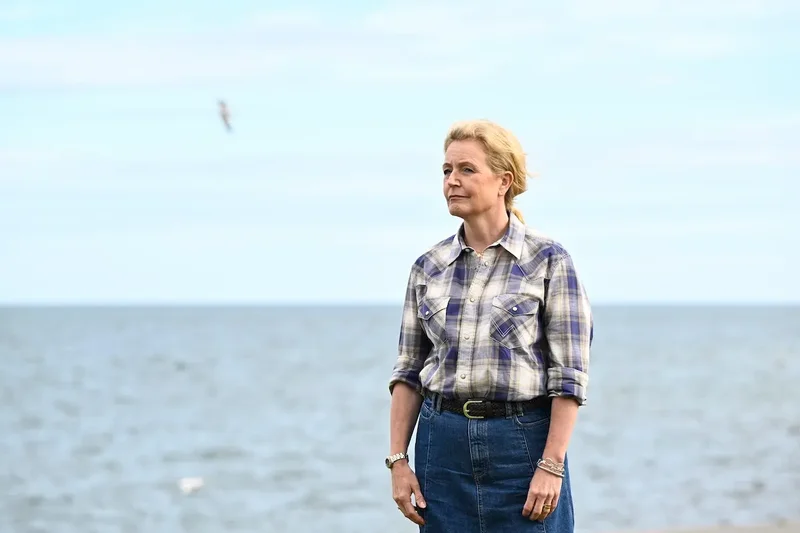
Leader: Elisabeth Thand Ringqvist
Current number of seats in parliament: 24
**Vote share in the last election (2022): ** 6.71 percent
Part of the current governing coalition?: No.
Current ministerial posts: None.
2026 election slogan: Sverige kan mer ("Sweden can do more" – it's a hard slogan to translate directly. "Sweden is capable of greater things" perhaps gets a bit closer to the meaning).
Party background
Like many of Sweden's major political parties, the Centre Party has a long history with various name changes and party permutations. It began in the early 20th century (around 1910) as Bondeförbundet – the Farmer's Union – and merged, about a decade later, with the National Agrarian Union (Jordbrukarnas riksförbund). The young party was formed to represent, as its name suggests, the interests of independent farmers, in a rapidly industrialising Sweden. It changed its name to the Centre Party in 1957.
It has had key governing roles in Sweden at different points throughout the 20th century, including being a key coalition partner of the governing Social Democrats between 1936-45 and 1951-57 and, in the late 70s and early 80s, having their leader – Thorbjörn Fälldin – as Prime Minister.
Later in the 20th century, Centerpartiet moved more to the right, particularly on economic issues. It was part of a centre-right government led by Moderate Prime Minister Carl Bildt, and, in the early 21st century, positioned itself more firmly in favour of market liberalism. The through-line of its political ideology, according to the party, is its support for small businesses and entrepreneurs. "Then, as now, we were a party for small business owners," they say on their website.
The Alliance, the coalition of four right-wing parties that ruled for two terms under Prime Minister Fredrik Reinfeldt, was originally formed in 2004 at the home of Centre Party leader Maud Olofsson's home in Västerbotten.
Key priorities in the 2026 election
Their election platform (also called an election manifesto) gives seven overarching priorities: More jobs, reduced emissions, a functioning welfare system throughout the country, strong rural areas, a strong justice system, freedom and confidence in the future via increased individual rights, and a stronger Sweden in an uncertain world.
Overall, the Centre Party says it wants to see a new political direction for Sweden after this election – one which moves away from both the far right and left of politics and instead governs from the centre.
What are their positions on key issues?
Immigration
The Centre Party's immigration policy generally views immigration through the lens of labour migration, with immigration and integration policies primarily framed around employment, language acquisition, and securing foreign talent.
Their key positions can be found in Section 1 of their platform (Jobben ska bli fler – "More Jobs") and include: scrapping the work permit salary threshold instituted by the current government, stopping the "absurd" deportations of high-skilled working immigrants, and reforming SFI (Svenska för invandrare – "Swedish for Immigrants") into Jobbsvenska ("Work Swedish"), a Swedish language program geared to employment that provides a completion paper certifying that the graduate can work in Swedish.
The Economy (including cost-of-living and taxes)
Economic growth and job creation are core issues for the Centre Party; most of their positions on the key issues in this guide are actively linked to growing the economy and minimising unemployment.
The parts of their platform that focus most directly on economic issues are Section 1:(Jobben ska bli fler – "More Jobs") and Section 4 (Starka landsbygder för ett starkare Sverige – "Strong rural areas for a stronger Sweden"). Policy positions include: lowering taxes on low and middle incomes, lowering taxes and fees for businesses – especially for small businesses and the first employees, simplify regulations for small businesses, reduce living costs for households outside major cities through various targeted tax measures, and a long-term agricultural tax deduction for Swedish farmers.
The party sharply criticises the current governing coalition on economic issues, saying that half a million people are unemployed and economic growth has weakened during their tenure.
Healthcare
The Centre Party's healthcare focus is on reducing queues, equalising access and quality of care across regions, a permanent family doctor for everyone, big investment in young people's mental health, and personal choice in healthcare.
The party supports private as well as public healthcare options in Sweden. Their healthcare policies can primarily be found in Section 3 of their 2026 election platform (Bättre vård, skola och omsorg för fler – "Better healthcare, schools, and support for more people").
Climate
Climate policy is another area in which the Centre Party has sharply criticised the current government. In their platform they have a variety of proposals for accellerating the green transition and supporing climate-friendly business through faster permitting processes and investments in the circular economy and biotechnology. Most of these are clustered under Section 2 (Utsläppen ska ner – "Reduced emissions")
The party believes that the climate transition can be a competitive advantage for Sweden and that the current government has been squandering that advantage.
Crime, security, and defence
Two of the seven sections in the Centre Party's platform are focused on crime and security: Section 5 (Rättsstaten ska fungera på riktigt – A justice system that works) and Section 7 (Ett starkare Sverige i en farligare värld – A stronger Sweden in a more dangerous world).
Their policy proposals in Section 5, which focuses on crime, include more police officers, cracking down on the criminal economy, targeting gang recruiters, and protecting children from being drawn into gang crime. On security and defence (Section 7), the Centre Party is in favour of strong international alliances – including with the EU, Nato, and support for Ukraine, strengthening total defence and making Swedish society more resilient – including a focus on better food security.
Education
The Centre Party's education policy proposals can be found in Section 3 of their election platform, with some additional proposals in parts of Section 1. Positions include: making the teaching profession more attractive through improved working conditions, competitive salaries, and a reduced administrative burden; creating a safe and calm environment in classrooms through clear authority for teachers and principals; and providing special education support early in primary school.
The party does not want to abolish the controversial independent school system (friskolesystemet) but instead reform it by introducing a school voucher system, imposing stricter quality and ownership requirements, and stopping religious influences in schools.
Which of the other parties will they work with?
As is typical with proportional representation political systems, Swedish governments are built as coalitions, with multiple parties needing to work together. How many parties have power or influence, and in what ways, can vary a great deal based on the outcome of a given election, and a common question asked of party leaders during election time in Sweden is which of the other parties they would be willing to work with in a governing coalition.
What has the Centre Party said? Who are they likely to cooperate with (or not) in coalition talks after the election?
With their place in the centre of the political spectrum comes the potential for a king-making role in coalition talks. Centre Party leader Elisabeth Thand Ringqvist, well aware of this, has said that Magdalena Andersson and the Social Democrats (who are comfortably ahead of the right-wing bloc in the polls) are "the most likely partner for the Centre Party after the election on September 13th."
In an opinion piece for Svenska Dagbladet this past June, Thand Ringqvist did not fully close the door on supporting a government lead by the Moderates, but wrote that "as long as Ulf Kristersson holds to his plan of building a government with Sweden Democrat Ministers, he is disqualified as a Prime Minister candidate" as far as her party is concerned.
The current government's close cooperation with the far-right Sweden democrats is the reason they did not gain the support of the Centre Party these past four years, despite having many economic values in common. Thand Ringqvist has said that, unlike the Liberals, her party will hold firm to their commitment never to be part of "a government that would be dominated by the Sweden Democrats' toxic cocktail of nationalism, protectionism and willingness to create divisions between people."
However, the party also is firm that it will not support a government that includes the Left Party, which Thand Ringqvist describes as "anti-growth." This past March, the Centre Party leader made headlines when she responded to a letter from Left Party leader Nooshi Dadgostar offering to open up discussions on common ground between the two parties with a flat refusal, saying "the only party that wants the Left Party in government is the Left Party."
"Our aim," wrote Thand Ringqvist in her June op-ed, "is to strengthen the middle of Swedish politics."
What are their chances?
The latest numbers from the highly respected election poll done by Statistics Sweden showed The Centre Party at 6.1 percent, down a marginal 0.6 percent from their vote share in the last election (in 2022), and up the same small amount (0.6 percent) from the previous year's Statistics Sweden poll (done in May 2025).
The same poll showed the Social Democrats as most likely to get a large enough vote share to lead a governing coalition, with the Left and Green parties as their most likely governing partners.
It seems, therefore, that the Centre Party's chances of playing a decisive role in a new governing political constellation after the election depend on how well – or poorly – the Left Party does in comparison to their party. In other words, the Centre Party's best hope of getting their priorities into a new government is if the Social Democrats are able to form a government with them (and the Green Party) instead of the Left Party.
"It is only through a strong Centre Party that we can avoid Swedish politics moving to the left," said party secretary Hannes Hervieu, regarding the poll showing a red-green majority government overall, which gives a sense of how the party is positioning itself in the race.