Approximately three-quarters of 393 preschool and K-12 teachers in the U.S. say they use YouTube for instructional purposes, with roughly half using it on a daily or weekly basis, according to our new nationally representative survey.
Those findings come from our new research, published in June 2026 in Educational Researcher, an academic journal.
Our sample included teachers from all grade levels and subject areas, and from across public, charter and private schools.
Our results revealed that teachers who said they use YouTube as an instructional tool do so for a considerable amount of classroom time, alongside other common teaching methods like lectures and group work.
Of the 76.5% of respondents who said they use YouTube for teaching, an average of 17.9% of their total yearly instructional time was spent showing instructional videos, ranging from 1% to 100% of instructional time.
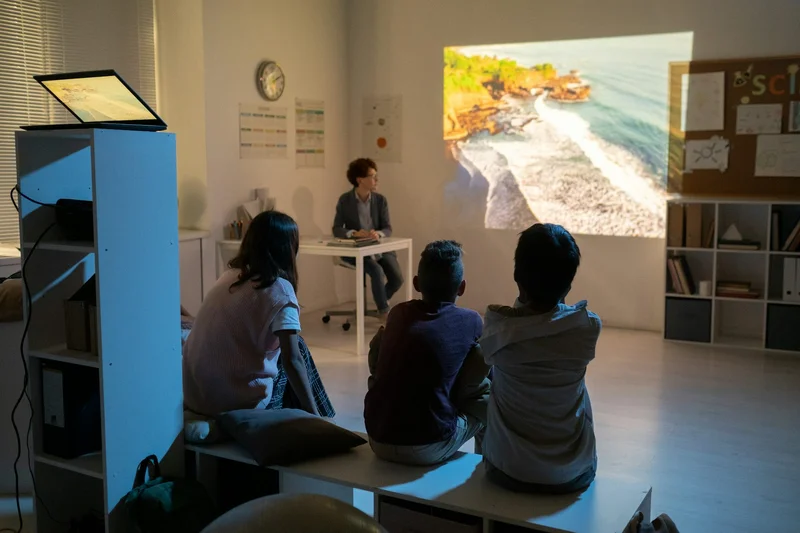
Rather than allowing students to watch videos on their own devices, most teachers reported showing videos on a big screen to the entire class. This might include showing a classic 20-minute episode of “Bill Nye the Science Guy” or a 5-minute “PragerU Kids” video, made by a conservative media nonprofit.
Respondents said they use both of those video sources, alongside a number of other content creators featured on YouTube.
In our other study, which is still under review with an academic journal, we saw some small differences in teachers’ use of YouTube across grade levels – with pre-K teachers reporting being slightly less inclined than other teachers to use instructional videos to support their teaching.
But these differences were not statistically significant, suggesting that YouTube is used more or less at the same frequency by pre-K through 12th grade teachers.
Why it matters
There is growing concern among parents about the amount of time their children spend watching YouTube at school, leading some school districts to ban the platform on student devices outright.
While the debate over screen time has primarily focused on students’ personal use, there has been less focus on how teachers are using the platform as part of their lessons.
YouTube is not specifically designed for educational purposes, and its algorithm that recommends content tends to prioritize increasing user watch time over providing material that may be best for learning.
There are some teacher-trusted educational channels hosted on YouTube, such as “Khan Academy” and “Crash Course.” which offer a host of explanatory videos on numerous subjects ranging from math to social studies.
But just about anyone can create and upload content to YouTube.
Prior research indicates that teachers are relying more on digital online resources found on sites like Teachers Pay Teachers and Pinterest than they once did. This work suggests that traditional curricular resources, such as textbooks, are playing a less prominent role determining what information is presented to students.
Our research suggests that pre-K through 12th grade teachers widely use YouTube as a staple of classroom instruction – not as an occasional supplement.
What still isn’t known
While research from Spain and Australia suggests that educators are not always rigorous in screening the YouTube videos they use for teaching, what is still unknown is the exact YouTube videos and content creators that teachers are relying on when they present information to students.
Nor do we know the impact that using instructional videos has on student learning. Given the widespread adoption of YouTube videos by K-12 and preschool teachers, it is becoming increasingly critical to understand the educational value that these video resources offer.
The Research Brief is a short take on interesting academic work.