A Wellington student is doubting that pursuing a degree is a smart move as she skips meals because she can't afford to eat.
A student association survey of 1238 students at Te Herenga Waka - Victoria University Wellington found many were skipping meals and missing classes as they worked to pay rent and bills on top of their studies.
Thirty-three percent of the students who responded to the survey said they had skipped a meal in the previous week because they couldn't afford to eat.
Pyper-Alex Adams is in her third year at Victoria University - studying Psychological Sciences.
She said a part-time job and a casual position on top of her full-time studies helped keep her rent paid, but she often skimped on meals - especially when shifts were sparse.
"If I get offered shifts that's great but I don't have any shifts this week, I don't have any shifts next week. I've actually had to apply to the student hardship grant to help with my power bill this month because I don't know if I'm going to be able to pay it without any shifts from my second job," Adams said.
She said she was starting to question whether a tertiary qualification was really a smart move.
"It makes me just want to drop out of university. I am barely able to afford rent. We're cold all the time because we're only using the heat pump during free power. I'm skipping meals.
"I'm going to university to try and get a degree. To maybe have a job someday - if I can get one in this country - but I'm seeing people my age that are doing so much better without the degree - which is the thing that we're all told in high school to do, right?" Adams said.
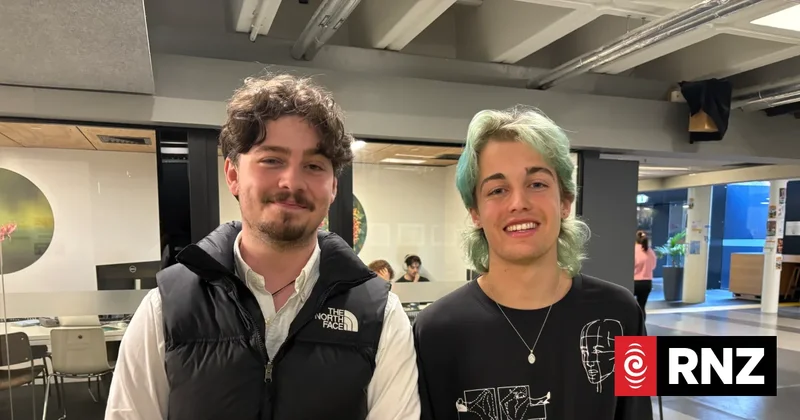
Third-year maths and statistics student Cam Dickson was trying to be creative to find his way around the high cost of living.
"You know people talk about chicken and rice? We're not doing chicken and rice, we're doing beans and rice. I'm moving away from fresh fruit and vegetables because they're not super accessible right now. Going heavy on the carbs - on the cans - on the box stuff," Dickson said.
Dickson is one of the nearly 38 percent of students surveyed who said they had missed classes because they couldn't afford public transport costs.
"I don't have public transport in the wiggle room. I've got no way to own a car, to pay for the fuel. I'm very constrained to where my feet can get me and sometimes that's not university," Dickson said.
At the lower entrance to Victoria University, a billboard advertising open days asked whether people were 'Ready to experience Wellington like a Victoria University student?'.
Cam Dickson said many students' experience of the slogan might be different to what the advertisers imagined.
"It means to be cold a lot of the time. Sometimes it means to be hungry. Sometimes it means to be damp. Sometimes it means to just kind of struggle to get by and I wouldn't really recommend anyone that experience," Dickson said.
The situation appeared to become more acute for students in their later stages of study.
Seventy-eight percent of third year students said they had considered heading overseas for better job opportunities - eight percent higher than respondents from across the entire survey population.
President of the Victoria University Students Association and Masters student, Aidan Donoghue, said the intense competition for work was changing how students approached their degrees.
"It's so competitive that you must be a straight A student. You must have X amount of internships. You must have all these extra curricular activities at this point just to put your name out there," Donoghue said
He had a message for people who saw today's student poverty as the same rite of passage experienced by previous generations.
"Students aren't just complaining. It's just as expensive as it was then but twenty years of inflation on top. Plus stagnant wage growth, plus competitive working environment. All the bad things of university that you have experienced have gotten worse over decades of compounding interest," Donoghue said.
Donoghue said any measures designed to help students needed a significant step up to reflect cost of living pressures and keep tertiary education within reach for everybody.