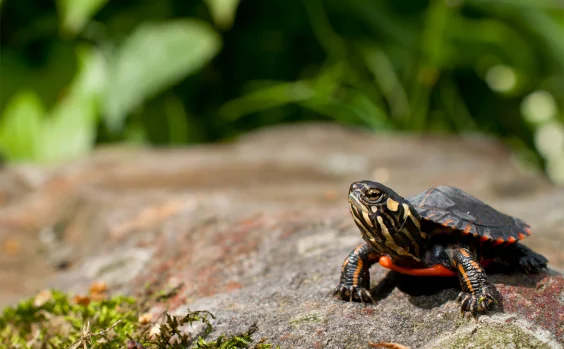
Turtle sex determination is all over the map. Some species use the XX/XY system most familiar to mammals like ourselves. Others, like the spiny softshell turtle, use the ZZ/ZW system where an individual with two different sex chromosomes is female, not male. However, most turtles dispense with sex chromosomes altogether, letting the environmental temperature determine the sex of their offspring. For example, the painted turtle’s eggs will develop as males only in a 73- to 81-degree Fahrenheit window, but any egg outside this range in either direction will become female. Now, a study investigating the genetic machinery behind sex determination in these two species has revealed a surprising player in the process.
Biologists from Iowa State University identified the genes responsible for creating sex organs in the two species and created a sophisticated model combining data from gene expression, protein-protein interactions, and protein-DNA interaction. The researchers found the two species shared 89 transcription factor hubs, or pockets of proteins that switch groups of genes on and off, involved in gonad development. Fifty of these hubs were unchanged between the species and their investigation into the hubs that were changed pointed to an unlikely culprit: primary cilia.
Read more: “The Sex Problem with Sea Turtles”
These hair-like protrusions from cells can act like tiny antennas, sensing everything from fluidic waves to the immediate chemical environment and temperature. As part of their sensory gig outside the cells, they also trigger signaling cascades within the cell, some of which are thermosensitive. And the link between the primary cilia and sexual development proved to be strong. Analyzing the regulatory regime from multiple angles produced the same results.
“We have concluded we need to open a whole new research avenue to characterize primary cilia in turtles and see how they’re composed, what they’re doing, and how they’re changing and responding to temperature and other cell signals,” study author Nicole Valenzuela explained in a statement. “It’s basic science that’s also biomedical science.”
That’s because primary cilia dysfunctions have been implicated in a number of diseases, including cancer. By uncovering their apparently robust role in turtle sex development, we can better understand how they work in our own bodies (and what happens when they don’t).
Medical advances can come from the unlikeliest of places, even the gonads of turtles.
Lead image: ondreicka / Adobe Stock