Across the Palestinian territories, the cumulative effect of Israel’s actions on Palestinians since Oct. 7, 2023, is clear: They have eroded the ability for Palestinians to live a dignified, healthy life. This must be named clearly. Policies applied in Gaza and the trajectory observed in the West Bank point to the broader Israeli project of colonization of Palestinian land through occupation.
It's been more than 1,000 days since Israel's genocide in Gaza began, and the collective punishment of Palestinians continues to this day. Amid a so-called ceasefire, the world has normalized seeing Palestinians being maimed and killed daily in their tents, in hospitals and on the street.
The word ceasefire has lost all meaning. As I write these words, the number of casualties keeps growing, as does the disinterest towards the catastrophic situation in Gaza, the world’s most striking political failure in recent decades.
June was the deadliest month since October 2025. As of July 14, Israel has killed a total of 1,110 Palestinians and injured 3,599 since the start of ceasefire, while expanding military control of the Gaza Strip. Israel’s “yellow line” is a shifting boundary that divides Gaza into Palestinian and Israeli-controlled areas. It keeps expanding and puts anyone who approaches it — often simply trying to reach their shelters, gather firewood or find food — at risk of being shot.
But it is not just the violence. As the line moves westward, it compresses more than 2 million people into just one-third of Gaza. This is not incidental. It produces conditions of extreme overcrowding where disease spreads easily and basic needs go unmet. We see the consequences in our clinics: respiratory infections, skin diseases, and diarrheal illnesses, driven by the lack of clean water and sanitation and the inhumane living conditions.
The West Bank has also undergone a violent, profound transformation since Oct. 7, 2023. The Israeli government, military and state-sponsored settlers have accelerated ethnic cleansing, land dispossession, territorial fragmentation and economic strangulation, further eroding Palestinian presence and continuity.
Palestinians are being hunted in their homes, schools and on their land, while the attackers enjoy complete impunity. In Nablus and Hebron, we receive patients experiencing trauma and depression linked to the growing violence and movement restrictions, which impede every aspect of their lives, including getting to the hospital.
Israel has continued to systematically obstruct access to health care in the West Bank and deliberately dismantled the health care system in Gaza.
Health care workers, patients, ambulances, and hospitals have all been targeted.
On Oct. 26, 2024, during a raid on Kamal Adwan Hospital in Gaza, Doctors Without Borders surgeon Mohammed Obeid was arrested with 57 others. He is one of more than 95 Palestinian health care workers who remain detained by Israeli forces. To this day, Obeid remains in an Israeli prison without charge. We continue to call for his unconditional and immediate release.
The genocide has decimated the health system’s workforce in Gaza, and this will take years to replace. At least 1,700 health care staff have been killed since October 2023, as well as 15 of our own MSF team members, many of whom worked tirelessly for decades. Nobody is safe in Gaza.
People’s access to health care is being further restricted since the Israeli authorities deregistered 37 humanitarian organizations in January. Israel is blocking us from bringing international staff and critically needed supplies into Gaza and the West Bank. While some humanitarian supplies have entered Gaza, it is not enough. These arbitrary restrictions are part of a long-standing punitive policy enforced by Israel.
Whether through direct violence, dismantling the health care system or obstructing humanitarian assistance, inducing famine, weaponizing water, causing higher levels of prematurity and mortality among infants and high levels of miscarriage, or denying care, from where I am sitting, it’s clear: The No. 1 health issue in the Palestinian territories is Israel's occupation.
Israel’s methods have become accepted; world leaders have normalized Israel’s conduct. Through political support, military aid or silence, they have enabled the continuation of its policies.
The situation is not only intolerable; it is entrenched. In Gaza, the genocide continues, and in the West Bank, ethnic cleansing accelerates.
A drastic shift in policy is urgently needed, one that prioritizes the dignity of Palestinians, the protection of civilians, ensures unimpeded humanitarian access and holds all governments accountable. Without that shift, the next 1,000 days will not mark a turning point, but a continuation of the same devastating reality.
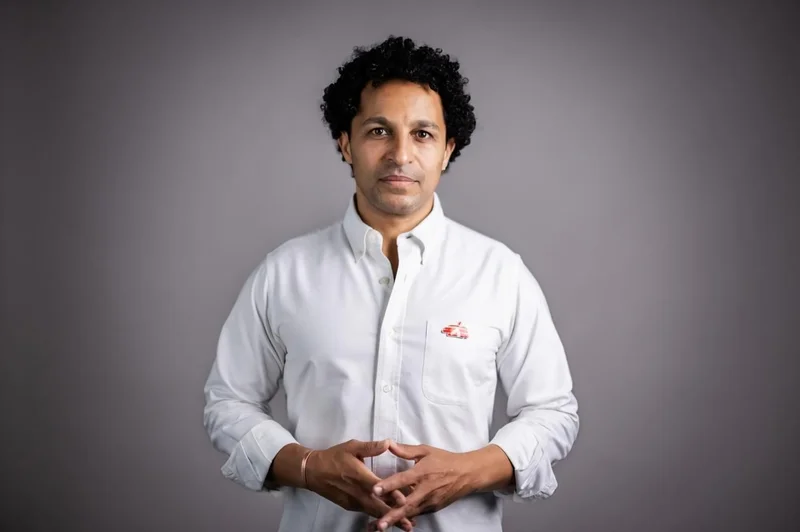
Javid Abdelmoneim is the international president of Médecins Sans Frontières (MSF) and worked as an emergency doctor in Gaza in 2024, primarily in Nasser hospital. The views expressed in this article is his own.