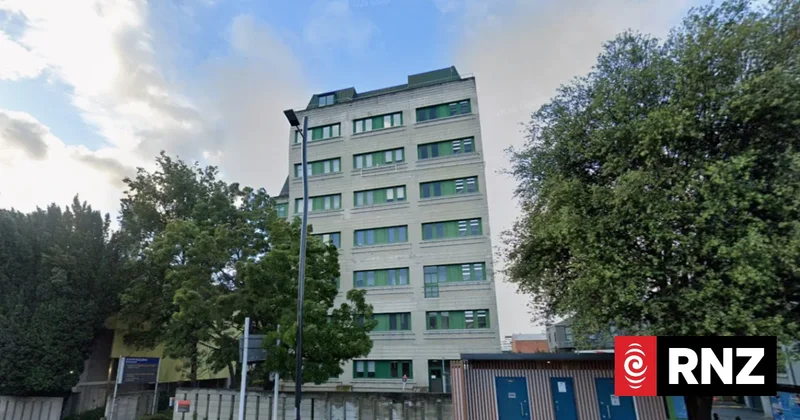
University of Otago has employed a full-time asbestos coordinator after workers complained they were unwittingly exposed to potentially hazardous material for about eight years.
Electricians and maintenance staff working in the Adams Building learned about the "high material risk contamination" through a 2018 report, according to incident forms lodged in February and released under the Official Information Act.
The contaminated material was within the building's plant rooms and risers, or utility shafts, which is home to the Department of Public Health.
The university has since had the material removed and the area inspected by a registered consultant.
Workers told the university's health and safety office it should have restricted access and removed the material much earlier.
One said they had been in the plant rooms daily for three years without knowing it was potentially unsafe and another said they would stay out of the rooms until they saw a negative asbestos test.
A third person said they came across the hazard assessment while they were on shift one day.
"I would like it to be noted that I in the course of my duties have been in both these plant rooms hundreds of times and have most definitely disturbed the suspect lagging in the bottom plant room. At no time have I been informed of an asbestos risk in either of these rooms," the person said.
In a statement, a University of Otago spokesperson said the contaminated areas could only be accessed by a small number of authorised personnel, not students, the public or non-maintenance staff.
The 2018 report showed material in the rooms "had a high potential for fibres to be released if the material is disturbed," the spokesperson said.
"At the time, this was recorded in the asbestos register, which was available to be viewed by our trades services staff and external contractors with access to the plant rooms and risers," they said.
"While available, it was not readily accessible. To enable our trades services staff to be better informed about asbestos containing material, we invested in upgrading our digital systems earlier this year so that information was more easily obtainable. When trade services staff in the Adams Building saw this information, they followed protocol and logged concerns via our health and safety register."
The university responded immediately by temporarily closing the plant room and carrying out further testing with a consultant who determined it was "safe to continue regular activities", the spokesperson said.
"A clearance certificate was issued in May when the asbestos-containing material was removed."
Asbestos generally only presented a health risk through exposure to airborne fibres, the spokesperson said.
"There is no evidence that this has happened in the plant rooms, risers or elsewhere in the building. We have regularly monitored air quality in the Adams Building for the past eight years and no test has indicated that any airborne asbestos risk was present," they said.
An asbestos coordinator position, advertised by the university in March, has since been filled.
A job description showed the asbestos coordinator would be responsible for organising safety surveys, keeping the university's official asbestos register up to date and communicating any risk of exposure to workers and contractors before they entered campus buildings.
The University of Otago declined RNZ's interview request.