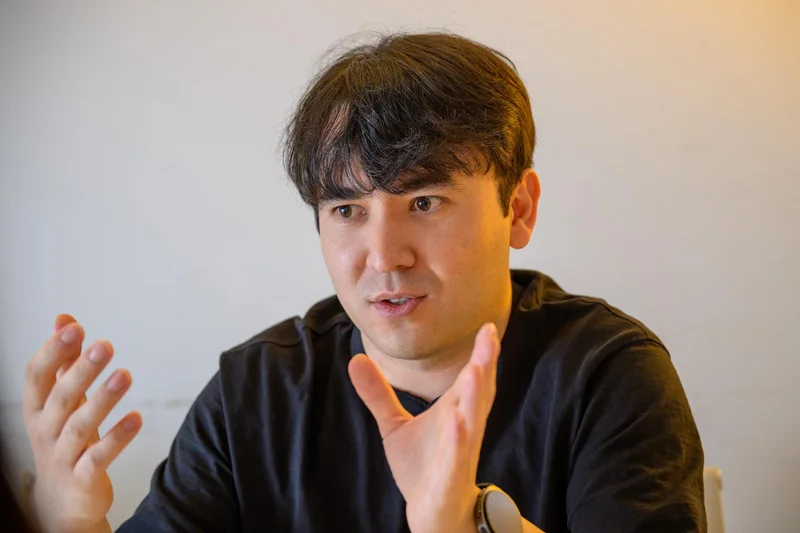
As Korea intensifies efforts to attract and retain global professionals, the Global Korea Scholarship (GKS) program plays an important role in bringing international students to the country. This is the sixth in an interview series that follows the journeys of GKS alumni, offering insight into how their experiences reflect the opportunities and challenges shaping Korea’s evolving global workforce.
Sodikov Normatjon had an older brother already studying in Korea when he began exploring scholarship options from Uzbekistan. That early window into Korean university life pointed him toward the Global Korea Scholarship (GKS) and made the prospect of moving abroad feel, if not easy, at least less uncertain.
"GKS was a life-changing opportunity for me," Normatjon said during a recent interview with The Korea Times. "Studying abroad can bring financial and cultural uncertainties, but the scholarship took away much of that burden and allowed me to focus fully on my studies."
Normatjon arrived in Korea in 2018 and the program has since helped him learn Korean, build a career and start a family in the country.
Beyond financial support, the scholarship also helped him navigate the linguistic and cultural challenges of living abroad. Its Korean-language training and cultural programs gave him an early foundation for adapting to life in Korea and connecting with people in the country.
"When I first came to Korea, I couldn't speak any Korean," he said.
A yearlong language program at Silla University in Busan helped him build his Korean skills while offering opportunities to experience the country's culture. After the course, he went on to study computer engineering at Kumoh National Institute of Technology.
After completing the language program, Normatjon continued to adapt to life in Korea by building relationships with Korean students through university exchange programs and socializing with other students in his department throughout his undergraduate years.
For Normatjon, language is the most critical factor for international students seeking to build a life in Korea beyond their studies.
"Language comes first," he said. "Learning Korean helps you understand the country and its culture more deeply and, most importantly, communicate with the people around you. I think that's the foundation for taking the next step in studying, working and living here."
His Korean skills proved particularly valuable as he transitioned from university life to the workplace. After graduating, Normatjon joined SK Telecom as a product planner, working on customer-facing and AI-related services for the past three and a half years.
He said Korean classmates also helped him navigate the job search, reviewing his applications and practicing with him for interviews.
"They helped me a lot with interview preparation, from going over potential questions with me to conducting mock interviews," he added.
Adapting to Korean workplace culture was another challenge. Having never worked in Uzbekistan, Normatjon began his first full-time job with little sense of what to expect from corporate life.
A senior colleague suggested he watch "Misaeng: Incomplete Life" (2014), a popular Korean drama about office life, to better understand working in the country.
"I watched it several times," he said. "It helped me understand Korean workplace culture, and my colleagues also helped me a lot as I adjusted."
His years in Korea were not only about adapting to a new culture: He also took opportunities to introduce his own culture to Koreans.
"During university, I regularly visited local middle and high schools to give special lectures on Uzbek culture," he said. "I did that for nearly four years, and it was a meaningful opportunity to share my country's culture with Korean students."
Normatjon has since built a life in Korea beyond his studies and career. Now a father, he lives with his wife and infant child and hopes to continue raising his family in a country he sees as safe and comfortable.
"Now that I have a family, I'm thinking not just about my own future, but theirs as well," he said. "Korea has the infrastructure and living environment where I feel I can raise my child and build a stable life."
He sees studying abroad as an experience that can reshape a person's future, with GKS providing the support needed to turn that opportunity into something lasting.
"GKS gave me that opportunity, and I believe that if you make the most of your studies and the connections you build, it can open up a new future," he added.