For many Korean viewers watching Christopher Nolan’s new epic “The Odyssey,” the story of Odysseus’ homecoming did not begin on a cinema screen.
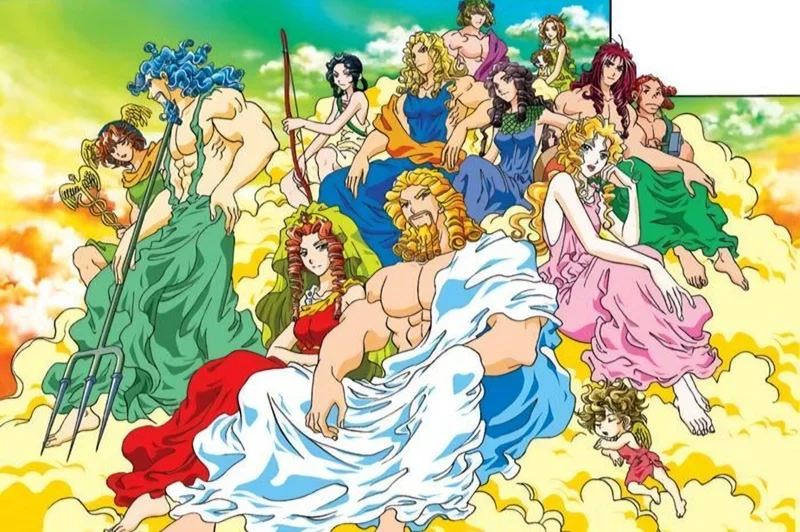
It began in elementary school classrooms, neighborhood libraries and friends’ homes two decades ago, in the colorful pages of “Greek and Roman Myths Through Comics,” illustrated by Hong Eun-young.
When Odysseus finally confronts the suitors who took over his home in Nolan’s film, Park Ji-hoon, a 32-year-old office worker in Suwon, Gyeonggi Province, said he felt a childhood story reach an ending that had long eluded him.
“The most satisfying moment was watching Odysseus take revenge on the suitors in his palace,” Park said. “The drawing style changed just before that part of the story in the comics I loved as a child, so his return home had remained unfinished for me.”
Park remembers sharing the books with classmates during breaks and competing to borrow them at the school library. Watching Nolan’s version, he said, brought a new thought: “I also wondered how Hong Eun-young would have directed that scene.”
“For me, ‘The Odyssey’ has always been unresolved,” Jeong Ye-seul, 31, an office worker in Seongnam, Gyeonggi Province, mirrored Park's view. “I learned the ending later, but after Hong stopped drawing the series, it still felt incomplete.”
Released by Gana Publishing in November 2000, the 20-volume educational comic series introduced Greek myths to a generation of young readers through the stories of the Olympian gods, heroes and monsters.
Based on Thomas Bulfinch’s “The Age of Fable,” the series became a publishing phenomenon, selling more than 12 million copies, according to industry reports. It won the culture ministry's Today’s Korean Comics Award in 2002.
For many Koreans born in the 1990s, the Greek gods remain inseparable from Hong’s visual interpretation: Athena with chestnut-brown hair, Psyche in an orange dress, Hades with dark blue curly hair and Artemis with distinctive twin buns.
Her drawings were characterized by muscular male figures, glamorous female characters and elaborate costumes and hairstyles that made each god instantly recognizable. The style was not conventional realism. Men were often drawn with an exaggerated, broad-shouldered physique, while women had idealized wasp-waisted figures — yet readers said that Hong made every character feel distinct.
“Her character designs were extraordinary because she differentiated everyone even within those limits,” noted Kim Seul-gi, 34, who called Hong “Korea’s Homer” and mimicked her illustrations as a child drawing her own work. “The men all had enormous muscles and the women had similar body types, but you could tell every character apart. They were all memorable.”
For Kim, Hong’s importance goes beyond nostalgia. “For children of my generation, she made Greek and Roman mythology feel like a shared cultural language.”
That language extended beyond books. The popularity of the comics helped fuel the 2002 SBS animated series “Olympus Guardian,” which saw a 39-part run. The show’s soundtrack, released in April 2003, included a title song by popular K-pop boy band g.o.d.
The success also helped establish a durable image of Greek mythology in Korea — one that was accessible, dramatic and surprisingly vivid for an educational series. Its stories did not avoid conflict or violence, treating myths less as distant classical knowledge than as emotionally charged tales of families, rivalries and desire.
The series’ impact was so broad that it later inspired the online joke that Koreans are “suspiciously knowledgeable about Greek and Roman mythology.”
But the original run was also marked by an abrupt creative break.
Hong illustrated the first 18 volumes, which ended with Odysseus returning to Ithaca and reuniting with his son Telemachus. A dispute with the publisher led to her departure before the final volumes, leaving some young readers disoriented when a different artist took over.
The break stemmed from a legal dispute over royalties and the use of Hong’s work in derivative projects. In 2004, Hong alleged that Gana Publishing had underreported sales of the series and failed to pay royalties reflecting its full circulation, while also challenging the use of her characters and artwork in the SBS animation and related merchandise without her consent.
The royalty dispute ended in Hong’s favor. A court ruled that the publisher had underpaid her by manipulating reported sales figures, and Hong received unpaid royalties and interest.
The series is now largely out of print, leaving readers to seek surviving copies through used book platforms, where individual volumes and complete sets are often listed as collectible items.
Hong’s return to this summer has drawn intense interest from readers who grew up with her work. Her new Naver Webtoon series, “Hong Eun-young’s Egyptian Myths,” began publication July 22 and marks her first vertical-scroll webtoon.
“It is meaningful to revisit the world of mythology that I have shared with readers for so long, this time through Egyptian mythology,” she wrote on her social media account. “I am sincerely grateful to those who have waited for me.”