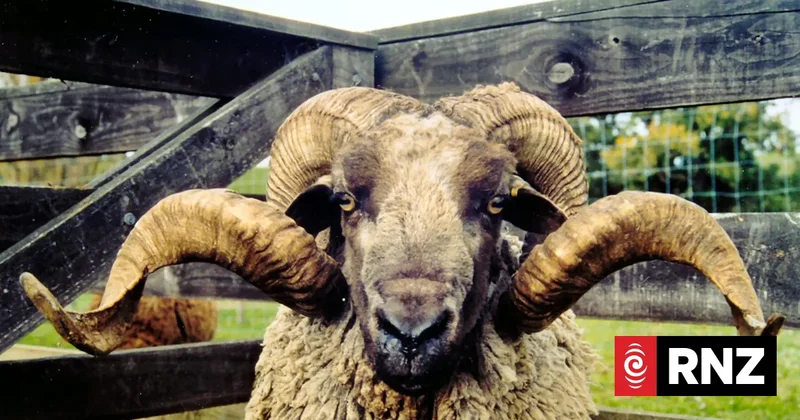
Mohaka sheep genetics to be stored as wild numbers drop
A feral sheep breed that's native to New Zealand is having its unique genetics stored as their numbers in the wild continue to drop.
Mohaka sheep are described as small and robust with large curling horns and black and white wool.
They originated from the Mohaka river area - between Gisborne and Wairoa and there are only about three hundred of them left.
Michael Willis from the Rare Breeds Conservation Society said they are one of the oldest wild breeds in the country.
Willis said nobody knows with any great accuracy about their history.
"They date back so long and were recognised as being there about 150 years ago."
Willis said Mohaka sheep semen from three rams has recently been frozen and stored for future use - and now they are looking for some Mohaka ewes but their numbers are extremely low.
"We had to step up and get some semen. We still need to get some embryos because they are the last of them so we are really fighting a bit of a downhill battle to preserve these animals."
Willis is encouraging any farmers who have the time and paddock space to offer to breed Mohaka sheep.
Feral sheep are known for their hardy natures, good health, parasite resistance, their ability to do well on rough or poor land, and their wool-shedding.
However, regardless of how tame they become, the sheep still have that wild gene and good quality fencing is a must.
The Rare Breeds Society said there are 12 different feral sheep populations dotted throughout the country.