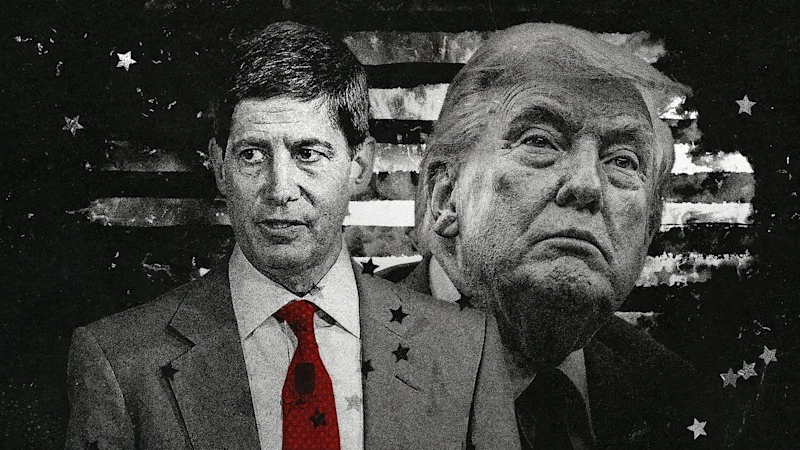
Even with his handpicked man in the chair of the Federal Reserve Board, Donald Trump can’t help himself. He is still trying to gain more influence, even control, of the US central bank and its decision-making.
Last week, he renewed efforts to sack Fed governor Lisa Cook that were thwarted earlier this year by the US Supreme Court, reviving an untested allegation that she had committed mortgage fraud prior to her appointment to the Fed’s board of governors in 2023.
The Supreme Court, while not offering an opinion on the allegations against her, had left Cook in place while litigation to remove her continued, saying that Trump had failed to give her proper notice or an opportunity to respond to the allegations.
A Fed governor can only be removed “for cause,” which is generally thought to mean serious wrongdoing or malfeasance while in office.
Trump has now revived his attempt to oust her from the board and open a vacancy that he could fill with someone more amenable to his desire for lower US interest rates. The White House has served her with a letter giving notice that Trump was considering removing her from the board “due to there being sufficient reason to believe that you made false statements on one or more mortgage agreements”.
The letter said that “even if your conduct does not rise to the level of a felony offence, it appears to demonstrate a level of gross negligence in financial transactions that calls into question your competence and trustworthiness as a financial regulator.”
Her actions, it said, “may be sufficient to demonstrate that you committed a crime, as you appear to have acquired mortgages that do not meet certain lending requirements and could have received favourable loan terms under fraudulent circumstances.
“Based on these facts, a jury could find that you intended to defraud these institutions for your own benefit, but at a minimum, this conduct was grossly negligent and demonstrates that you are unfit for the office in which you serve as a controlling member of the Federal Reserve.”
The allegation against Cook, brought forward by Trump loyalist Bill Pulte, the former director of the Federal Housing Finance Agency, is that she misled her lender by claiming two separate properties as her principal place of residence in order to gain a lower interest rate.
Cook, however, has referred to a clerical error in the documentation, and there have been a number of reports from those who have seen the loan documents that say that her application for the loans makes it clear that the second property was a holiday or second home and therefore the lender should have been aware that it wasn’t her principal place of residence.
Trump, of course, isn’t concerned about the facts or due process – his original attempt to fire Cook came via a social media post – but remains committed to trying to stack the Fed board with loyalists who will deliver him the lower rates he has long obsessed about.
He failed to force former Fed chair, Jerome Powell – who he threatened with criminal charges over over-runs in the cost of renovating the Fed’s Washington headquarters – to vacate his position.
Indeed, that effort backfired, with Powell breaking the convention that retiring Fed chairs leave the board, vowing to remain until it was certain that the charges wouldn’t be revived. His term doesn’t expire until January 2028.
Cook, whose 14-year term is scheduled to end in 2038, is also not going to go quietly, with her lawyers describing the allegation “as baseless now as they were a year ago when President Trump tried to remove Governor Cook and interfere with the independence of the Federal Reserve.”
She has vowed to continue fighting the allegations, which haven’t been tested in a court because no formal charges have been laid. To date, the court actions have been about process – whether Trump has the power to unilaterally fire her – not the underlying allegations.
The issue at stake, as it was with Trump’s attempts to remove Powell, with whom he had a testy relationship because Powell wouldn’t do his bidding, isn’t so much the individual fate of Cook, but what it could mean for the independence of the Fed.
There is plenty of research that says the independence of a central bank from its government is correlated with lower inflation rates. Politicians want pro-cyclical monetary policies and lower interest rates to boost growth. Central bankers generally tend towards counter-cyclical policies to control inflation.
The inflation-fighting credibility of the central bank has a significant influence over market interest rates – the bond yields that actually help determine the rates businesses and consumers pay.
That’s why Fed chairs and officials try to keep their relationships with presidents and other political figures at arms-length, although it has been normal for Fed chairs to meet regularly, even weekly, with the US Treasury Secretary and other senior economic officials.
Warsh has been at pains to try to distance himself from any suggestion that he is a “sock puppet” for Trump, presenting himself as an inflation hawk, ready to raise rates if required.
Financial market participants have yet to be completely convinced that Warsh will be as hawkish on inflation as he presents and recent revelations that Trump speaks frequently with him have added to their unease.
Trump’s National Economic Council director, Kevin Hassett, told Bloomberg last Friday that Trump and Warsh “talk about the economy all the time, although he was “sure” the president didn’t pressure Warsh on interest rate decisions and respected the independence of the Fed.
Trump himself claimed that he had spoken to Warsh “one time briefly” a few days ago: “just a conversation.”
“They (the reports) made it sound like I live and breathe, you know, I speak to Kevin all the time, every time,” he said.
As if the rates-obsessed Trump wouldn’t raise the topic of interest rates with the Fed, who he believes would cut rates if only the other 11 members of the committee that sets US monetary policy weren’t “political” and determined “to keep rates up.”
Trump, of course, isn’t concerned about the facts or due process – his original attempt to fire Cook came via a social media post – but remains committed to trying to stack the Fed board with loyalists who will deliver him the lower rates he has long obsessed about.
Trump doesn’t appear to have grasped that, while the Fed might be able to anchor the short end of the yield curve, the market sets the longer-term yields/rates that matter to the economy.
When the Fed left its policy rate unchanged at last month’s meeting, and Warsh failed to provide guidance and made some comments interpreted as being “dovish,” the yields on longer-duration bonds spiked immediately.
Trump might not be concerned about a US inflation rate that has been elevated by his tax cuts, trade wars and the war in the Middle East, but by investors holding bonds that might mature in 10 years, or 30 years’ time are.
This week’s consumer price index is expected to reflect a slight easing in inflation in July (because it covers a period when there was a ceasefire in the Middle East) but, with no end to the war in sight, higher oil, gasoline and diesel prices are likely to seep more widely into the economy and flow through to an inflation rate that has been well above the Fed’s 2 per cent target for more than five years.
The continuing pursuit of Cook and the apparent closeness of the relationship between Trump and Warsh means that the question mark over the Fed’s continuing independence will remain.
Bond traders talk about a risk premium having been added to bond yields to reflect Warsh’s withdrawal of forward guidance from his and the Fed’s commentary and the uncertainty over his inflation-fighting credentials.
If Trump continues to try to unseat Cook, and keeps Warsh on speed dial, they might well add another layer of premium to those yields.
The Business Briefing newsletter delivers major stories, exclusive coverage and expert opinion. Sign up to get it every weekday morning.
More: