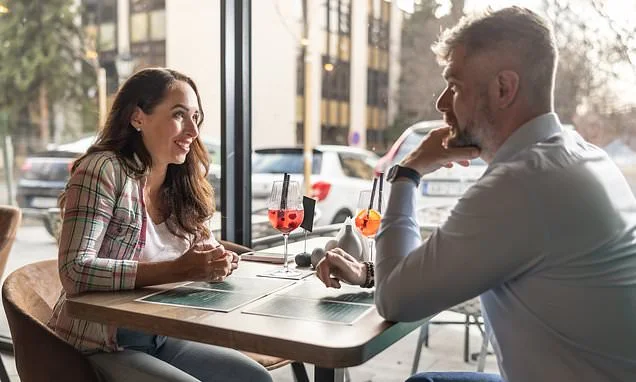
Is it ever acceptable not to pay for a meal – even a cup of coffee – at a restaurant or cafe? Before our latest trip to the South of France, my husband and I would of course say no.
We are 52 and 55, financially secure, and like to think of ourselves as upstanding members of the community. I work in a senior position in the arts and Robert runs his own business from home. We live in sleepy Barnstaple in Devon.
And yet, by the time we finished our recent tour of the gorgeous French Riviera we were fully fledged bill dodgers. Paid-up, or rather not paid-up, dine and dashers. The Bonnie and Clyde of the bistro, if Bonnie and Clyde robbed croissants instead of banks.
We started our holiday in Marseilles, which felt gloriously hot and colourful and whose wonderful eateries gave us no reason to do anything but settle up in full and add a tip. No, our dishonest habits began at the next stop on our two-week holiday, the picture-postcard seaside town of Cassis.
As we travelled east along the Cote d’Azur, we’d already noticed a subtle change in the levels of service at bars and restaurants. Meals took longer and waiting staff became more uninterested. The real bugbear was waiting for the bill. We couldn’t understand why they wouldn’t want to free up tables for the next paying customers. Perhaps it was because the French like to sit around for hours after eating, smoking and drinking tiny cups of coffee. Fine – let them dawdle – but we had a schedule to keep.
At a little cafe, a street back from Cassis’s pricey waterfront restaurants, we hit a frustrating new low. Having booked a scuba diving trip for 10am, we decided to have a breakfast of coffee and croissants before joining the boat. We were served without looking at a menu – small French cafes don’t tend to have them – and ate and drank swiftly, leaving us a good ten minutes to make the quay.
We looked around. No staff. We waited five minutes. I went inside and asked a man stocking the bar for the bill. He gestured that someone would bring it. No one did. Eventually I decided.
‘Two coffees and two croissants. It can’t be more than five euros [or just over £4],’ I said to my husband. In the back of my mind, I knew it was probably nearer €10 (£8.60), but I wasn’t willing to reward such poor service. I’d seen other people leave money on the table at other restaurants, so I put a €5 note under the ashtray. We quickly got up and walked off.
'As we travelled east along the Cote d’Azur, we’d already noticed a subtle change in the levels of service at bars and restaurants... the real bugbear was waiting for the bill'
We knew we’d underpaid, but we hadn’t tried to avoid paying. We’d simply decided what we thought breakfast and the service were worth. Neither of us felt particularly guilty. If the French hospitality industry had remained as consistent as it had been up to that small hiccup, that would have been the last of the story.
But St Tropez, our next stop, undid everything. By the time we left St Tropez, we were practised, if not hardened, middle-class dashers. We were staying near the retro-chic Plage de Tahiti on the St Tropez peninsula, but each evening took to hiring a scooter to zip over the hill into the port where all the bistros and bars are. Everywhere was eye-wateringly expensive – yet nothing about the service could possibly justify the prices. Places looked beautiful on Instagram, but seemed totally uninterested in customers once they were seated.
Could they tell we weren’t as well-heeled as the usual St Tropez tourist? This is a town overflowing with superyachts, designer boutiques and exceptionally rich people, after all. Perhaps we were suffering the equivalent of trying to buy a posh handbag in Knightsbridge but looking as though we couldn’t afford it. A polite but very definite cold shoulder.
Indeed, we felt that many restaurants had confused exclusivity with indifference.
One lunchtime we sat at one of the cafes opposite the yacht moorings. We ordered two coffees and two croque monsieurs – the cheapest things on the menu but still adding up to €30 (£25.70) before service and local taxes.
We were basically paying for the privilege of looking at rich people. Now, a croque monsieur is essentially a toasted sandwich. But in France it is very often a special dish, elevated by the quality of the cheese and ham, the piquancy of the mustard and the richness of the layer of bechamel sauce.
Not these ones, however, which could easily have come from the kitchen of a service station off the M6. Lukewarm, they were made from bog-standard sliced white bread. The cheese had the texture and taste of plastic, and the ham was processed. The coffees, burned and tasteless, weren’t much better.
We complained politely. The waiter looked at us and shrugged. When we’d finished, we asked for the bill. Then we waited. After 20 minutes and a polite reminder, we’d had enough. How long could it possibly take to produce a small piece of paper? How many times did we have to ask? Why were those waiters just standing around by the counter, chatting?
We had another whispered conversation – call it the justification discussion.
‘They don’t want our money.’
‘No, we’ve been forced into this position. I’ve seen other people just leave a note and go.’
‘There’s no way the meal and the service were worth it. If they brought the bill I’d demand a discount anyway.’
‘It couldn’t have cost them more than €10 to make. Let’s leave that.’ And we did.
I spent the next hundred yards waiting for the tap on my shoulder. As we wandered through the streets of St Tropez, we started asking ourselves an awkward question. Had we just stolen lunch? Morally, it didn’t feel quite that simple.
There was obviously a disdain for tourists in the town and some of the prices were daylight robbery. The more we discussed it, the more we developed what became known between ourselves as ‘the code’. Our moral justification for dining and dashing.
‘The code’ went like this. We would always pay full price at quiet off-the-main-drag family-run restaurants. We would always stump up the full cost of an expensive dinner and of course never dash from a meal we had genuinely enjoyed. We would always ask for the bill at least twice and wait 20 minutes, and we would always leave enough money to cover what we genuinely believed the ingredients had cost.
Otherwise? All bets were off.
It wasn’t about getting something for nothing; we simply weren’t prepared to reward dreadful service and cynical tourist pricing. Whether that would stand up in court was another matter entirely.
Two days later we were eating a light lunch at the other end of the port. We had a superfood salad with goat’s cheese and a chicken burger and fries. With two beers it came to more than €80 (£68.50). Ridiculous money, but everywhere was full and we were starving. The main gripe was the service. The waiter was abrupt and rude. He ignored requests for mayonnaise and when I pointed out that the glass my beer was served in had lipstick on it, he pulled a face as though I’d just insulted his mother.
I’ll be honest, by the time I was trying to get his attention for l’addition, I was hoping he’d be just as obstinate and ignore me. He did and, dead on 20 minutes, we left €20 (£17.10) and scarpered. I even laughed when we walked off.
By the end of the holiday, we’d repeated our little system at five cafes and restaurants. Each time we agreed they deserved it and each time we knew there was a chance someone would run after us. They never did.
When we returned to the UK, we told no one about our culinary crime wave, but we’ve often joked about it between ourselves. We’d gone to the South of France as respectable, middle-aged professionals and somehow returned as serial saucisson underpayers. Our willingness to do a runner surprised us but also – and this is a source of guilt – gave us both an undeniable thrill.
The Cote d’Azur is beautiful and I’d certainly go back. But I’d avoid St Tropez in case there’s still a waiter there with a long memory and an unpaid bill. We’d certainly deserve his ire – but I’d still argue his blandly flabby croque monsieurs deserved ours too.
As told to Nick Harding