When one considers the contradictions between the Enlightenment’s stated ideals and their practical implementation, for example, if we take the case of the American Revolution, which was one of the earliest implementations of the movement inspired by Enlightenment principles such as liberty, equality, and natural rights, and note that it coexisted with chattel slavery, we find that the Enlightenment ideals functioned as an ideological framework that could also coexist with, without any disturbance in its coexistence with a profoundly unequal and racialised society. Enslaved individuals could be, without needing an extraordinary example or explanation, constitutionally counted as three-fifths of a person for purposes of representation.
The US Constitution is an early, large-scale application of Enlightenment ideals that, at the same time, reveals the racially restricted claim to universality. Solomon Northup’s Twelve Years a Slave is a well-noted critique of the inconsistency of American democracy, particularly the coexistence of constitutional freedom and institutionalised slavery.
Northup, born a free Black man, who was enslaved and then later freed through legal intervention, appealed to reason and human dignity, and challenged, early on, the point being made here – that in the superficial universality of Enlightenment ideals within a racial order, Black or, by extension, coloured lives were expendable. History is replete with examples that show that when colonised or enslaved invoked the ideals proclaimed in the Enlightenment to expose the violence and racial exclusions of imperial systems, the typical response was repression and execution, and almost never reform. The violent responses of the system underscore the contradictions in the Enlightenment’s claims to universality, which were always limited by race and geography.
The examples of writing and the fate of many who made appeals to Enlightenment principles and their contradiction with the unabated imperial violence show the racial boundaries of the universality of those principles. José Rizal, the Filipino nationalist and European-educated intellectual, provided a rigorous critique of the Spanish colonial regime, particularly its combination of religious orthodoxy and imperial repression, revealing the very point about the disparity between Enlightenment ideals and the clerically sanctioned brutality of Spanish rule in the Philippines. He was executed in 1896. Bhagat Singh, a revolutionary in British India, drew upon rationalist and anti-colonial thought to critique imperialism and uncritical adherence to tradition. Singh was executed by hanging in 1931. Olaudah Equiano, a slave who had purchased his freedom, in his autobiography, The Interesting Narrative of the Life of Olaudah Equiano (1789), combined firsthand testimony with appeals to moral reason and human equality and exposed the hypocrisy of Enlightenment Europe. These diverse figures are united by their efforts to reclaim Enlightenment values from the margins and confront the imperial powers by using the very moral vocabulary of those powers, demanding accountability to the principles publicly proclaimed by them. In each instance, however, these values were ultimately betrayed. A clear historical pattern emerges when we examine such examples, which are otherwise too copious to record, showing that the Enlightenment’s claims to universality were racially and geographically restricted.
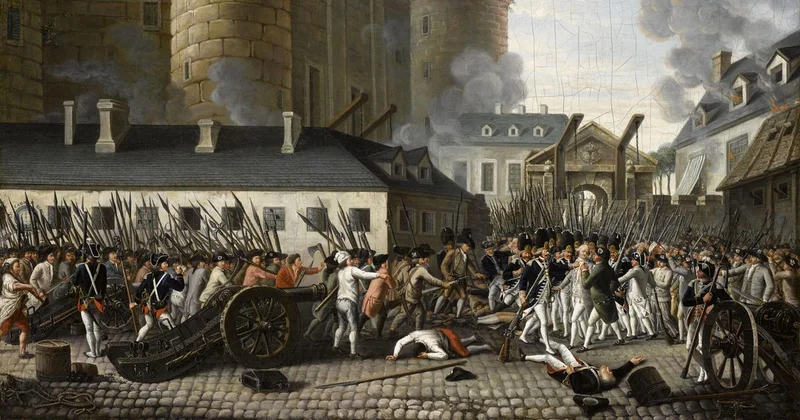
When examined through a global and historical lens, even the legacy of Enlightenment appears ambivalent: aside from the duplicity between the espousal and practice as we noted in the US Constitution, under Maximilien Robespierre – during the French Revolution, particularly the Reign of Terror (1793-1794) – Enlightenment ideals were marshalled in the name of reason, as a critique of monarchical despotism and religious orthodoxy that finally turned into such a violent purge of the “enemies of the revolution”, that thousands were guillotined in the mass violence that ensued.
The Enlightenment-inspired revolution embodied a dogmatic secularism that mirrored the very intolerance and authoritarianism it sought to displace, the state-sponsored Cult of Reason that attempted to displace Christianity. However, the Enlightenment’s supposed rupture from religion was never fully realised. Instead of collapsing under Enlightenment scrutiny, and through the Concordat of 1801, negotiated between Napoleon Bonaparte and Pope Pius VII, the Church conceded to secular reforms, absorbed elements such as individual conscience and moral responsibility into its own doctrinal framework, and metamorphosed into a modern institution that could engage with Enlightenment ideals and contemporary intellectual currents while upholding its doctrinal integrity, and reasserted its authority in the post-Enlightenment era. Far from being weakened, the Church retains enormous temporal and material power and, as the world’s largest non-state landowner, wields political, cultural, institutional, and even economic influence.
The Catholic Church has never relinquished its medieval ambitions to control human behaviour, enforce its doctrines, and impose its moral judgements on society. In many parts of the world, the Church’s authority remains almost as strong as it was during the Dark Ages.
Hans Küng, a leading Catholic theologian, agrees that the Church continues to exercise dominant influence, particularly where it retains control over education, law, and public morality. John Cornwell also argues that the Church’s hold in many parts of the world is not dissimilar to its power during the Dark Ages. Thus, the Enlightenment’s avowed ideals of rationality, scientific inquiry, and secular governance have not prevailed, as evidenced by the Church’s political survival. This limitation is not unique to Europe.
In the modern world, states from the Islamic Republic of Iran to Western democracies continue to legislate morality and sexuality through religious frameworks. Max Weber claims that religious worldviews such as the Protestant ethic have shaped the rise of capitalism. Religion generates national narratives and informs global diplomacy.
Excerpted with permission from The Chromatic World Order: The Fiction That Rules Our World: A Brief History of its Genesis and Other Stories, Sajid Mohamed, Aakar Books.
We welcome your comments at letters@scroll.in.