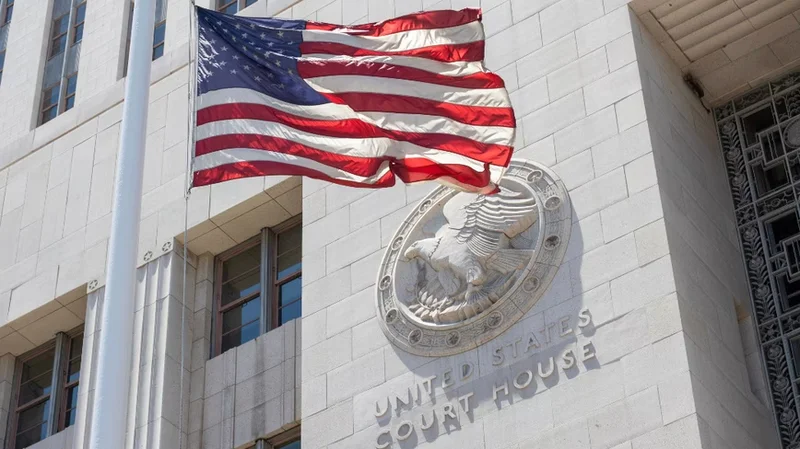
US appeals court has cleared thousands of lawsuits accusing the biggest social media companies of harming young people to move towards trial, in a ruling that chips away at the legal shield the tech industry has relied on for decades.
On 10 August 2026, a three-judge panel of the Ninth Circuit Court of Appeals rejected attempts by Meta and TikTok to have the claims thrown out, and its reasoning could reshape how courts treat the sector.
At the heart of the case is Section 230 of the Communications Decency Act, the provision that has long protected online platforms from liability for content their users post.
Writing for the panel, Judge Jacqueline Nguyen concluded in a 24-page opinion that the statute offers “a defense against liability, not blanket immunity from being sued.”
The distinction is subtle but consequential, because it means the companies can no longer count on early dismissal.
The decision keeps alive litigation against Meta, ByteDance’s TikTok, Snap, the owner of Snapchat, and Google’s YouTube. Plaintiffs allege that the firms designed their products to be addictive and harmful to young people, that they bypassed parental controls, and that they allowed minors to access exploitative content.
These are allegations rather than findings, and the companies deny wrongdoing, arguing that their platforms are safe by design and that responsibility for the harms described lies elsewhere.
The ruling matters because Section 230 has been the tech industry’s reflexive defence in almost every case brought against it.
By framing the law as a shield to be raised at trial rather than an automatic bar to being sued, the court narrows a protection that has repeatedly ended cases before evidence was ever heard.
It does not strip that defence away entirely, but it forces the companies to answer the claims on their merits.
Momentum was already building before this decision. In March 2026, a jury found Meta and YouTube negligent and liable, awarding $3m in damages to a plaintiff who alleged that social media addiction had caused depression, anxiety and body dysmorphia, with a further $3m recommended in punitive damages.
TikTok and Snap had settled before that trial began, a sign that some defendants would rather pay than risk a verdict.
The pressure is unlikely to ease. A separate Meta trial, this one centred on allegations that the company used children’s data to maintain engagement, is due to begin on 14 August 2026.
Together with the appeals ruling, it suggests that the coming months will test in open court, and in front of juries, arguments the industry has spent years trying to keep out of one.
None of this is happening in isolation. Lawmakers and regulators around the world have grown increasingly uneasy about the effect of social platforms on children, and the courts are now one front in a much broader reckoning.
In the United States, that mood has already produced a kids’ online-safety package in Congress, while local disputes have ended in eye-watering figures, including a settlement that exceeded a school district’s annual budget.
Europe has taken a more restrictive tack. Governments there are increasingly willing to draw hard lines around age, with Greece barring under-15s from social media and the UK’s debated under-16 ban both signalling that patience with self-regulation is running thin.
Against that backdrop, the Ninth Circuit’s decision reads less as an outlier than as another turn of the same wheel.
For the companies involved, the immediate consequence is exposure. Cases they hoped to close quickly will now proceed, discovery will surface internal documents, and juries rather than judges may decide whether their design choices crossed a line.
The allegations remain unproven, and Section 230 still gives the platforms a genuine defence, but the era in which that statute reliably ended the conversation appears to be drawing to a close.
Get the TNW newsletter
Get the most important tech news in your inbox each week.