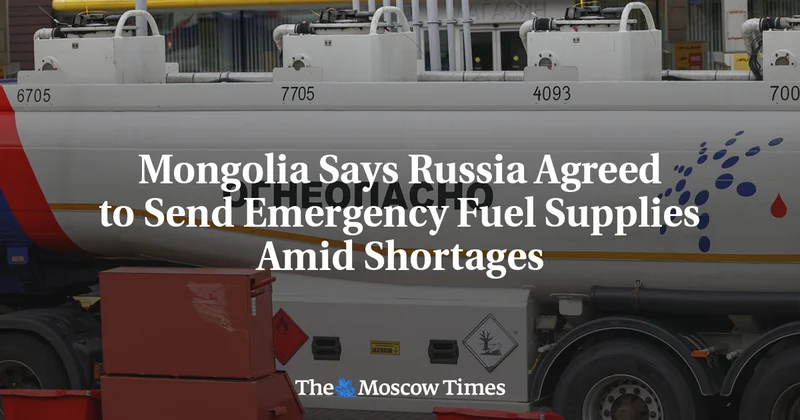
Russia has agreed to provide Mongolia with additional shipments of gasoline and jet fuel to help relieve a fuel shortage that officials in the landlocked country have blamed on high seasonal demand, Mongolian officials said late Monday.
Mongolian Industry Minister Gongoryn Damdinnyam said Russia committed to delivering an extra 25,000 metric tons of AI-92 gasoline and 5,000 metric tons of jet fuel by the end of August.
“I express my gratitude to the Russian government and its businesses for their assistance in helping us overcome this unprecedented difficult period,” he wrote in a post on X following talks with Russian officials and executives from Rosneft and Gazprom.
Russia accounts for up to 97% of Mongolia’s gasoline and diesel imports.
In July, Russian fuel exports to Mongolia decreased to 173,000 metric tons from 186,400 in June as it grappled with its own shortages following a series of Ukrainian drone attacks on oil refineries.
Shortages in Mongolia, meanwhile, are being driven by summer tourism and agricultural harvesting, according to local officials, who say that supply constraints have been exacerbated by shortages in Russia.
Minister Damdinnyam said that the increase in Russian fuel deliveries would eliminate “any need for rationing” in Mongolia, which has also secured additional supplies from China and South Korea.
Russia has extended its nationwide gasoline export ban through the end of the year, but Mongolia continues to receive shipments under carve-outs granted for existing intergovernmental trade agreements.
Moscow has not publicly commented on the agreement to supply Mongolia with emergency gasoline and jet fuel.
Mongolia is building its first domestic oil refinery, which is expected to be completed by 2028, to reduce its near-total dependence on Russia.
A Message from The Moscow Times:
Dear readers,
We are facing unprecedented challenges. Russia's Prosecutor General's Office has designated The Moscow Times as an "undesirable" organization, criminalizing our work and putting our staff at risk of prosecution. This follows our earlier unjust labeling as a "foreign agent."
These actions are direct attempts to silence independent journalism in Russia. The authorities claim our work "discredits the decisions of the Russian leadership." We see things differently: we strive to provide accurate, unbiased reporting on Russia.
We, the journalists of The Moscow Times, refuse to be silenced. But to continue our work, we need your help.
Your support, no matter how small, makes a world of difference. If you can, please support us monthly starting from just $2. It's quick to set up, and every contribution makes a significant impact.
By supporting The Moscow Times, you're defending open, independent journalism in the face of repression. Thank you for standing with us.
.