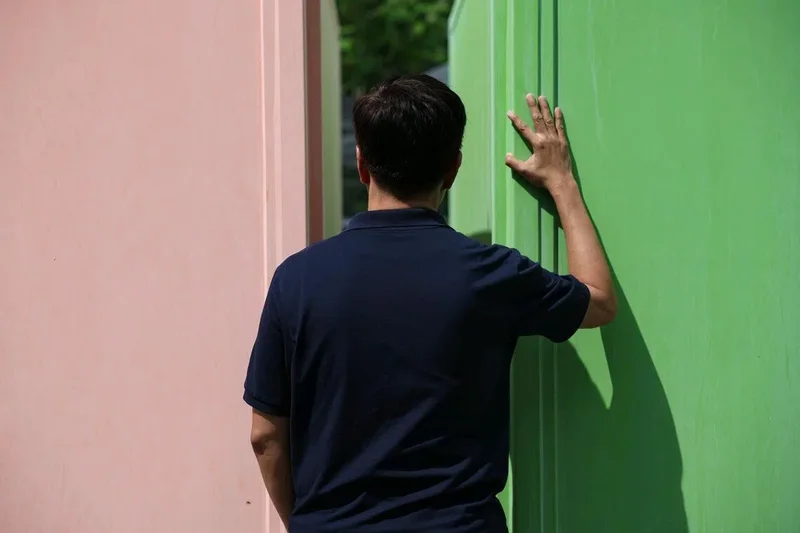
He was an engineering manager with a Master’s degree. Then meth took over
AI generated
SINGAPORE – As former engineering manager Roland (not his real name) stood in a court dock in 2018, he wondered: “How did I get myself into this situation?”
On the surface, his life looked picture-perfect: he had a Master’s degree from a local university, a successful career with a five-figure salary, and a loving wife and son.
Yet in his 40s, Roland was sent to the Drug Rehabilitation Centre (DRC), and later prison, due to methamphetamine addiction.
Now 53 years old, Roland was candid and articulate in a July interview with The Straits Times at We Care Community Services, where he works as a counsellor.
“I don’t think there’s a certain (profile of) person with addiction. We may know about (addiction), but knowing how to deal with it is another thing,” he mused.
Stories like his are more common in Singapore today than one might expect. DRC inmates with tertiary education and above are growing in number over the years, according to official statistics.
There were 293 inmates with tertiary education or higher qualifications in 2025, compared with 204 in 2021, based on Singapore Prison Service statistics.
Meth did not seem like a problem when Roland first tried it at a party in 2014. It felt like a quick solution to pent-up stress.
After moving from Malaysia to Singapore to study at the age of seven, he grew up under pressure to work hard and prove himself.
The engineering graduate climbed the corporate ladder swiftly. He became a manager at a semiconductor plant and was in charge of over 200 staff.
But the relentless pressure became unbearable. He lost his sleep and appetite just to get work done, recalled Roland, who is now a Singaporean.
The white crystals promised relief – especially when his friends were taking it too.
“Of course I knew how dangerous it was,” said Roland. “But I just couldn’t think beyond that. All I could think about was how stressed I was, how I needed to get away for a while.”
At first, meth helped him stay awake at night and think more creatively, said Roland.
When people remarked that he looked tired during the day, he simply passed it off as work stress.
The addiction worsened when he quit his job in 2015. Despite sending out about 2,000 applications, he could not land a role. From using meth once a fortnight, he started taking it almost daily.
His wife noticed that he was moody and sleepy, but he claimed he was depressed about being unemployed.
The drug use remained a carefully guarded secret: he had a reputation to uphold and a family to feed. Their son was only eight years old then.
“I always considered myself as a problem solver. So trying to manage the drug use was a problem that I needed to solve,” said Roland.
‘I was a slave to drugs’
That facade did not last long. Roland soon realised he was no match for meth. His moods became more irritable, and he started hallucinating that people were out to harm him.
In 2017, he surrendered at a police station to protect his family from himself. He was sent to DRC for three months.
Ironically, he felt freer in DRC, where he met people just like him.
“There was a certain understanding and relation to each other’s problems. I felt that I wasn’t alone in this journey,” he said.
“When I was outside, I was a slave to drugs. Everything went upside down.”
After his release, Roland worked as a restaurant waiter, but soon slipped back into using drugs as he did not have sufficient community support.
He surrendered to the police again in 2018. This time, he was sentenced to five-and-a-half months’ jail.
His wife, who works in social services, stuck by him and took care of their finances during his rehabilitation.
When he left prison in 2019, he joined We Care’s counselling programmes and finally stayed clean.
Reflecting on his journey, Roland said education did not prepare him for many of life’s challenges, such as how to handle stressors and rely on the community.
At the age of 47, he pursued a second Master’s degree in counselling and after graduation, joined We Care full-time in 2022 to help other ex-drug addicts.
“Educated people can be the most defensive when it comes to recovery,” Roland said.
“(They think) ‘I don’t need help. I just need to plow through.’ And sometimes that will just make them go deeper into the quicksand.”
Knowing how fragile their ego can be during recovery, Roland uses the analogy of driving a car to emphasise their capacity to make choices.
They are the driver while he is their passenger who will warn them – and step out – if the car is moving towards a tree. They are free to drive forward. When the car crashes and they turn around, he will be there waiting.
“It’s not about what you know,” said Roland. “It’s more about knowing who is around to support you.”