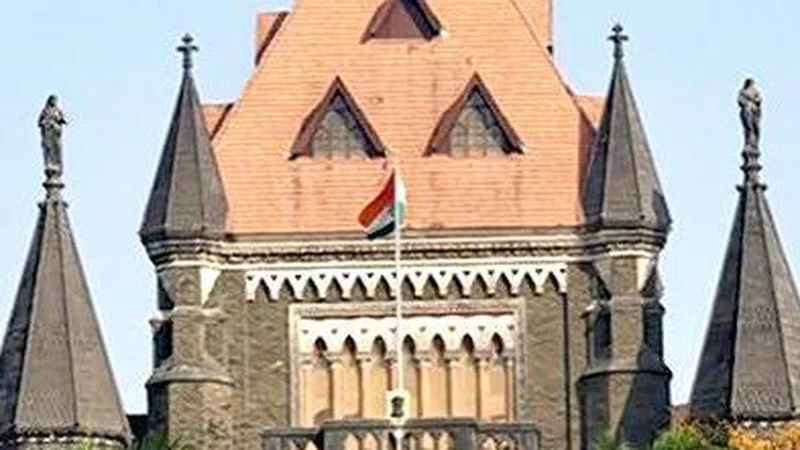
Justice Gautam Ankhad of the Bombay High Court recused himself on Monday (August 10, 2026) from a bench hearing petitions filed by political parties and trade unions against the Maharashtra Special Public Security Act, 2025. The bench has directed the registry to not list these matters before any division that includes Justice Ankhad.
A division bench comprising Acting Chief Justice Ravindra Ghuge and Justice Gautam Ankhad was scheduled to hear a group of petitions on Monday (August 10, 2026). The petitions have been filed by the Indian National Congress, the All India Trade Union Congress, and the Communist Party of India (Marxist). The petitioners are challenging the constitutional validity of the Maharashtra Special Public Security Act (MSPSA), 2025.
During the proceedings, Maharashtra’s Advocate General Dr Milind Sathe urged the bench to dismiss the petitions. He stated that the petitions were without merit. Senior advocate Navroze Seervai, representing the AITUC, responded to this submission. He stated that the MSPSA itself was without merit and violated constitutional provisions, not the petitions filed against it.
Justice Ankhad then stated that he could not hear the petitions and recused himself from the matter. Following this, the bench issued an order. The order instructed the registry to ensure these petitions are not placed before any bench of which Justice Ankhad is a member.
The petitions argue that the MSPSA confers powers upon the executive. The petitioners contend that these powers are extensive and allow for the banning of organisations without judicial oversight. They state that the definitions of ‘unlawful activity’ and ‘unlawful organisation’ in the Act are vague and broad. This, according to the petitioners, has a chilling effect on rights protected under the Constitution, including freedom of speech and expression, and the right to peaceful assembly and association.
The petitioners also claim the Act violates the guarantee of due process under Article 21 of the Constitution. They state that the Act permits the banning of an organisation without a prior hearing. It also does not require the disclosure of material that forms the basis for the executive’s decision. The petitions further object to the provision allowing for the unilateral extension of a ban notification without judicial review or recourse to independent courts or tribunals.
According to the document filed by the INC, the Act criminalises persons who are not members of banned organisations. The petitioners argue this is based on suspicion or association, thereby criminalising beliefs without the requirement of mens rea. The plea also objects to the powers conferred upon District Magistrates and the Commissioner of Police. These authorities have the power to notify and take possession of premises, attach property, and evict persons without a hearing. The petitioners state that the Act does not prescribe a procedure for these actions and lacks a mechanism for the return of forfeited property. This, they argue, violates Article 300A of the Constitution.
The petitioners are seeking a declaration from the court that the MSPSA is unconstitutional. They argue the Act is ultra vires to Articles 14, 19(1)(a), 19(1)(b), 19(1)(c), 21, and 300A of the Constitution. They have also requested an interim directive to the State. This directive would prevent the State from enforcing the Act or taking coercive action against anyone until the plea is decided. Additionally, the plea seeks a stay on the operation of the Act during the pendency of the case.
Published - August 11, 2026 03:31 pm IST