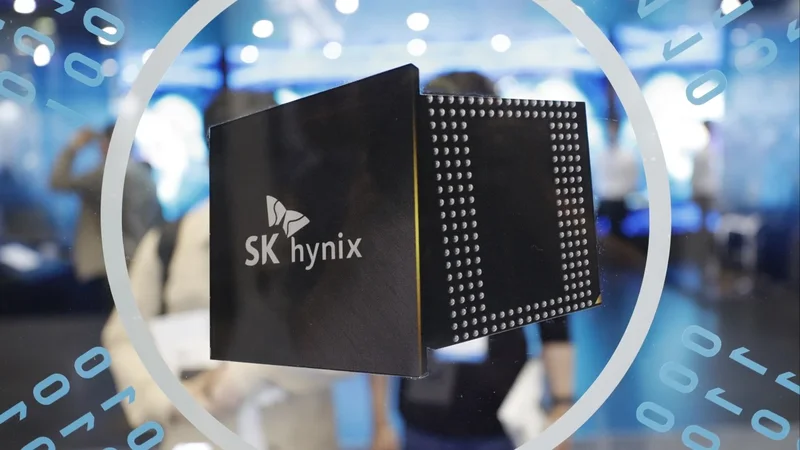
Why does SK Hynix want to sell its chip facility in southwest China?
The South Korean chipmaker wants to pivot towards the high-margin AI memory sector, but analysts warn any sale would face valuation hurdles
South Korean chipmaker SK Hynix’s potential deal to offload a packaging plant in southwest China is part of a strategic pivot towards higher-margin artificial intelligence (AI) memory products, according to analysts.
But a sale might not be straightforward, as the memory chip giant would need to navigate valuation hurdles and a volatile chip cycle, they cautioned.
SK Hynix said on Monday it was “looking into various solutions to enhance the competitiveness of its packaging business”, after reports emerged last week it was weighing options for its facility in the megacity of Chongqing.
Those options include bringing in an investor for a stake sale that could value the plant at around US$3 billion, Bloomberg reported. SK Hynix said in a statement that no final decisions had been made.
The Chongqing plant functions as a back-end hub focused on downstream packaging and testing for SK Hynix’s NAND flash memory products. The company also operates two front-end wafer fabrication plants for dynamic random access memory (DRAM) and NAND products in China – in the eastern city of Wuxi and northeastern Dalian, respectively.
Industry watchers view the potential sale as a move to recycle capital away from lower-margin legacy products. Profit growth in high-bandwidth memory (HBM) is far clearer than in standard NAND flash, according to Diana Wang, an analyst at Chinese semiconductor research firm ICWise.
Zhang Guobin, founder of Chinese semiconductor news platform eetrend.com, described SK Hynix’s decision as a strategic shift from low-value back-end assembly to high-margin front-end manufacturing.