Councils are warning that local government reform could derail vital pest management work, leaving ratepayers to pick up a hefty bill if biosecurity programmes are disrupted.
More than 1300 pests are managed locally by the country's unitary and regional councils, with programmes ranging from controlling wallabies to invasive seaweeds and wilding conifer pine trees, across 13.2 million hectares of productive land.
The programmes cost about $142 million each year, but had a wide range of flow-on benefits such as protecting arable or agriculture sectors, fisheries or horticulture, and improving biodiversity.
Morning Rural news for 7 August 2026
Time was up for the country's councils to pitch their amalgamated futures to the central government, amid major reform through the Simplifying Local Government and Head Start projects.
Te Uru Kahika - the organisation representing 16 unitary and regional councils - commissioned a report by financial consultants Heuser and Whittington to evaluate cost benefits of existing regional and national biosecurity programmes.
The report said that re-assigning biosecurity functions or responsibilities or reducing funding during the reform transition would create significant extra costs in the short and long term.
It estimated that disrupting biosecurity programmes over the next five years would cost $1.7 billion, due to negative effects like pest damage or the costs of re-establishing controls.
Te Uru Kahika spokesperson and Canterbury Regional Council chairman Deon Swiggs said the primary sector was the backbone of the economy that deserved protecting, and continuity of the work was vital.
"Pests will not stop while the future of local government arrangements are worked through," he said.
"Regional biosecurity is going to rely on the staff, the data, the surveillance and all of the tools that we all have to keep working and to keep going on.
"If we fragment any of those, there is a very real opportunity that those pests will move beyond the boundaries and then we're just going to be chasing their tail."
He said it cost far less to keep pests under control than to try to regain control later.
"It protects farmers, growers, foresters, exporters, biodiversity and communities from costs that become much larger when pests are allowed to spread."
Councils were given the hard word by the government to make sure ratepayers were getting value for money from every rates dollar.
Ratepayers were funding the bulk of the $142m in existing biosecurity programmes each year compared to central government funding, the report found.
Furthermore, there was disparity between whether biosecurity programmes were funded by central government or local and regional councils, with taxpayer-funded programmes leaning on a metric of its national significance.
Some areas like Auckland and Hawkes Bay get less than one percent in central funding versus Canterbury with the highest share at 61 percent, which reflected key nationally-focussed programmes in the areas like the national wilding conifer control programme for Canterbury.
Swiggs said 78 percent of the programmes was funded regionally by ratepayers, which could be better matched up.
"There is opportunities through the reform at the moment to look at the mismatch of funding that's available for biosecurity," he said.
"Regional biosecurity does support that productive land, the export resilience, biodiversity in New Zealand, and our international reputation.
"When we've got 78 percent of that being funded at a regional level, the question is, 'can some of that national benefit be funded more from the national taxpayers'?"
The report found that regional programmes collectively protected an estimated $285 million in primary production each year from pest damage.
It carried out quantitative cost benefit analysis of programmes, with the best value for money in programmes like the eradication of rooks in Hawkes Bay returning $22 for every $1 invested over 10 years, rising to $128 per dollar over 50 years.
Hawke's Bay Regional Council chair Sophie Siers said the value of regional biosecurity programmes was clear to rural communities, but their benefits were often national.
"Councils can work across boundaries, bring landowners together, track where pests are moving, and keep pressure on pests before they become much more expensive to manage," she said.
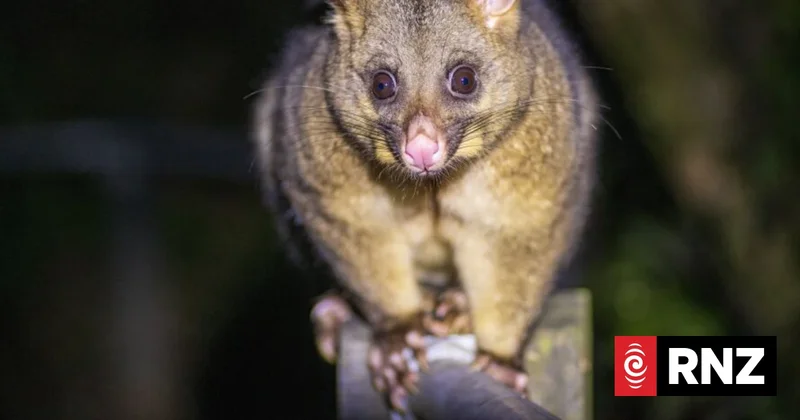
"We must also learn lessons from the past. When possum control lapsed in the 1970s, bovine TB resurged through the 1980s and 1990s. Regaining control cost far more than maintaining it would have."
The report found programmes delivered major biodiversity gains, with co-benefits including greater kiwi populations at monitored Horizons sites and a 370 percent increase in kōkako breeding pairs in Auckland's Hūnua Ranges - which were excluded from cost benefits.
Te Uru Kahika said new evidence compiled in the report should inform how biosecurity functions were treated through reform, including future delivery models and a co-investment framework that better aligned funding with the beneficiaries of the work.
Local Government Minister Simon Watts has been approached for comment.