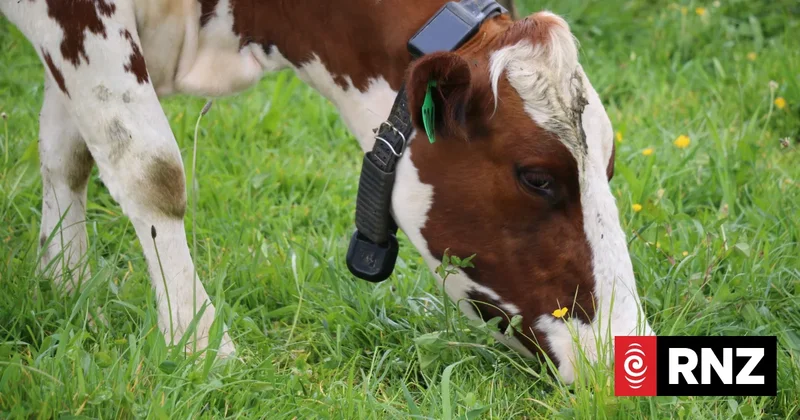
A wave of farmers taking up cow collars for managing pasture is driving further growth for technology firm Halter, which now has 1.5 million cows collared up globally.
The United States-owned company operated solar-powered smart collars for livestock controlled by virtual fences, that were connected to its app and powered by artificial intelligence.
New figures filed to the Companies Office showed Halter earned $98 million from New Zealand farmers and other intercompany services for pasture management systems, over just nine months last year.
For these latest figures, between April last year and 31 December, Halter New Zealand's after-tax profit was $2.57m.
In the previous period, the year to March 2025, Halter's profits were at $53.8m, although that included a loan of $51m from its owner.
This year, it changed how it reported its financial results, to reflect the American style of calendar year, like its owner.
Farmers signed up to a 2-3 year subscription billed monthly or annually, and paid a one-off fee for installation of the hardware, like the tall towers that connected the GPS collars to the app.
Chief executive and founder Craig Piggott said in a statement the company was hiring more staff and building more products to bring Halter to more farmers and ranchers globally.
"We are in a time of incredible change and expansion for Halter as we continue to build out our business, both in New Zealand and globally," he said.
"There's so much more to do - we're really just getting started on our mission to help make agriculture more efficient and sustainable.''
Piggott said it was just getting started in its mission to make agriculture more efficient and sustainable.
Halter employed 391 staff in Aotearoa among 535 globally. Its global workforce increased 109 percent over the past year, and it was preparing to enter South America.
The wider Halter Group now served more than 3500 farms and ranches.
Uptake of the agritech was rapidly expanding, but opinion around its animal welfare was divided among farmers, vets and animal welfare groups.
When releasing an ethical code for the GPS collars recently, Group Veterinarians for Animal Welfare Aotearoa warned that New Zealand was falling behind Australia in regulating virtual fencing technology.
However, Prime Minister Christopher Luxon ruled out any added regulations for the virtual fencing technology, as it was managed by the Animal Welfare Act.