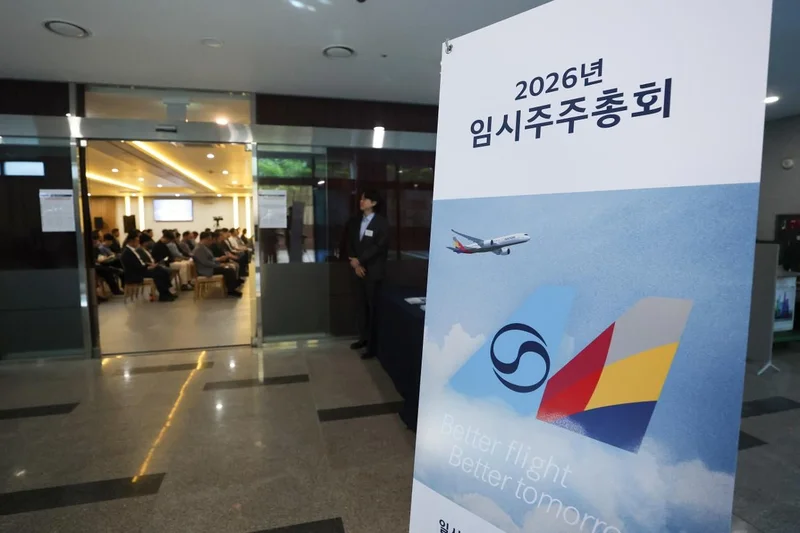
Asiana Airlines shareholders approved its high-profile merger with Korean Air on Wednesday, clearing a key final hurdle ahead of the official launch of an integrated national flag carrier in December.
The approval concludes the corporate combination process that began in November 2020, when Korean Air decided to acquire its smaller rival. The deal has since undergone regulatory reviews by authorities in Korea and abroad.
Asiana shareholders voted in favor of the merger at an extraordinary shareholders' meeting, with 81.9 percent of shareholders in attendance and 99.3 percent voting in favor of Asiana’s integration with Korean Air.
The two airlines plan to officially launch the integrated Korean Air on Dec. 17. Asiana Airlines will be dissolved the same day.
“This marks the first step toward writing a new chapter in Korea’s aviation industry as a megacarrier,” Asiana Airlines CEO Song Bo-young said.
“All employees will come together to ensure the successful launch of the integrated airline while bringing Asiana Airlines’ final chapter to a meaningful close.”
The merger ratio has been set and Asiana’s existing shareholders will receive 0.2736432 newly issued Korean Air shares for each Asiana share they own.
Korean Air will issue some 20.34 million new shares for the merger, which are scheduled to be listed Jan. 4, 2027.
The two airlines are now turning their focus to the remaining preparations for the integrated carrier, including the highly-anticipated integration of their mileage programs.
Song said Asiana is working closely with the Fair Trade Commission to protect consumer interests and minimize inconvenience during the mileage integration process.
The deal is expected to create one of Asia’s largest full-service airline groups and strengthen Korea’s position in the global aviation market.
Asiana said it will make every effort to complete the remaining procedures and ensure a smooth launch.
Once integration is finalized at the end of this year, Korean Air will emerge as a megacarrier serving more than 120 cities worldwide, with a fleet of over 230 aircraft and a workforce of approximately 28,000 people. Its annual revenue is forecast to exceed 23 trillion won ($16.25 billion).
The merger will also leave Korean Air as the country's sole full-service carrier, giving it a dominant position in the domestic market.
However, challenges remain over how to effectively integrate the two airlines’ corporate cultures.
Hanjin Group and Korean Air Chairman Cho Won-tae acknowledged the challenge at an event marking the company’s 56th anniversary in March last year.
“Organizational culture cannot be integrated in a short period of time. It is a task that requires sustained efforts from a long-term perspective,” Cho said.
“We are aware of the potential difficulties that may arise during the integration process and plan to proceed gradually, taking full account of the sentiments and values of employees from both companies.”