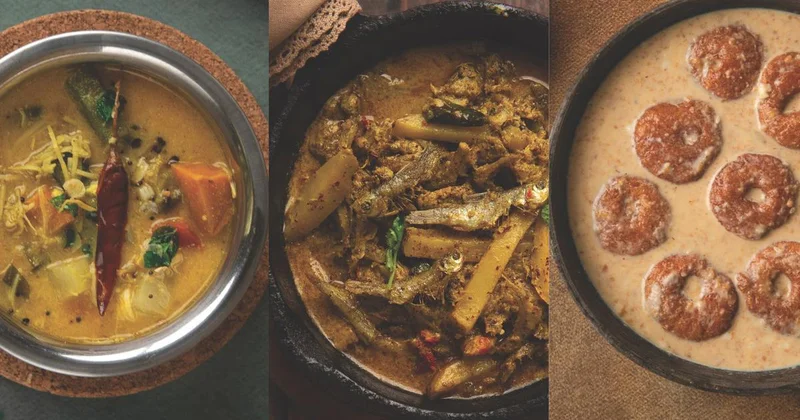
Ambila (sweet and sour vegetable stew)
During Nuakhai, the most important agrarian festival of Western Odisha, food becomes both an offering and a celebration – an expression of gratitude to the Earth for her bounty. Among the many dishes prepared during this festival, ambila made with bamboo shoots stands out for its unique flavour and deep-rooted cultural significance.
This version of ambila combines a medley of fresh, seasonal vegetables with tender bamboo shoots, whose earthy tang beautifully complements the dish's signature yoghurt-based broth. A final tempering of mustard seeds, dry red chillies, and garlic crackles into the pot, infusing it with warmth and aroma.
Preparation time: 10 minutes
Cooking time: 15 minutes
Serves: 4
Ingredients
1 cup pumpkin, peeled and cut into 2-inch cubes
2 okra, cut into 2-inch pieces
1 small brinjal (with stem), cut lengthwise into four pieces
1 small radish, sliced lengthwise
2 large tomatoes (sour variety preferable), cut into fours
1 cup sour yoghurt, whisked
3 cups water
1 tbsp bamboo shoot
1 tsp turmeric powder
3 tsp salt
1 tbsp chickpea flour
(For seasoning)
1 dry red chilli
1 sprig curry leaves
3–4 garlic cloves, crushed
1 tbsp mustard oil
1⁄4 tsp pancha phutana
Let’s cook
Begin the dish by sautéing the okra in oil for a minute to remove their sliminess. In a deep pan, heat mustard oil and temper with pancha phutana, dry red chilli, crushed garlic, and curry leaves. Once aromatic, add pumpkin, radish, and tomato chunks along with salt and turmeric. Pour in 1 cup of water and cook until the vegetables are half done. Add the brinjal, bamboo shoot, and the sautéed okra to the pan. Cover and let the vegetables cook gently.
Prepare the yoghurt mixture by whisking 2 cups of water with yoghurt and chickpea flour. Raise the flame to high and, while stirring quickly with a spatula, slowly pour in the whisked yoghurt. Keep stirring continuously to maintain the texture of the yoghurt and prevent it from splitting. Once it comes to a boil, let it simmer on a low flame for 5–10 minutes until all the vegetables are perfectly cooked. Remove the dish from heat and serve hot with rice.
Chuna machha chadchadi (small fish with potatoes in a spicy curry)
This delicious dish, my mother always says, is one of the easiest and yet the most comforting meals you can make. Fresh, small fish with tender potatoes, prepared with mustard oil and a handful of simple spices, truly embody the beauty of flavours coming together effortlessly. It's the kind of meal that warms both the body and the heart and is an authentic reflection of home and tradition.
Preparation time: 10 minutes
Cooking time: 15 minutes
Serves: 4
Ingredients
250 grams small fish, cleaned
1 large potato, cut into long pieces
1 small tomato, chopped
1 small piece of dried green mango (for a tangy kick)
8–10 cloves garlic, crushed
4 green chillies, slit
1 tsp turmeric powder
1 tsp mustard seeds, soaked
1⁄2 tsp cumin seeds, soaked
1⁄4 tsp pancha phutana
2 tbsp mustard oil
Salt to taste
A handful of coriander leaves, chopped
**Let’s cook **
Make a smooth paste of soaked mustard, cumin, and 2 green chillies.
Coat the fish with turmeric and salt, then fry in oil, while ensuring the fish stay intact. In the same pan, heat mustard oil. Once hot, add pancha phutana, letting them crackle to release their aroma.
Stir in crushed garlic to enhance the flavours. Toss in potato slices, seasoning with turmeric and salt, and let them cook for about 5–6 minutes. Add green chillies, chopped tomatoes, and dry mango for tanginess along with mustard paste with water. Once the gravy comes to a boil, carefully add the small fish, mixing gently so they absorb the spices and oil. Reduce the heat, cover, and cook for 10–15 minutes, stirring gently to prevent the fish from breaking.
Once the potatoes are tender and the fish is cooked through, garnish with fresh coriander for a vibrant finish.
Serve with steamed rice for a simple yet heartwarming meal filled with tradition and flavour.
Rasabali (deep-fried cottage cheese in condensed milk)
The rasabali is renowned for its significance in festivals, rituals, and temple offerings as prasad (sacred food), particularly at the Baladevjew Temple at Kendrapara. It is one of the oldest and cherished temple sweets. The name “rasabali” beautifully captures its essence – derived from “rasa” meaning syrup, and “bali” referring to flattened dumpling patties, which are soft in the insides with faint crispiness on the edges. This sweet treat combines cardamom-infused fried dough with the richness of milk and syrup, creating a dish that is both aromatic and irresistible. It is velvety and mouth-watering as the creamy milk syrup seeps into every pore of the dumplings. Its roots in temple rituals and its universal appeal make rasabali a true embodiment of culinary artistry.
Preparation time: 20–25 minutes
Cooking time: 45–50 minutes (including milk reduction)
Serves: 6–8
Ingredients
500 grams fresh cottage cheese
1⁄4 cup refined flour
1 tsp cardamom powder
61⁄2 cups milk
Ghee or oil
11⁄2 cups sugar
Let’s cook
Start by crumbling the cottage cheese in a large bowl using your fingers until smooth. This will require a few minutes of gentle massaging. Add 1⁄4 tsp of cardamom powder and refined flour to the chhena. Knead the mixture for 8–10 minutes until it becomes soft and releases a slight amount of oil, ensuring the dough feels firm yet pliable. Divide the dough into 15–16 equal portions. Grease your palms with ghee to prevent sticking and roll each portion into a ball. Flatten the balls gently into round discs and set them aside.
Heat a combination of ghee and oil in a deep pan to a moderate temperature. Test the heat by dropping a small piece of dough into the oil – it should sizzle gently and rise without burning. Fry the rasabalis, one or two at a time, turning them carefully until golden and crisp. Drain excess oil by placing them on a kitchen towel.
In another pan, simmer milk over medium heat until reduced by two-thirds of its volume, which should take around 25–30 minutes. Sweeten the reduced milk with sugar, stirring well until completely dissolved. Add the fried rasabalis to the warm milk and let them soak for 4–5 hours, allowing them to absorb the syrup and soften to a luscious consistency. This exquisite Odia dessert offers a harmonious blend of textures and flavours, perfect for festivals or indulgent occasions. Rasabali is best enjoyed chilled or at room temperature.
**Chef’s tip **
Always opt for fresh, homemade cottage cheese to achieve the desired soft and luscious texture. Store-bought paneer may fall short of replicating this quality. When reducing the milk, focus on achieving the perfect consistency – thick yet pourable – to allow the rasabalis to absorb the syrup seamlessly. For a healthier twist or a touch of tradition, consider reducing the sugar in the milk or substituting it with jaggery. The subtle earthiness of jaggery enhances the flavour beautifully.
Excerpted with permission from The Orissan: 2500 Years of Ancient Heritage and Culinary Tradition Passed Down Generations from Temples to Homes, Sandip Das, Alka Jena, Pallavi Das, Penguin Enterprise.
We welcome your comments at letters@scroll.in.