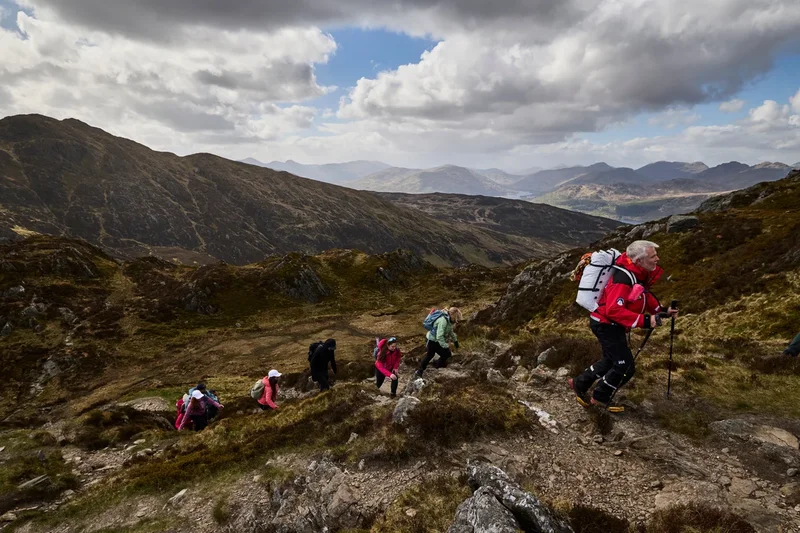
“My Heart’s in the Highlands,” stated acclaimed poet Robert Burns in 1789, as he lauded the vast mountainous region where he spent so much of his time.
Labelling it the “birth-place of Valour, the country of Worth”, the Scottish national poet’s sentiment appears to be shared widely more than two centuries later, with its vast expanse drawing locals and tourists alike.
In 2024, there were a total of 1.79 million overnight tourism visits to the Highlands and a total overnight tourism spend of £756m.
For those looking for outdoor activity, there is no short supply. But with adventure comes risks, with uneven terrain, slippery rock or grass and muddy or loose paths creating hazards across the mountainside.
Read more: I explored some of Scotland’s beautiful islands on a 12 person boat
Alongside those people out enjoying the mountains, you will also find teams ready to assist anyone who gets into trouble.
“It’s my escape,” says Sarah McLean, a mother-of-two and ambulance technician, who spends her free time volunteering as part of a rescue team in the Scottish Highlands.
She is a member of Assynt Mountain Rescue Team (MRT), a 40-strong crew that put their own lives on the line to rescue those in need, regardless of the weather, location or time of day.
The team collectively volunteer about 8,500 hours every year, on top of their day jobs and family life. Between 40 people, that’s a thousand working days, with every hour spent working to keep people safe in the mountains.
And the workload shows no signs of slowing down.
Mountain rescue callouts are on the rise. According to data from Sport England, there’s been a particular spike in recent years, with the number of people regularly climbing a hill or mountain rising from 2.8million people in 2018 to 3.6million in 2024.
“It’s basically a full-time job,” team leader Ben Dyson tells me as we descend Ben Vane, a 2,393ft mountain located in the Trossachs, in the southern Highlands. We’re more than a hundred miles away from their normal backdrop of the most northernly tip of the Scottish Highlands.
We’re here with Helly Hansen, whose clothing the volunteers sport while working in the mountains.
Read more: I hike in extreme heat – this is how I stay safe
There has been a particular increase in young people venturing out into the mountains, with social media posts showing off “honeypot locations” being cited as a reason for the surge.
In 2025, there were over 400 incidents involving 18 to 24-year-olds across England and Wales, more than double the 166 recorded in 2019. Similarly in Scotland, 106 rescues were conducted for the same age range, up from 50 incidents recorded in 2019.
The team also cited Covid as a factor in the uptick in inexperienced venturing into the mountains, as they look for adventure just a train ride away.
While many of the callouts result in the team guiding lost travellers, some underprepared and underdressed, down the mountainside, not every call ends in a happy ending.
“ I mean, bad s*** happens,” says Ben, stressing how important it was to have a support system in place to be there on the days when the rescue isn’t a success.
Read more: I retraced my grandma’s footsteps hiking on Ben Nevis
Despite the rise in call-outs, the team still wants people to take that plunge into adventure if they see fit, though preparation and practice is key.
If people get into difficulty in the mountains, they need to call 999 and ask for police and then mountain rescue.
But the call-out itself is just the “sexy part” which makes up only one fraction of their lives as volunteers, says Ben, as he detailed the level of training, time and organisation required to ensure every rescue attempt is carried out the best it can be.
“Without the skills and the knowledge, none of it really matters,” Ben adds.
Ben explains that the number of volunteer hours required to keep up with the training and team admin, let alone just call-outs, means that family time and work commitments are often put on the back burner.
“It’s crucial that family members and employers are supportive of our volunteers' involvement,” he stresses.
Missed birthdays, cancelled appointments, skipped dinners – it’s all part and parcel of life as a volunteer in the vast and sparsely populated stretch of land, spanning approximately 10,000 square miles.
It’s tireless; it’s relentless; it’s at times unforgiving. So, why do they do it?
“ I love being a very small speck in a very large landscape. I think it's just amazing how that feels,” Sarah explains, adding that the rush of helping others is fuelled even further by the love of her surroundings.
In an unforgiving landscape that can inspire awe one moment and fear the next, the volunteers remain a constant – ready to drop their own lives in a second to bring someone home.
Let’s just hope you don’t have to meet them.
Holly’s trip was supported by Helly Hansen.