The Cheap Drone Problem: The Infrastructure Bill Latin America Hasn’t Costed Yet
Analysis · Security
Europe is building a counter-drone playbook. Latin America’s ports, mines, and airports face the same threat, and the bill is coming due.
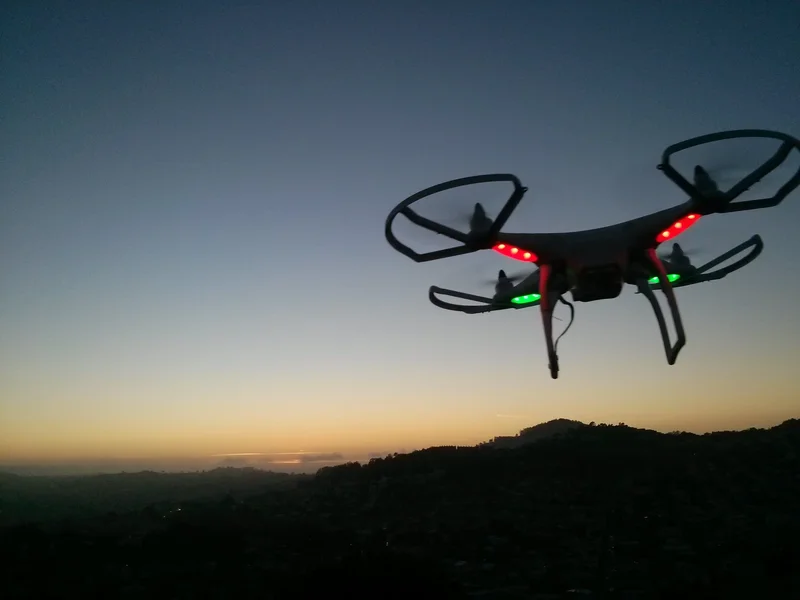
The Cheap Drone Problem is about to hit Latin America’s budgets. A device found on a drone at Leipzig/Halle Airport in Germany forced a bomb-disposal robot to defuse it.
German police logged over 1,000 suspicious drone flights last year, and Europe is now building a permanent counter-drone unit. That same defense template is already being sold to airports, ports, and mines across the region.
Cheap Drone Problem: One Drone, One Robot, and a Wake-Up Call
On August 5, 2026, a drone carrying an explosive device was found at Leipzig/Halle Airport, a major cargo hub. Federal police used a bomb-disposal robot to remove the detonator, reported The Guardian and DW.
This was not a movie plot—it was a real security breach at a critical logistics node. For Latin American operators, the lesson is simple: vulnerable sites are not only in Europe.
The drone had landed in a grassy area near the runway. And the police robot carefully extracted the detonator before removing the device.
The airport resumed operations after a brief shutdown, but the event sent ripples through security circles. Cargo hubs like Leipzig/Halle handle thousands of packages daily, making them attractive targets.
A similar incident at a hub like Panama City or Santos would force a total operational standstill.
The European Escalation That Started Last Year
German authorities recorded more than 1,000 suspicious drone flights in 2025, according to the Rio Times Europe Brief. Frankfurt Airport alone saw 45 sightings in eleven months, compared to 17 the previous year—a rise of about 165%.
These numbers show a pattern, not a one-off incident. Drones are becoming a routine nuisance and a serious threat.
The sightings were concentrated around airports, military bases, and critical industrial sites. Many of these flights occurred at night, making interception harder for police.
Some drones were equipped with cameras, while others carried packages or unknown payloads. The Rio Times Europe Brief noted that this uptick correlates with the low cost and easy availability of consumer drones.
Berlin’s Answer: A 130-Officer Drone Defence Unit
In response, Germany’s federal police have created a dedicated drone defence unit with around 130 officers. Equipped with jamming systems and interceptor drones.
This is a permanent posture shift, from reacting to incidents to actively safeguarding airspace. The unit is based in Berlin and serves as a template for other nations.
For Latin America, this is the model to watch—not just for airports but for all critical infrastructure. Their equipment includes radio-frequency jammers, detection radars, and purpose-built interceptor drones that can physically capture rogue units.
German officials have said the unit will grow as threat levels evolve. This command structure is precisely what Latin American nations lack at the federal level, and building one will take time and money.
The unit also focuses on legal coordination, working with prosecutors to charge offenders under aviation law. This dual approach—technical defense and legal deterrence—is missing in most of Latin America.
Until that framework exists, criminals will face little consequence for flying over secure zones.
Why Latin America’s Ports and Mines Are Sitting Ducks
Latin America’s container ports, oil refineries, and open-pit mines share the same vulnerabilities as Leipzig/Halle: large perimeters, high-value assets, and open terrain. A drone can fly in undetected, disrupting operations for hours.
The market research confirms that Brazil, Mexico, and Argentina are key geographies for airport security robotics. But no major regional airport or port has announced a comprehensive counter-drone programme yet—that silence is the real story.
Ports like Santos in Brazil and Manzanillo in Mexico handle roughly 20% of the region’s trade but have minimal drone detection. An attacker could use a drone to drop a small incendiary device onto a fuel depot, causing a chain reaction.
Mines in Chile and Peru, often located in remote deserts, are even more exposed. The vulnerability extends to oil refineries along the Caribbean coast and hydroelectric dams in Brazil.
These sites have vast perimeters that are nearly impossible to patrol on foot. Security guards typically rely on binoculars and patrol dogs, which are ineffective against small, fast drones.
The technology to counter them is proven but rarely installed in these environments.
The Procurement Cycle Is Opening Now
Europe is already spending. Aéroports de Lyon has deployed Ascento Guard robots in car parks.
And LaGuardia Terminal B launched an autonomous robotics pilot on July 28, 2026. These are early adopters, but the market reports show active demand for screening and patrol automation across the globe.
For Latin American operators, the message is clear: the vendors are ready, and the technology is proven. The question is who will be first to buy.
Beyond airports, ports in Rotterdam and Singapore have integrated drone detection into their port management systems. They use radar to distinguish between birds, aircraft, and drones, reducing false alarms.
This technology is modular and can be scaled to smaller facilities. Latin American ports could adopt the same systems.
But they must also integrate them with existing Vessel Traffic Service (VTS) systems, which many ports still lack. Mining operations in Australia and Africa have already deployed counter-drone systems to protect haul trucks and crushers.
These systems often combine thermal cameras with RF sensors to detect drones at over two kilometers. The cost per site is modest compared to the potential losses from a disrupted operation.
For a copper mine in Chile. The return on investment would be immediate if it prevents just a few hours of downtime per year.
Who Wins When the Bill Comes Due
The big winners will be established security-tech firms like Smiths Detection, OSI Systems, Leidos, and Teledyne, according to market analysis. They already supply screening equipment to airports worldwide, and they are adding drone detection and interception to their portfolios.
Latin American buyers will likely bundle counter-drone systems with broader security upgrades, not as a standalone line item. That means the capex will be hidden inside larger contracts—but it will still be paid.
For example, Smiths Detection already has service contracts in over 20 Latin American airports. Extending those contracts to include drone detection is a natural upsell for the vendor.
This bundled approach reduces procurement complexity for the buyer while increasing the vendor’s revenue per client. Smaller regional firms will also benefit by providing installation, training, and maintenance services.
Utility companies, especially those managing power grids, are also potential buyers. A drone flown near a high-voltage substation can cause a blackout, and the cost of restoring power is enormous.
Utilities in Brazil and Mexico are exploring counter-drone options but face budget constraints. Government funding, either through national security budgets or infrastructure grants, will be critical.
The FCC’s 2026 Robot Ban and What It Means for Your Supply Chain
On July 28, 2026, the U.S. FCC added advanced robotic devices made by foreign adversaries to its Covered List. As reported by Reuters.
This is not a Latin America rule, but it will shape procurement decisions. If you are an airport manager in São Paulo, you will likely avoid Chinese-made security robots to stay compatible with U.S. partners.
That leaves room for European and North American vendors to dominate the region’s market. The FCC’s decision specifically affects robots that include advanced communication modules, which many security robots use.
U.S. partners may require compliance with this rule as a condition of their cooperation, especially for joint ventures. This effectively bans certain Chinese robotic systems from major Latin American infrastructure projects.
The immediate winners are firms like Ascento and Knightscope, which focus on security patrol robots. However, Latin American nations must also consider their own connectivity and integration with global supply chains.
If a port buys a Chinese drone detection radar, will it be able to integrate it with a U.S.-made command center. The FCC rule pushes the region toward a NATO-compatible standard, but this also brings higher equipment costs.
Local manufacturers may have a chance to fill the gap, but they need technology transfer agreements. It is a delicate dance for countries like Colombia, which have close U.S. ties but also trade broadly with China.
The procurement decisions made next year will lock in a technology ecosystem for decades. A false step now could mean being out of sync with all major international partners later.
The Real Cost: Not Just the Gadgets, But the Team
Germany’s 130-officer unit shows that hardware alone is not enough. You need trained personnel, 24/7 monitoring, and response protocols.
For a single port, the upfront cost of detection systems and jammers might be US$2 million. But the annual operating cost could double that.
That’s the bill Latin America hasn’t costed yet. It will show up in security budgets within three years, driven by insurance and national regulators.
Personnel costs are the hidden multiplier. Add in supervisors, maintenance staff, and legal advisors, and the team’s cost balloons quickly.
Training is also vital—a misidentified drone could lead to a shutdown, causing cargo delays and contract penalties. Insurance companies are beginning to ask about drone defense in their coverage for critical infrastructure.
If a port has no counter-drone system, its insurance premium could rise by 5-10%. A significant cost for an operation with thin margins.
Last year, Lloyd’s of London introduced specific clauses for drone-related business interruption. These clauses are already being introduced in Latin American policies, though they are not yet common.
The cost of not acting is also visible. In Mexico, a drone scare near a PEMEX refinery caused a 30-minute shutdown, leading to a minor fuel shortage in Monterrey.
That incident was never officially called a terrorist attack, but it showed the operational fragility. Paying for a system is often cheaper than the reputation damage and regulatory fines after an incident.
Your Next Move: Start the Audit Now
Begin with a simple gap analysis of your own facility. It costs little to assess your drone risk.
But it saves millions if you discover a hole before a drone finds it first. For airports, ports, and mines, the question is not if but when.
The Cheap Drone Problem is here, and it’s not going away. Hire a drone security consultant to walk the perimeter and identify vulnerable points.
This audit should take less than a month and will produce a prioritized list of improvements. The next step is to define a procurement plan, including the vendor shortlist and budget line items.
Don’t wait for a parliamentary inquiry or an insurance claim to force your hand. Public-private cooperation is also key to a successful defense.
Ports and airports can share data on drone sightings with national security agencies, building a regional map of threats. This is already happening in Europe, where airports in Germany and France exchange information on drone incidents.
The same networks are emerging in Latin America, but they need leadership to grow.
Frequently Asked Questions
What exactly happened at Leipzig/Halle Airport?
On August 5, 2026, a drone carrying an explosive device was found on the tarmac. A police robot defused the bomb, and flights were disrupted.
How many suspicious drone flights does Germany see in a year?
German police recorded more than 1,000 suspicious drone flights in 2025, with many around airports and military sites. Frankfurt alone saw 45 sightings in eleven months, up from 17 the year before.
Is Latin America already preparing counter-drone defenses?
Not publicly. Market reports show Brazil, Mexico, and Argentina are key consumers of airport security technology, but no major counter-drone programme has been announced.
What does a basic counter-drone system cost?
Expect roughly US$1.5 million to US$3 million for detection and jamming systems at a medium-sized airport.
Which companies supply counter-drone technology?
Main vendors include Smiths Detection, Leidos, Teledyne, OSI Systems, and Nuctech. For robotics, firms like Knightscope, Ascento, and Robotnik are active in patrol applications.
This article was produced by The Rio Times’ automated newsroom system. How we use AI · Report an error