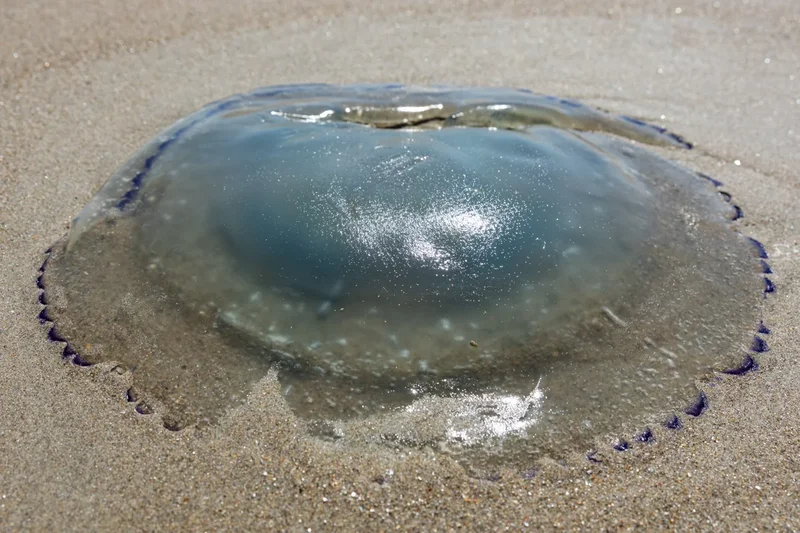
A swarm of jellyfish forced a shutdown of nuclear reactors at western Europe’s largest nuclear power station after clogging the pumps.
The Gravelines plant in northern France was left with only one of its six reactors operating at full capacity after the marine life disrupting cooling units on Monday, EDF said.
Images from the scene show groups of bright blue jellyfish in the waters around the plant, which then appear to have been sucked in to the pumps.
EDF said that around 100kg of jellyfish arrived on Saturday increasing to an influx of “several tens of tons” by Monday.
Three of the six 900-megawatt reactors were taken offline completely, while a fourth had its output slashed by half. Another was taken offline for maintenance, leaving only one functioning.
This time last year exactly the same thing happened, when the power station was overwhelmed by jellyfish, leaving operations at the facility disrupted for two days.
“This situation has no impact on the safety of the facilities, the safety of our personnel, or the environment,” EDF said in a statement on the latest event.
“On-site teams are fully mobilised to ensure the safety of the facilities and to reconnect the reactors to the national power grid.”
Fishing vessels are now taking part in “preventive fishing operations” on a 24 hour basis with three fishing boats “constantly patrolling off the coast of the plant”.
The operations involve the jellyfish being caught by trawlers and then released offshore. Teams have also increased the frequency of cleaning the equipment at the pumping stations, according to EDF.
The precise species of jellyfish has not been confirmed.
EDF had attempted to preempt an attack following last year’s incident by installing cameras and having fishing boats patrol the area.
Last year, four reactors were shut down temporarily after a swarm of the creatures swam into the cooling system. The shutdown was automatic and delays were forecast for days after the event.
It comes as French and Spanish beachgoers were warned this week, over sightings of a jelly-fish like creature with a sting that can cause painful skin burns.
The Portuguese man o’ war (Physalia physalis) is not a jellyfish despite its uncanny similarity to the marine animal but in fact a “colonial hydrozoan” made up of smaller creatures called zooids that each have their own function such as feeding or breeding and are unable to survive alone.
They are described as “large translucent purple float, the crest tipped with pink and long blueish-violet tentacles” by the UK’s Wildlife Trusts.
Experts say that rising sea temperatures are creating favourable conditions for jellyfish making swarms along the coast increasingly common.