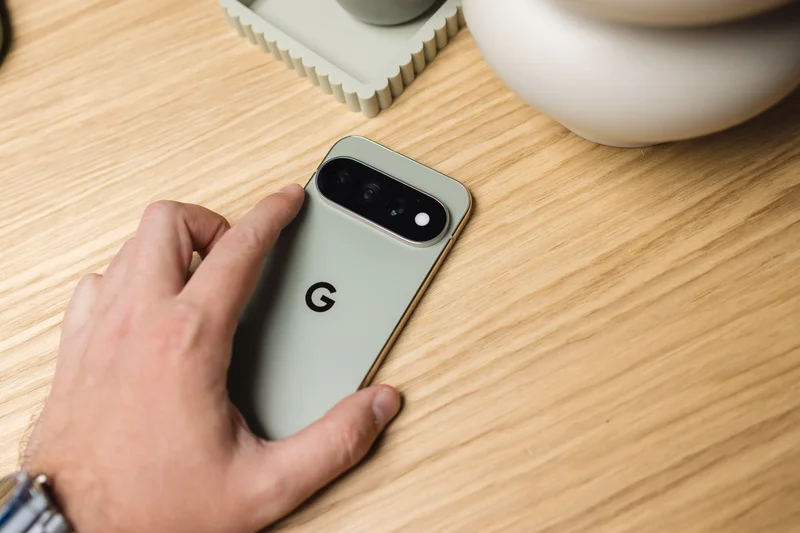
The Pixel 11 Pro is Google’s latest flagship phone, and I got to take it on a photo walk through the colorful streets of mid-summer Paris. Très charmant! Alongside a suite of upgrades like its Tensor G6 processor and delightful new peachy color, there are a bunch of camera updates. And, as a photographer myself, I was keen to see what was up.
So it might seem that most of the camera hardware is the same. It’s the usual trio of wide, ultrawide and telephoto lenses all at the same resolutions as last year’s model. But Google says that the main image sensor is new and generally offers better quality. And the telephoto sensor is physically larger.
But honestly, one of my favorite new features is called Camera Looks, and it’s all about the software. Similar to Apple’s Photographic Styles, Camera Looks change the colors and exposure in your images to give them a more creative look than just taking clinically accurate photos.
I really like the looks, and I actually had them applied to the camera pretty much my whole day. You can also customize each look further, adding some warmth or adjusting the depth of shadows and even adding grain. Typically, I really like the grainy look you get from authentic analog film — it’s why I recently spent a fortune on a Leica M6 film camera — but I’ve gotta say, I don’t love the grain effect that the Pixel 11 Pro applies.
It looks very digital and not especially realistic. I shot all my photos in JPEG and in RAW, which bypasses Google’s processing, allowing me to do my own edits instead.
I’ve done this with a few shots, actually, as sometimes the Camera Looks can be a bit…much. The Black Tie effect is a very high-key black-and-white style that won’t suit every scene, but did play an absolute blinder when I got the phone low for this shot of this person carrying a plant.
And I liked it for this portrait mode shot with the 5x telephoto lens.
Though I definitely prefer the ones we did in color using the Editorial Camera Look.
But generally, it was the “Vanilla” Look that I stuck with for most of the day.
A new feature for the phones is Magic Capture, which shoots a few seconds of video and uses AI to identify the still frame that best captures the moment, then saves that one for you.
I put it to use with a couple of skaters I found, and it was surprisingly effective. All I had to do was just film the action and not worry about capturing the best moment — the phone would do that for me.
I think the phone definitely highlighted the best shots for me, and while it kind of takes the skill out of nailing that decisive moment, that’s kind of the point. It’s not really for pro action photographers who know exactly when to hit the shutter; it’s more for parents who want to capture an awesome moment of their kid on their bike but don’t want to try again and again to get the shot they want.
I do like the look that I created on the phone here. It’s definitely got that feel of a summer day, but I do think the sky has been blown out, arguably, a bit too much.
But again, I shot in raw too, so a few tweaks in Lightroom and I discovered that the phone definitely had captured a lot more dynamic range than the JPEG suggested, giving me much more scope to edit the image how I wanted.
But otherwise, most of my images were straight out of the Pixel’s camera.
The 5x telephoto lens has been tweaked to let you focus closer, turning it into something of a macro lens. I put it to use on this shot of a padlock, and I love the shallow depth of field it produced.
But if you want to take things further, that zoom can now reach 120x magnification. That’s basically at the level of an actual telescope, though there’s an important thing to keep in mind. Once you go beyond 30x zoom, the phone uses generative AI to artificially recreate the details in your images, which is good or bad, depending on your perspective.
I shot this image of the French flag on a building that was so far away I could barely even see it. The results speak for themselves. The raw version of that shot (left) is basically just a handful of pixels, yet the AI has reconstructed it (right) with all kinds of new details.
But the problem for me is that those details aren’t real. Or at least, they might not be real. The camera is essentially seeing what’s in front of it and rebuilding that scene almost entirely using generative AI, meaning that what you’re seeing in the finished image is really more of an interpretation of what you saw.
But it’s up to you as to whether that matters. As a photographer, I don’t want generative AI anywhere near my images. I want to know that what I’ve captured in an image is actually what I saw, not simply an algorithm’s interpretation. You’ll have to draw your own ethical lines with tools like this.
Anyway, the afternoon rolled on, and I continued my walk with the phone, trying to indulge in some street-style photography along the way until I eventually came to an iconic spot overlooking the Eiffel Tower. I switched lenses and styles here, shooting quickly to capture some of the moments as they unfolded before me.
I tried out what I think was the Editorial Camera Look (though it might have been called something else), and I think it goes a bit hard on the teal sky in some of these, though I do like how it looks sometimes.
It’s too early for me to give a real verdict on the cameras on the new Pixels. You’ll need to wait for my full review and for me to put them up against rivals like the iPhone 17 Pro or Galaxy S26 Ultra.
But I do really like a lot of the photos I took on this little photo walk. The overall image quality is solid, and while I’m somewhat morally opposed to the generative AI in the 120x zoom, I do think tools like Magic Capture can be genuinely helpful. I’m thrilled to see more creative shooting options with the Camera Looks tool.
I also want to spend more time using it and do a better job of it myself — it’s really handy that the style settings you apply will remain. However, it also means that the heavy-handed grain I chose earlier in the day was still active in images I took later, and it’s…not great.
But we must all learn from our mistakes, even though experience has taught me that I never learn a damn thing.