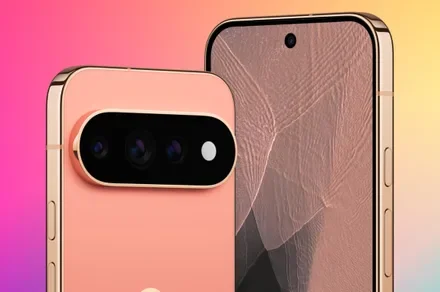
For the last two generations, I’ve complained that the Pixel’s video performance trails behind what’s available under other brands. Google has finally agreed.
The Pixel 11 lineup landed today with its biggest video overhaul in years. However, not every upgrade made it to every model in the family.
So, what’s the biggest video upgrade here?
To kick things off, let’s discuss the bump in video resolution. The Pixel 11 Pro and Pro XL can now shoot 8K at 24 or 30fps. The feature is powered by Video Boost, the same cloud-assisted pipeline that’s stayed a Pro-only perk since the Pixel 8 Pro.
The base Pixel 11 sits this one out; it still tops out at 4K, alongside 1080p, both running up to 60fps across every rear lens. Stabilization gets a matching as well, called Pro Stable Video. It’s yet another Pro and Pro XL exclusive, and layers OIS, EIS, and Fused stabilization together for genuinely tripod-smooth 8K clips.
Everyone in the lineup, though, now gets 20x Super Res Zoom Video, which could come in handy for shooting a stage or a soccer match from the cheap seats. In my opinion, it’s a welcome trickle-down, especially since the base model carries a telephoto lens too.
What else is new with Pixel 11?
On the software side, a new Creator Tab bundles trimming, clip reordering, and automatic project albums into what Google calls Creator Suite. Then there’s a built-in Teleprompter for creators trying to read from a well-thought-out script.
Magic Capture grabs a photo and a video from one shutter press, then auto-crops and sharpens the still, while Live Translate works on video playback too, not just phone calls.
Audio gets real attention as well. Speech Enhancement and Audio Magic Eraser clean up dialogue, while features like stereo recording, wind reduction, and Audio Zoom help anyone filming outdoors.
Every camera also supports 10-bit HDR, with dual exposure specifically on the wide lens. Moreover, the Pixel 11 series is now a much better smartphone for recording videos, vlogs, handheld documentaries, or recording memories.