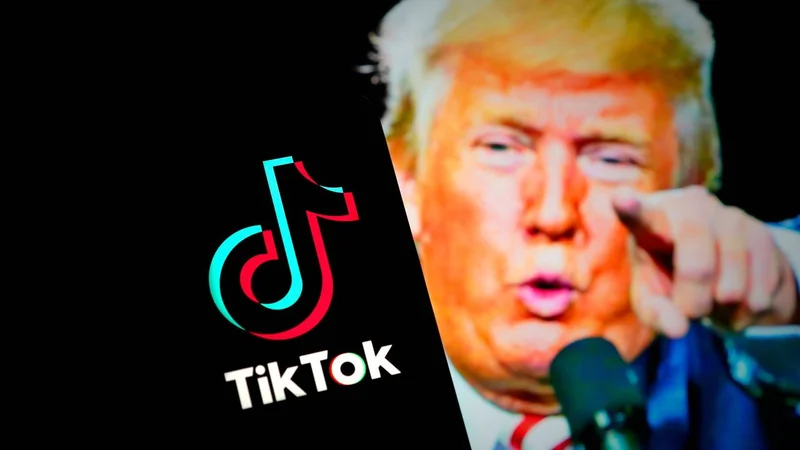
- The Trump administration has lifted the TikTok ban for federal devices
- The app was banned from being installed by government employees in 2022
- TikTok in America is now majority owned by a US company, with ByteDance still holding around a 20% share
The Trump administration has lifted a ban on government employees having TikTok on their mobile devices.
The law was introduced in 2022 when TikTok was deemed to be a national security threat because of potential ties between TikTok’s parent company ByteDance, and the Chinese government.
A memo released by the Office of Management and Budget (OMB) states, “TikTok may be used on government devices.”
Government to go back to doomscrolling
The details as to why the government banned the app in the first place have not been fully disclosed. Discussions within the senate centered around data collection and Chinese government influence over the app’s algorithm.
TikTok briefly went offline in the US in 2025 as the Trump administration forced ByteDance to sell the app to American owners or have the app be permanently blacklisted in the US.
The two settled on having an American version of the app for American audiences controlled by TikTok USDS Joint Venture.
The Department of Transportation, Treasury Department, and Health and Human Services have all since created official accounts on the app and have begun posting. The White House also has an official account which mainly posts hype edits of the President.
Via Engadget
Benedict is a Senior Security Writer at TechRadar Pro, where he has specialized in covering the intersection of geopolitics, cyber-warfare, and business security.
Benedict provides detailed analysis on state-sponsored threat actors, APT groups, and the protection of critical national infrastructure, with his reporting bridging the gap between technical threat intelligence and B2B security strategy.
Benedict holds an MA (Distinction) in Security, Intelligence, and Diplomacy from the University of Buckingham Centre for Security and Intelligence Studies (BUCSIS), with his specialization providing him with a robust academic framework for deconstructing complex international conflicts and intelligence operations, and the ability to translate intricate security data into actionable insights.