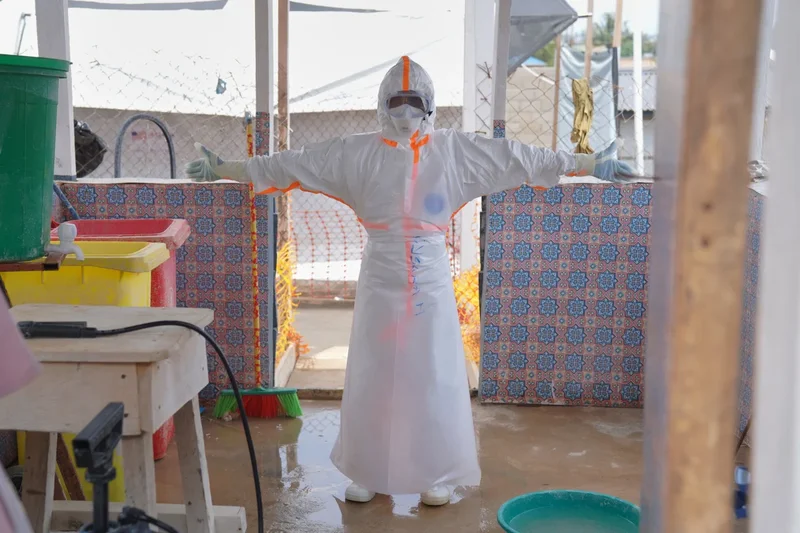
The active Ebola outbreak in Congo is projected to surpass the deadliest on record, which killed more than 11,000 people among over 28,000 cases, the head of the World Health Organization stated Wednesday.
Tedros Adhanom Ghebreyesus informed reporters: "At its current pace, it's on track to eclipse the West African Ebola outbreak of 2014 to 2016."
Considered history's fastest-expanding outbreak, the crisis in eastern Congo has now claimed over 2,000 lives across more than 4,300 documented cases.
The rare Bundibugyo virus responsible for this current outbreak has no approved vaccines or treatments.
More than two-thirds of Ebola deaths are happening in the community rather than in treatment centers.
The 2014 to 2016 outbreak was caused by the Zaire strain of the virus.
While officially declared on May 15, the outbreak actually began in February, the WHO reported. As a result, the virus remains “ahead of us,” a WHO official said during a press briefing.
The first 1,000 deaths were recorded over nine weeks, but the second thousand only took three weeks.
Early cases were wrongly attributed to malaria, typhoid or a more common type of Ebola.
Aid agencies have warned that fear of infection and misinformation have also kept people away from seeking care, while the outbreak has disrupted essential healthcare services like routine vaccination and childbirth.
“One doctor told our team that before the current outbreak, his facility saw an average of 500 patients a month but that has dropped to almost nothing,” said John Agbor, Unicef’s representative in the DRC.
This event differs from previous outbreaks because the rare Bundibugyo virus driving it currently lacks any approved vaccines or clinical treatments.
Specialists report the disease is outstripping response efforts in an isolated region of eastern Congo plagued by conflict, near borders with South Sudan, Uganda, and Rwanda. Consequently, a majority of fresh cases and fatalities are emerging in remote communities beyond the reach of health responders.
Response efforts have also been hampered by abrupt cuts to international aid, which have heavily impacted health programmes in already vulnerable countries like the DRC and disease monitoring.
The US Agency for International Development (USAID) was dismantled in July 2025.