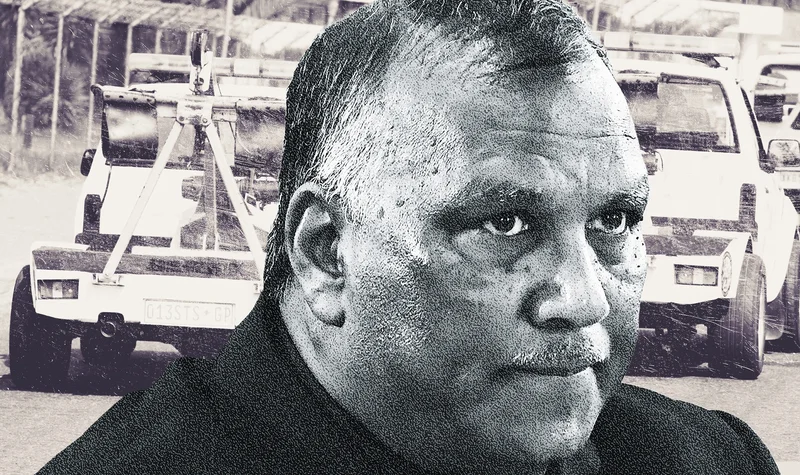
They cover their faces, prey on their targets between 11pm and 3am and ensure all witnesses to their actions are killed â this, a police watchdog boss has alleged, is how rogue police officers in KwaZulu-Natal carry out extrajudicial killings.
Len John, the deputy director for investigations with the Independent Police Investigative Directorate (Ipid) in that province, testified at the Madlanga Commission of Inquiry on Wednesday, 12 August 2026.
It was his first time in the witness stand.
During his testimony, John appeared calm and, at times, adamant, occasionally pausing as he deliberated on how to explain certain matters when evidence leaders pressed him for more details.
He was asked several questions, especially about how he came to certain conclusions about police activity.
The Idac threadAhead of Ipid official Len John taking the witness stand, the Madlanga Commission, which is investigating accusations that a cartel has infiltrated the criminal justice sector, was focused on the Investigative Directorate Against Corruption (Idac). The Idac evidence thread was among those that reverberated the most because it resulted in the resignation of the directorateâs head, Andrea Johnson, as allegations of improper conduct against her and some of her colleagues mounted.
John referenced three task teams established to address cash-in-transit heists, illicit drugs and taxi industry issues.
These were under the command of South African Police Service (SAPS) officers Lieutenant Colonel Deendayalan (Deena) Govender, Colonel Mbongeni Khalishwayo and Captain Pedro Rodrigues.
âSurge in extrajudicial killingsâ â 149 deaths
During his testimony on Wednesday, John focused largely on the cash-in-transit team that Govender headed and which John believed criminals had infiltrated.
John explained that he had been told the Madlanga Commissionâs terms of reference did not extend to investigations into extrajudicial killings by police officers, referring to investigations into alleged police activities âin an environment where a task team of the SAPS is apparently able to escape accountability despite evidence of its repeated involvement in extrajudicial killings of alleged criminalsâ.
"They go out to kill." That was the testimony of Independent Police Investigative Directorate official Len Barnabas John, who told the Madlanga Commission that alleged rogue SAPS task teams operating in KwaZulu-Natal are using lethal force to eliminate suspects. John is⦠pic.twitter.com/VoQTdTQtvJ
— eNCA (@eNCA) August 12, 2026
He added: âThere is a heightened risk that criminal syndicates will seek corruptly to influence that task team to kill their rivals.
âThere is clear evidence that this risk has materialised in KwaZulu-Natal.â
John provided figures.
âSince 2023, there has been a surge in extrajudicial killings which Ipid has noted with great concern,â he said.
âBetween 1 April 2023 and 31 May 2026, Ipid investigated over 300 cases, of which 77 cases involve the death of 149 people as a result of police action by the task teams.â
âNo witnesses sparedâ
John testified that in most shootings involving cash-in-transit suspects, the task team under Govenderâs command was involved.
The cases also had âstrikingâ similarities.
John alleged a pattern existed:
- Task team members would say they received information from the policeâs Crime Intelligence unit about the location of cash-in-transit suspects;
- The information was generally not verified via investigations, case dockets or detectives leading probes;
- The commander planned operations based on the âinformation allegedly receivedâ;
- These operations usually happened between 11pm and 3am, which John pointed out was âa time when there is a reduced likelihood of witnesses being present to observe any wrongdoing by the members of SAPSâ;
- During most of these operations, officers were in civilian clothing with balaclavas or face masks with no SAPS insignia; however, they still identified themselves as police officers; and
- Members âinvaded the premises of the allegedâ cash-in-transit suspects and âallege that they come under fire from the suspects and they return fire in self-defenceâ.
John testified on Wednesday that in most cases involving alleged cash-in-transit suspects being killed by police officers, âall suspects and occupants present when the shooting takes place are killed by the task team, leaving no witnesses to the operation other than the members of the task team itselfâ.
He said that âno high-calibre rifles, explosives, components to manufacture explosives or moneyâ were found.
Instead, Ipid âusually finds only home-made firearms, pistols or revolvers which are pointed out by the police officers implicated in the shooting of the suspectsâ.
John added: âThe SAPS commander in charge of the task teams is frequently unable to provide the names or identities of the suspects who are killed.
âVery rarely are they able to provide the SAPS case numbers in which the suspects/deceased are allegedly implicated in [cash-in-transit] robberies, leaving a suspicion that the so-called suspects killed during these operations may not have been involved in any [cash-in-transit] robberies.â
This allegation suggests individuals were targeted and killed for reasons other than being cash-in-transit suspects.
Tow trucks, turf and drugs
Johnâs testimony on Wednesday expanded into the tow truck industry.
He explained that âcertain police officers at station levelâ were connected to tow truck operators.
âTow truck owners pay police officials for referrals of customers,â Johnâs statement, prepared for the Madlanga Commission, explained.
âWhen there is a collision, police officials contact the owners of tow truck companies who pay them so that these companies can get business from the collision.
âIn more sinister cases, owners of tow trucks who are using their trucks to transport drugs pay corrupt SAPS members to protect their tow trucks from being searched.â
Tow truck turf warsAccording to allegations that Ipid official Len John made at the Madlanga Commission, shootings linked to tow truck turf wars include the murders of Marlin Stuart and Jonathan Thomas of Durban South Towing and Panel Beaters. The date of this incident was not clear. Another murder was that of Kalvin Perisamy, a leader of the Blood Gang and an owner of taxis and tow trucks. He was shot on 6 June 2018 in a parking lot outside the Gateway Shopping Mall in an alleged hit by a rival gang.
Turf wars over routes had also broken out over the years.
âThere are numerous cases where these turf wars have resulted in violent crimes including murders and attempted murders,â John said.
âDeployed to killâ
John spent time detailing the circumstances around the killing of Bevan Loftus, a tow truck operator, who was one of five men fatally wounded in a shootout in 2023.
âThere is at least a prima facie case that, at the instance of Mr Clive Naicker, the alleged leader of a drug and tow trucking gang, Lt Col Deena Govender deployed the task team to kill Mr Bevan Loftus, who was the alleged leader of a rival drug and tow trucking gang,â John testified.
John alleged that the day before Loftus was killed, his father, Gregory Loftus, a former police officer (who may still testify at the Madlanga Commission), applied to the high court to interdict âDeena Govender and the SAPS from killing Bevan Loftusâ.
âIn his founding affidavit in the interdict application, he alleged that Mr Clive Naicker had promised to pay Lt Col Deena Govender R2.5-million to kill Bevan Loftus,â John testified on Wednesday.
He said that âat the relevant timeâ, Govenderâs monthly take-home remuneration from SAPS was less than R26,000.
But John also explained that over a period extending from 2022 to 2023, Govender and his wife received more than R2.4-million.
They did not necessarily receive it directly, as some, for example, was allegedly paid into a trust and a home loan account. DM
What next?More witnesses are expected to testify before the Madlanga Commission, which aims to wrap up its hearings by early October 2026. It will then complete a report on the hearings, which will be presented to President Cyril Ramaphosa.