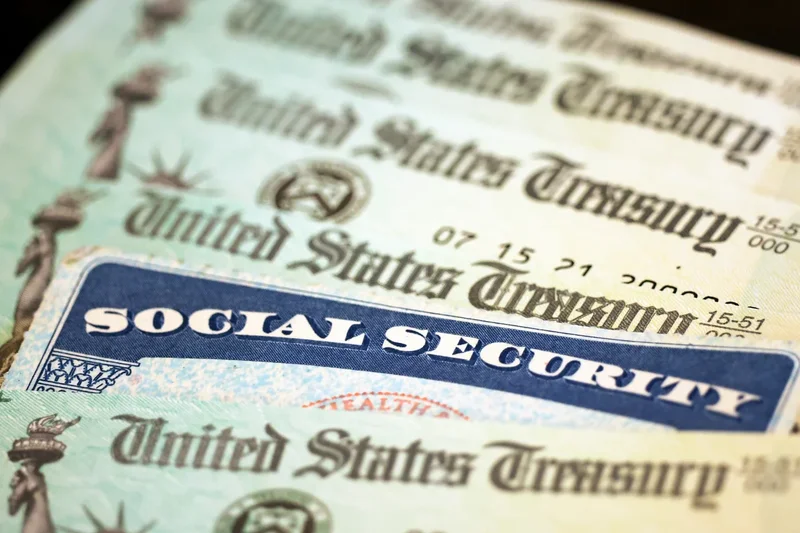
Seniors may see a smaller rise in their Social Security payments after the latest inflation report showed the annual cost of living slightly cooled.
The Consumer Price Index, which the government uses to track the cost of goods and services over time, saw inflation rise 3.4 percent in July from the previous year. While this is still significantly higher than the Federal Reserve’s 2 percent target rate, it’s slightly lower than the 3.5 percent annual inflation rate in June.
While lower inflation is a good sign for the economy, it also means seniors could see lower Social Security payments next year than previously predicted.
Social Security payments change each year to keep pace with inflation, a process known as cost-of-living adjustments (COLA). This year, Social Security benefits increased by 2.8 percent.
Next year, Social Security payments are predicted to increase by 3.6 percent, the Senior Citizens League advocacy group predicted Wednesday when the new Consumer Price Index report came out.
While a 3.6 percent increase is still significant, the advocacy group predicted in May and June that Social Security payments would go up by 3.8 percent amid higher inflation reports.
Even though the annual inflation rate ticked lower last month, Americans, especially seniors on fixed incomes, are struggling to afford everyday necessities like groceries and gas.
“Seniors don’t experience inflation as a percentage on a chart. They experience it at the grocery store, at the pharmacy, in their insurance premiums and when they pay the rent,” Shannon Benton, the executive director of the Senior Citizens League, said in a statement Wednesday.
“That’s why the size of the COLA matters, but so does how accurately it reflects their real-world expenses.”
The cost of food was up 3 percent, and energy prices increased by 14.7 percent in July from the year prior, according to the latest inflation report.
Oil prices skyrocketed during the Iran war that President Donald Trump launched alongside Israel at the end of February. While energy costs have decreased in recent months, they remain high for the year.
A new poll from Marquette Law School found that 35 percent of Americans cite inflation and the cost of living as their top concern. Marquette notes that this has been the most important issue for the public in each of its polls this year.
“Frankly, it’s infuriating that seniors must wait for a COLA to catch up with prices that have already driven up their grocery bills, housing costs, healthcare expenses and insurance premiums,” Benton noted.
“A higher COLA is welcome, but seniors shouldn’t have to lose purchasing power year after year before Washington acknowledges what they’re experiencing.”
If the Senior Citizens League’s COLA prediction took effect today, average Social Security payments would rise by nearly $70, from $1,937.53 to $2,007.28 a month.