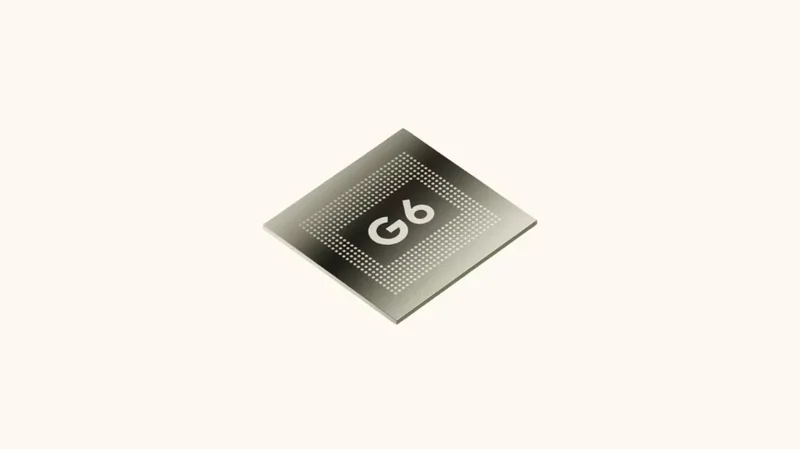
All four Pixel 11 models run Google’s Tensor G6 alongside a new Titan M3 security coprocessor that adopts NIST’s post-quantum cryptography standards, a first for a Google phone. The chip claims 25% faster browsing and 20% better power efficiency, with a TPU carrying 50% more compute.
Every Pixel 11 ships with Google’s new Tensor G6, but the more interesting silicon sits next to it. A new Titan M3 security coprocessor adopts the post-quantum cryptography standards set by the US National Institute of Standards and Technology. Google says the Pixel 11 is its first phone to meet them.
The chip handles quantum-safe secure boot and runs Trusty, Google’s trusted execution environment, across all four models. Google describes the protection as being against “emerging, highly advanced digital attacks,” and says Titan M3 holds Common Criteria certification at the level used for SIM and bank cards.
No quantum computer can break current encryption. The reason to ship this now is that data stolen today can be kept until one can, a problem the industry calls harvest now, decrypt later. TNW has written before about why this is an inevitable threat rather than a distant one.
Governments are pushing the timeline from the other direction. The White House has signed orders calling for a useful quantum computer by 2028, which puts a date on work that vendors had been treating as open-ended.
The performance side is more ordinary. Google claims the Tensor G6 delivers 25% faster browsing and 15% faster app loading than the Tensor G5, with up to 20% better power efficiency, the complaint that has dogged every previous Tensor.
Its TPU carries 50% more compute and higher memory bandwidth. That runs Gemini Nano on device, which Google says now executes background work up to 3.5 times faster while using 3.5 times less energy. The same silicon drives 120x Pro Zoom on the Pro models, 4K portrait video and an Instant Night Sight that captures up to 4.5 times faster.
Google has not published the manufacturing process or the core configuration. Benchmarks against Qualcomm and Apple silicon remain the weak point, and nothing announced suggests that changes this year.
Pricing did land. The Pixel 11 starts at $899, the Pro at $1,099, the Pro XL at $1,299 and the Pro Fold at $1,899, with the 128GB tier dropped, confirming the increase Google signalled in July as memory prices climbed.
Get the TNW newsletter
Get the most important tech news in your inbox each week.