Twenty years ago, in September 2006, I sat down to write my first column for this paper. I did not know then that I would still be writing it two decades later, or that this particular column would be my last. It seems fitting that my final subject is transition, because I find myself, at this moment, keenly aware that our lives are literally a series of big and small transitions. As Kim Kwang-seok’s famous song, “Thirtysomething,” says, “Every day is a farewell.”
This spring I did something I never thought I would do: I left a government job I had held for 19 years. It was stable, familiar, and safe in the way that only two decades of institutional memory can make a job feel. But it had also become a known quantity, and I wanted, before I got too old to want such things, to co-create, with other passionate and committed people, what I believe will improve everyone’s lives in critical ways. So, I took a position in the private sector, less secure, less predictable, but full of the kind of professional possibility I had not let myself imagine in years. That decision did not stay contained to my own career. It pulled our whole family across the country, from a townhouse in Alexandria, Virginia, to temporary housing in Silicon Valley, a place none of us had ever called home.
My son's transition arrived at almost the same moment as mine, though his was not a choice so much as a consequence. He had spent every year of his schooling, from kindergarten through eighth grade, at the same small private school, surrounded by the same handful of classmates who had watched him grow up. Now he is walking into a large public high school in an unfamiliar region, where nobody knows his name yet, and he has to build, from nothing, the social world that took him nine years to build the first time.
My wife's transition may be the largest of all, and the least visible. She left her own career as a social worker in Northern Virginia, not because she wanted to stop the work, but because someone had to take on the enormous, thankless task of relocating a family: finding a place to live, learning a new region's schools and pediatricians and grocery stores, making sure our son finds his footing, and doing the thousand invisible things that turn a house into a home. She is doing all of this while her own body is transitioning too, moving through perimenopause with all the physical and emotional weather that entails. Hers may be the most demanding transition of everyone's in this story, and certainly the most uncredited.
Then there is her father in Korea. He is transitioning in the oldest and hardest sense of the word. Alzheimer's has been taking his memory for some time now, and recently a fall broke his pelvis. After surgery, he was moved by ambulance to a rehabilitation hospital, unable to walk, unable even to speak. We understand, without saying it aloud, that he is likely in his last transition, the one none of us gets to opt out of, and I am forced to watch my wife carry the weight of it from across the Pacific Ocean in her own quiet grief.
My own parents are transitioning as well, though theirs is a transition of distance more than of body. We are now on the opposite coast, and the visits that used to be a short drive away have become long flights, harder to arrange and harder on aging bodies to make. They are growing older and more fragile, and I know they carry a particular fear now, one common to anyone watching a parent age from afar: that any phone call might be the one bearing news that changes everything. Distance does not create that fear, but it sharpens it considerably.
And beyond all of these private transitions, the world itself seems to be transitioning at a pace that feels almost historic. The order that has organized international relations, trade, and alliances for most of my adult life is shifting beneath our feet, its old certainties no longer quite certain. Nations are recalculating their positions. Institutions once assumed permanent are being renegotiated in real time, sometimes gradually and sometimes overnight. It is strange to watch a global transition unfold on the news while so many personal ones unfold at my own kitchen table, but perhaps that is simply what this era looks like from the inside: everything in motion at once, nothing quite arrived. Perhaps that’s how it has always been. I just see it in sharper relief against the canvas of my own changing life.
Which brings me, at last, to this column's own transition. After nearly 20 years and hundreds of essays, this is the final one I will write for The Korea Times. I did not choose this ending for dramatic effect; it simply arrived, as transitions do, alongside all the others. Looking back, I realize almost every column I ever wrote was really about some threshold or another, even when I didn't call it that. I am grateful to every reader who stayed with me across two decades of thresholds, and I leave you, as I leave this chapter of my own life, with the thought I have tried to carry through every transition described here: that endings and beginnings are rarely separate events. They are the same door, seen from two different sides.
I leave this column with a sense of profound gratitude for the opportunity given and time allowed. I hope to do the same when facing my own inevitable transition whenever that comes. That would truly be a life well lived.
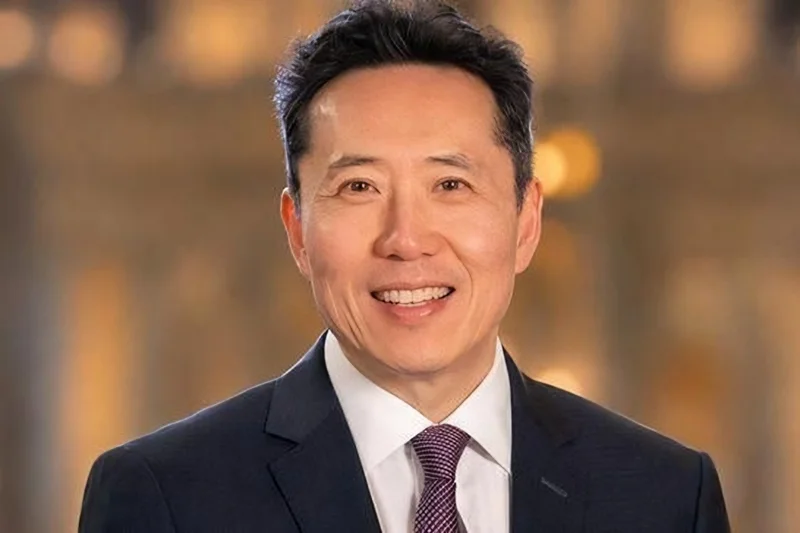
Jason Lim (jasonlim@msn.com) is a Washington-based expert on innovation, leadership and organizational culture. The views expressed in this article are the author’s own and do not reflect The Korea Times’ editorial stance.