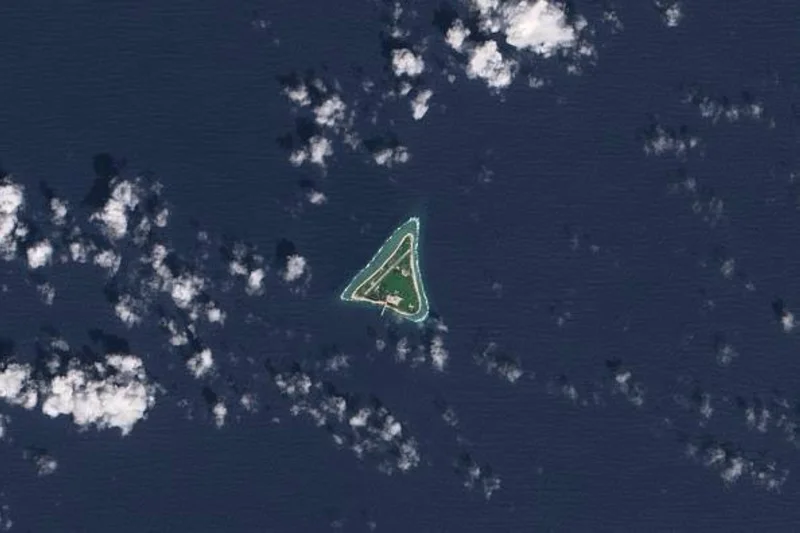
When U.S. President Donald Trump met with Japanese Prime Minister Sanae Takaichi in March at the White House, little attention was paid to their discussions about a tiny Japanese island in the Pacific Ocean, barely big enough for human visitors but inhabited by dangerous snails.
Minamitorishima, a pancake-flat speck of land about the size of a few city blocks with little more than a weather station and a runway, lies over 1,000 miles southeast of Tokyo. It also sits astride deep-sea rare earth deposits — ones that could “meet centuries’ worth of industrial demand,” a U.S.-Japan statement about cooperation to consider mining them heralded after the summit.
The response was widespread skepticism. Despite decades of global seabed exploration and mapping, no such mining projects have reached commercial scale and international guidelines are still debated. Minamitorishima’s bounty, encased in mud, also happens to be some of the deepest considered for extraction, at around 6 kilometers beneath the ocean’s surface.