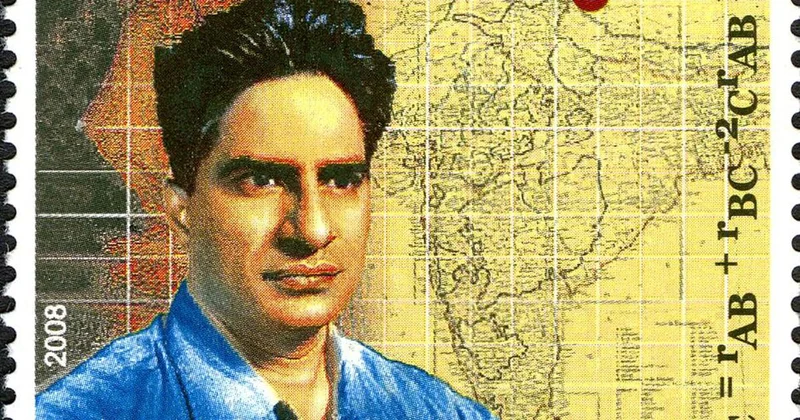
When DD Kosambi was appointed Professor of Mathematics at the Tata Institute of Fundamental Research (TIFR) in June 1945, he was 38 years old. His was the second appointment at the TIFR, the first being that of Homi Bhabha, two years younger than DDK. The two men found themselves in an exciting position at the start of a newly born institute for research at the forefront of physics.
Bhabha, well-known both nationally and internationally, had a lot going for him. Coming from an upper-class and influential Parsi family that was closely related to the Tatas, he had been educated at Cambridge University and had obtained his doctorate in theoretical high-energy particle physics. He was in the running for an academic position in England, but circumstances deemed otherwise – a trip home during the summer vacations of 1939 turned into an extended stay in India, the war in Europe having started. He found himself in the Physics Department at the Indian Institute of Science in Bangalore, where Raman, as Senior Professor at the IISc, arranged that Bhabha was appointed Reader. In the next few years, even as World War II was raging, he set up a cosmic ray group at the IISc and was elected Fellow of the Royal Society, London, but his ambitions evolved along the way into something much larger.
That larger ambition was to set up a top-class research facility in physics in India, one that could look upon the best in England and America as peers. In the early 1940s the importance of nuclear physics was only too evident – and this was one area that Bhabha was anxious to develop, along with particle physics. But to set up a strong research group in these areas, he realised he needed money and people. The Dorab Tata Trust, which was headed by Sir Sohrab Saklatvala, responded to his appeal, giving the initial seed money to start the Institute. Bhabha was appointed Director in May 1945, and the Institute was inaugurated in December 1945.
Bhabha’s choice of Kosambi as a colleague was unusual. Their backgrounds could not have been more different. One had an English education while the other’s was American. Kosambi had both his secondary education as well as his undergraduate studies in the US. Kosambi did not have a PhD, and at the time Bhabha appointed him, he had just been fired from his position at Fergusson College. Although he had been publishing extensively during his years in Poona, he was an academic maverick – his interests ranged from mathematics to Indology, Sanskrit, and numismatics. In contrast, Bhabha was a very focused particle physicist with a deep interest in cosmic rays. He was looking for someone who could help him in building up a School of Mathematics, and Kosambi seemed to fit the bill, his enthusiasm and his intelligence being all too evident. Kosambi had a striking presence, and with his stentorian voice – and the American accent that he never quite lost – he lectured forcefully. Unlike the undergraduates he had been suffering in Poona, the members of Bhabha’s Cosmic Ray research group responded to his lectures. These were scientists who were actually interested in mathematics.
When it consisted of not much more than Bhabha’s group, TIFR was temporarily located within the campus of the IISc in Bangalore. They would soon move to Bombay, to Kenilworth, the residence of Bhabha’s aunt who had rented out half the building to the new Institute. The academic programme had started even before the move to Bombay; as early as September 1945 Kosambi gave a public lecture on “Scientific Method in the Study of Ancient Indian History” at the Royal Institute of Science in Bombay where he described his statistical analysis of coins. It was good publicity for the new Institute.
DDK decided not to move to Bombay immediately. No suitable accommodation was available then, and in any case, the house in Poona was well set up. Maya and Meera who were ten and six years old were comfortable in Poona. The girls were largely being brought up by Nalini: this was a familiar pattern, one that he had seen playing out with his own parents. He did, however, insist that they should attend Huzurpaga, but this meant that the medium of instruction was going to be Marathi. Although both the girls did well enough in their studies, Meera later commented that it was somewhat inconsistent on her father’s part to make that decision – more so since he had been admitted to the New English School when he had come to Poona in 1912.
His academic preoccupations took up the bulk of his time and energy, and the family took the backseat. His parents kept their distance from Poona – Balabai would go meet her brothers in Goa every so often, but DDK would travel to Bangalore at least twice a year to go see her. He would occasionally take Maya along to spend time with her cousin Sheila, Manik’s daughter who was just a year older. On those trips, she got to know her grandmother Balabai as well. Meera, on the other hand, grew up with little contact with her paternal grandparents. When she put together Dharmanand’s Essential Writings, she mentions that she recalls him visiting Poona only once, when she was three years old.
The girls spent more time with Nalini’s side of the family who lived in Bombay – she would go there often, usually with one or both of them. What exposure they got to Marathi culture would come from those visits; given DDK’s Marxist beliefs, he was vehemently non-religious, even though as a child in America he had been declared a Buddhist. Dharmanand, for whom religious thought was a bedrock, was very different in this regard.
With the move to TIFR, the time Kosambi would spend with Nalini and their daughters decreased even further. In the initial years, he only came to Poona on the weekends; he stayed over with Doc and Manik at their home on Marine Drive on weekdays. When he later decided to make Poona his base, the hours spent walking to the station and on the Deccan Queen would constitute a large fraction of the working day. As a father, he was affectionate, but also almost always preoccupied and distant – his nieces who knew him quite well during these years recall being somewhat scared in his presence. True to form, he rarely talked about his family: there are only passing references in his letters to friends such as Agnes Conklin, and even though he was an avid amateur photographer, there are very few family photographs.
The early years of TIFR were exciting and heady. Bhabha had only Kosambi as a sounding board, and vice versa. They would discuss everything, and most decisions were taken informally and through consultation. Whenever Bhabha was away from Bombay for an extended period, he would leave Kosambi as Acting Director – a position of considerable responsibility, and one that DDK initially enjoyed. Their relationship also grew warm, especially since they had to plan the Institute together, concerning themselves with details regarding land acquisition, equipping the laboratories, hiring staff and planning for the future. Bhabha was spending more than six months abroad in 1946, so Kosambi had to fill him in on details of the equipment procured, research journal subscriptions, student applications and so on. As acting Director, DDK had to worry about finances, especially grants from the government, and even though he weakly protested that “Directorship weighs very lightly upon my unworthy shoulders,” it was clear that he had a flair for such work, at least then. Setting up a workshop was one of his main preoccupations since research on cosmic rays and particle physics was the main activity of the Institute. He had to sit in on several of the initial discussions regarding the plot of land in Colaba where the TIFR campus was to be set up, and although he was acting as Bhabha’s proxy, his input and advice were essential. Bhabha was toying with the idea of approaching Frank Lloyd Wright to design the new Institute’s permanent buildings in Colaba, but Kosambi felt that it would be better to ask the Bauhaus masters, Otto Bartning and Walter Gropius, pointing out that Wright, although vastly eminent, was old and had never designed a working laboratory in a tropical country. In the end, Bauhaus won out.
In a long letter to Bhabha in London, Kosambi says: “About building up a School of Mathematics in India, we also think alike; but, as you are fully aware, we have to get people trained in a considerable number of branches for which there are no real specialists in this country.” Among those that he suggested Bhabha try to recruit were K Chandrasekharan (who was more commonly referred to by his initials KC) and Harish Chandra. That same year, DDK was elected Fellow of the Indian National Science Academy and was awarded the Bhabha Prize (named for Bhabha’s father, Jehangir Hormusji Bhabha) the following year. He was made president of the Mathematics section of the 34th Indian Science Congress that was held in Delhi in January 1947; all this happened with the active support of Homi Bhabha who needed to bring his Professor of Mathematics, and via him, the TIFR, into mainstream Indian academics.
As Vice President of the Executive Council of the Interim Government of India, Jawaharlal Nehru was to address the Science Congress. Kosambi had written to him in May 1946 to suggest that scientists from different countries should be invited to attend the Science Congress to raise the level of science at the meeting. Nehru endorsed this idea and asked Kosambi to get the invitations issued via the Science Congress. Several delegates from the USSR, China, the UK and the US were present at the 1947 meeting. Harlow Shapley, the well-known Harvard astronomer (who was the first to accurately estimate the size of the Milky Way) also spoke at the Science Congress and spent a month in India, visiting universities in Delhi, Lahore, Karachi, Bombay and Hyderabad.
Nehru’s Presidential Address, “Science in the Service of the Community” was direct and powerful and would have hit the right notes with Kosambi. Nehru made the case for globalising Indian science and called on scientists to review the social consequences of their actions:
I would like to assure the Science Congress and our friends who have come from abroad that we want to cooperate with science abroad in every way to advance the cause of peace in the world, peace and progress of humanity. But while giving that undertaking and pledge, I want to make it perfectly clear that we will not cooperate in the ways of war.
… It is essential that new India should also come in intimate contact with the world of science. Because if science – whatever progress it may make – is isolated from the living currents, it will not go very far. If the new currents of renascent India go along lines that are not lines of science, then they too will go into a blind alley. Therefore, it becomes essential that the two must march together.
By this time, it was amply clear to DDK that along with Bhabha, he was participating in setting up an institution that would play a major role in independent India. He may have come into this role accidentally – after all, had he continued at Fergusson College, it is very unlikely that he would have reached this level of prominence nationally – but he understood he was listening to a kindred spirit. Nehru repeated his injunctions about the need to apply science for the greater public good:
… What the future will bring, I do not know. I can neither foretell the future nor have I any authority to bind my country down to what it may or may not do in future, but in these days, so soon after the last war, when people again think of wars and when scientists are yoked into work in preparation for future wars, I think it desirable and necessary that men and women of science should also think about the way they are often misused and exploited for base ends and should make it clear that they do not want to be so exploited.
… You cannot divorce science from social and political happenings and from the economic structure of the world. Therefore, perhaps it is time that science developed a certain philosophy and unity, if I may put it so. It had the quality in the olden days when science presented a smaller picture than it does now.
Many of the crucial parts of this speech – likely the first time DDK had heard a politician that he admired at such close quarters, other than Mahatma Gandhi – were to echo in Kosambi’s actions in the coming years. He was already in tune with some of these points, especially those on the integration of the social with the scientific. Kosambi’s continued preoccupation with applications of statistics to socially relevant problems did not always result in publications, but it would form a major thrust of his research.
Shortly after he joined TIFR, there was the so-called naval ratings’ mutiny in February 1946. These were difficult times – Indian independence, won through non-violence, was around the corner, but the birth of the nation was accompanied by pain and bloodshed. Writing to Mrs Conklin some months later, he recalled walking through heavy rioting on the streets of Bombay, at some risk to his personal safety.
Before he joined TIFR, Kosambi had been given a research grant of Rs 1800 by the JRD Tata Trust in May 1945. A report that he submitted upon its completion offers a view of his intellectual preoccupations in those times. He carried out no less than six separate projects, one of which involved the construction of a primitive electronic computing machine (using electric motors, cathode-ray oscillographs, valve tubes and so on) that he named the Kosmagraph; the total cost of the project was Rs 300. The other five projects were: (i) preparation of a monograph on path-spaces that was based on the lectures he had given to Bhabha’s group in Bangalore (ii) analysis of Medical Statistics, in particular tuberculosis data from the Arogyavaram sanatorium in Madanapalle in the Madras Presidency (iii) quantitative metrology of different coin hoards that he was studying (iv) preparation of a critical edition of the Satakatrayam of Bhartrhari (v) a study, also statistical, of the conditions of the low-income working-class in Poona, specifically the Mang community.
This report should have raised some red flags for Bhabha. The grant of Rs 1800 rupees was a little more than two months’ salary for Kosambi, so this amount, expected to cover six months of research, while generous for the times, was not excessive. For six projects to be carried out within this budget was mildly ambitious, and predictably, nothing concrete would come out from four of them. Satakatrayam of Bhartrhari was published in 1946; the analysis of the hoards of coins would lead to more papers, but otherwise the projects, although well-meaning, would not amount to much. The medical data was deemed unsuitable for analysis, and the data on working-class economics was probably insufficient. A book summarising his research in differential geometry – the path-spaces that he had worked on for 15 years – was prepared, but the manuscript was eventually misplaced and the monograph remains unpublished. In reality, by then Kosambi was already spending only a small fraction of his time on mathematics.
Earlier, when the Indian Statistical Conference was held in Calcutta in 1938, he had met the great statistician, RA Fisher and had made an impression on him. A few years later, Kosambi had shared offprints of his papers with Fisher – the ones on the distributions of weights of coins and the on the genetic distance – which greatly impressed Fisher and his group at the Galton Laboratory. Kosambi’s conversation with Fisher and his knowledge of sampling techniques had later led to a long discussion with PV Sukhatme, one of the leading statisticians working in the Imperial Council for Agricultural Research, on methods of removing sampling bias. The involvement of PC Mahalanobis in the project was probably the reason that not much was done on this until some years later.
Excerpted with permission from DD Kosambi: One Life, Many Worlds, Ram Ramaswamy, HarperCollins India.
We welcome your comments at letters@scroll.in.