Now Published in Two Editions
Get the Latin America Power Map
You’re reading the Brief — the whole hemisphere at a glance, free, every weekday. The Latin America Power Map is the daily instrument no one else publishes: a single reading of all fourteen nations across markets, power and society — a power ranking, currencies and rates beside defense strength, the leader’s grip, alliances and social cohesion. Thirty signals, one board, every morning. The whole region in sixty seconds.
Rio Times · Latin America
Key Facts
—Brazil Pragmatic shock—domestic politics and US tariff pain collide as voters calculate the cost of Lula’s 2026 gamble.
—Mexico Businesslike nervousness—a quiet morning of earthquakes, trade talks, and a local murder keeps the country on edge.
—Argentina Cautious optimism—Moody’s upgrade validates Milei’s austerity, but household credit pain is rewriting daily life.
—Colombia Transitional jitters—a new Congress takes shape under De la Espriella while Petro threatens a general strike to defend his legacy.
—Chile Raw grief—a state of catastrophe in the north after floods kill 10 people, cut roads, and bury hope under mud.
—Peru Quiet integration—joining trade and naval pacts while silently tightening airport rules that strand unprepared travellers.
Latin America woke up on Wednesday split between nature’s fury and political choices: Chile buried its dead, Brazil counted the cost of Trump’s new tariff, and Colombia’s Congress chose new leaders while a wounded left vowed to fight.
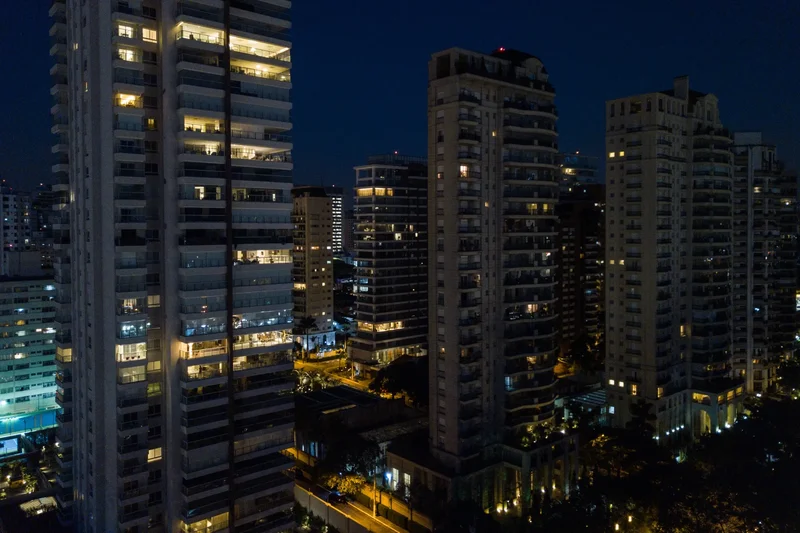
The day across Latin America at a glance. (Photo internet reproduction)
One-stop reference
Company Intelligence
Every listed company in Latin America — financials, ownership and structure for 1,450+ companies across 26 exchanges, in one place.
| Instrument | Level | Session |
| --- | --- | --- |
| Ibovespa (Brazil) | 177,548 | +2.44% |
| S\&P/BMV IPC (Mexico) | 67,304 | +0.88% |
| S\&P IPSA (Chile) | 11,009 | +0.50% |
| S\&P Merval (Argentina) | 3,379,771 | +2.98% |
| COLCAP (Colombia) | 2,297 | -0.19% |
| USD/BRL | 5.0546 | -0.37% |
| USD/MXN | 17.3905 | -0.13% |
Source: EODHD close, 2026-07-22. Figures rendered directly from the feed.
The Continent’s Mood Today
Two words define 22 July across the region: price and water. Brazil felt the price of protectionism as a 25% US tariff took hold, while Argentina celebrated a cheaper price for its own debt after Moody’s lifted its sovereign rating from Caa1 to B3. Meanwhile, water turned deadly in Chile, where a state of catastrophe covered the flooded north, and Mexico’s rain-swollen Cutzamala reservoirs—at 72.5% capacity—were a rare, quiet blessing.
These aren’t separate stories. Every capital is now pricing external shock against internal fragility. In Brazil, that means credit lines for exporters. In Argentina, it means 5.8 million people sinking under credit-card delinquencies that jumped from 2% to 9.7% in eighteen months. Nature and markets are squeezing the continent simultaneously, and today people are feeling the pinch in their pockets and their lungs.
Brazil – The Tariff Hangover Meets Election Fever
The day started with a sting that people felt before their first coffee: a new 25% tariff from the United States on Brazilian products took effect, hitting export sectors hard. The federal government rushed to announce emergency credit lines for exporters, trying to calm nerves. Newspapers framed it not just as a trade spat but as a direct cost being loaded onto Brazilian workers and factory floors.
That economic punch landed on an already tense political body. Senator Flávio Bolsonaro used the day to repeat false claims about electronic voting machines, a move that Folha de S.Paulo put on its front page. The old 2022 wound isn’t healed—it’s being deliberately reopened. Yet a fresh poll claims 55% of Brazilians think President Lula will win a fourth term, against just 25% for Flávio Bolsonaro. The mood is a strange cocktail: fear of a rigged past, anxiety about a tariffed present, and a resigned confidence that Lula will keep the keys to the palace.
This means a foreigner holding Brazilian assets should watch consumer stocks closely: the real-world cost of the tariff shock could show up in next quarter’s earnings before the presidential race even heats up.
Live Market IntelligenceLatin America — Cross-Market BoardInside: market breadth, the sector heatmap, currencies \& rates, the Latin America scoreboard and the full instrument board.
Rio Times · Live Market Intelligence
Latin America — Cross-Market Board
Regional
Jul 23, 2026 · 02:48
Ibovespa · benchmark
177,547.57
+2.44%
+32.46% over 12 months
Market breadth · 4 names
75% advancing
3 ▲ advancing1 declining ▼
Currencies, rates \& key inputs
Latin America scoreboard
IndexLastTodayStrength
IbovespaBrazil
177,547.57
+2.44%
S\&P/BMV IPCMexico
67,298.78
+0.88%
S\&P IPSAChile
11,009.22
+0.50%
S\&P MERVALArgentina
3,379,771
+2.98%
MSCI COLCAPColombia
2,297.00
-0.19%
BVL S\&P PerúPeru
57,575.02
—
Full instrument board
| Instrument | Last | Change | YoY | Prev. | High | Low | Volume |
| --- | --- | --- | --- | --- | --- | --- | --- |
| IBOV | 177,547.57 | +2.44% | +32.46% | 173,325.65 | — | — | — |
| IPSA | 11,009.22 | +0.50% | — | 10,954.04 | 11,019 | 10,913 | 1,513,213,483 |
| IPC MEX | 67,298.78 | +0.88% | +21.23% | 66,709.60 | — | — | — |
| MERVAL | 3,379,771 | +2.98% | +68.11% | 3,281,979 | — | — | — |
| COLCAP | 2,297.00 | -0.19% | — | 9.04 | 9.05 | 9.02 | 4,133 |
| BVL PERÚ | 57,575.02 | — | — | — | — | — | — |
| USD/BRL | 5.05 | -0.01% | -9.16% | 5.05 | 5.06 | 5.05 | — |
| EUR/BRL | 5.78 | -0.36% | -11.45% | 5.80 | 5.78 | 5.77 | — |
| USD/MXN | 17.38 | -0.07% | -6.78% | 17.39 | 17.41 | 17.37 | — |
| USD/CLP | 937.27 | +0.17% | -1.36% | 935.70 | 938.15 | 937.15 | — |
| USD/COP | 3,205 | -0.70% | -21.27% | 3,227 | 3,205 | 3,200 | — |
| USD/PEN | 3.39 | -0.30% | -4.71% | 3.40 | 3.40 | 3.39 | — |
| USD/ARS | 1,482 | -0.03% | +18.06% | 1,483 | 1,482 | 1,482 | — |
| USD/UYU | 40.14 | +1.16% | +0.69% | 39.68 | 40.14 | 40.14 | — |
| USD/PYG | 6,035 | +1.38% | -19.46% | 5,954 | 6,035 | 6,035 | — |
| USD/BOB | 10.95 | +2.82% | +62.48% | 10.65 | 10.95 | 10.95 | — |
| USD/DOP | 57.99 | -0.02% | -3.43% | 58.00 | 58.34 | 57.99 | — |
| USD/CRC | 447.42 | +1.36% | -9.14% | 441.41 | 447.42 | 447.42 | — |
Largest moves today
MERVAL
3,379,771
+2.98%
USD/BOB
10.95
+2.82%
IBOV
177,547.57
+2.44%
USD/PYG
6,035
+1.38%
USD/CRC
447.42
+1.36%
USD/UYU
40.14
+1.16%
IPC MEX
67,298.78
+0.88%
USD/COP
3,205
-0.70%
The session read
The Ibovespa rose 2.44%, with breadth positive — 3 of 4 names higher. MERVAL led, while COLCAP lagged.
From The Rio Times
Related coverage · 23 Jul 2026
São Paulo Daily Brief — Thursday, July 23, 2026
Read →
Mexico – Earth Tremors, Trade Talk, and a Town Hall Murder
Waking up in Mexico this morning meant feeling the earth move—almost literally. The Seismological Service recorded multiple quakes off Chiapas, with a magnitude 4.8 tremor 155 km southwest of Ciudad Hidalgo. No sirens wailed in the capital, but phones lit up with alerts. President Sheinbaum, meanwhile, kept the mood light about the World Cup, declaring Mexico the best possible host. That sporting pride is the public face.
The private face is harder. The third round of USMCA trade talks kicked off with Washington pushing tough new rules of origin, giving factory bosses a quiet reason to frown. In Morelos, the president municipal of Temoac, Valentín Gavín Romero, was shot dead in his office, a reminder that local governance still carries a deadly price. The UNAM university was also forced to order a probe into bizarre anomalies in its online entrance exam, shaking the faith in meritocracy that Mexican families hold dear.
For a foreigner living here, the takeaway is practical: the USMCA talks could reshape local manufacturing jobs, but the real daily disruption is invisible—a deep, stubborn distrust that the rule of law protects anyone.
Argentina – A Moody’s Upgrade and a Mountain of Personal Debt
The big news feels good on paper: Moody’s raised Argentina’s sovereign rating from Caa1 to B3 and shifted the outlook from stable to positive. President Milei’s team took a victory lap, quietly. International bondholders nodded. But the Argentine street is reading a different ledger. Private credit delinquency has jumped from 2% to 9.7% in eighteen months, according to the report. That means 5.8 million Argentines—28% of adults with formal borrowing—are late on their payments.
This split-screen reality is the true mood. The government is making the country cheaper to lend to, but its citizens cannot afford the credit they already have. While the ex-Army chief publicly scolds Milei for softening Argentina’s Falklands claim, the housewife in Córdoba is dodging the bank’s calls. The pride of national solvency rubs up against the humiliation of a blocked credit card.
For a foreigner holding Argentine bonds, the upgrade signals lower risk; for a foreigner living in Buenos Aires, the soaring cost of everyday credit makes pesos feel heavier and futures shorter.
Colombia – Two Presidents-in-Waiting Tear at the Sheets
Colombia is sleeping in a bed that two men are pulling from opposite sides. The Senate elected Honorio Henríquez as its new president, and the House chose Nicolás Barguil. President-elect Abelardo de la Espriella congratulated both and named his team, including Mauricio Tobón as ambassador to Mexico. A peaceful, orderly transition—on the surface.
Underneath, the mood is combustible. Outgoing President Gustavo Petro warned he could call an indefinite general strike if the new government dismantles his reforms. That threat landed hours after a massive earthquake rattled Santander, Valle del Cauca, and Chocó, and the same day the nation learned that community journalist Jader Durango was killed in Córdoba. The country’s economic growth of 4.1% in May feels like a statistic from another country; the real Colombian pulse is a physical tremor of fear, both geological and political.
For a foreign resident, this means one thing: a general strike is not a metaphor. It would close roads, delay flights, and empty office blocks, just as new tax rules threaten to expand VAT on daily purchases.
Chile – Catastrophe Wears Mud in the North
Chile is not talking about politics or money today; it is talking about its dead. The government declared a state of catastrophe in the north after a brutal frontal system overran river banks, cut roads, and forced mass evacuations. Senapred confirmed ten fatalities and four people still missing. The sky dumped so much water that the government dispatched over 150 tons of humanitarian aid, rushing nine tons on a second plane to Atacama.
Congress approved 27 of 28 votes in a reconstruction package, paused only by a tiny clause on municipal compensation. This unity is pure grief. The people of Antofagasta and Atacama are shovelling mud out of their homes, entirely uninterested in the usual Santiago noise. The mood is blunt: nature decided the news. The floods reached Chile only days after the country joined the US-led UNITAS naval drills—international posturing feels obscenely irrelevant when your neighbour is missing in the water.
A foreigner with assets in the mining north should verify site access and logistics immediately; the flooded roads are a direct physical barrier to operations and daily life.
The Shared Mood
Strip away the individual headlines and the continent feels the same stitch in its chest: resilience is running out. The Peruvian who gets denied boarding at an airport for a passport with five months left on it, the Colombian who felt the floor shake and then heard about a strike, the Brazilian who read about a 25% tariff and then saw a senator lie about a machine—everyone is processing a cumulative threat.
There is no single villain. It is the US trade representative, the geological fault line, the cold front, and the old political grudge all acting at once. Latin Americans are buying bread, checking the sky, and refreshing their news feeds. On Wednesday, 22 July 2026, the continent felt not defeated but dogged. Tired of paying, tired of bailing water, but still awake.
Frequently Asked Questions
Did the US tariff on Brazilian goods actually take effect on July 22?
Yes. A 25% US tariff on various Brazilian products took legal effect that day, prompting immediate federal credit lines for affected sectors.
Which country declared a state of catastrophe, and why?
Chile declared a state of catastrophe in the north following fatal flooding from a severe frontal system; Senapred confirmed 10 dead and 4 missing.
What is the credit situation for ordinary Argentines after the Moody’s upgrade?
Despite the sovereign upgrade, private credit delinquency hit 9.7%, affecting 5.8 million people, or 28% of formally-financed adults.
Sources: UnoTV – Las de Hoy 22 de julio de 2026, iSosenda – Manchetes do Dia 22/7/2026, Vanguardia – Noticias más importantes del 22 de julio en México, Radio Universidad de Chile – Noticias, Infobae México – Temblor hoy 22 de julio de 2026
Companion: today’s Latin America Power Map (PDF) — our full daily dossier on who holds power across the region.
Who's gaining power in Latin America — and who's about to lose it?
The daily Power Map ranks all fourteen nations — markets, companies, armies, alliances and the leaders behind them — and shows exactly which way each is moving. The whole region’s pecking order, on one page.
Read More from The Rio Times