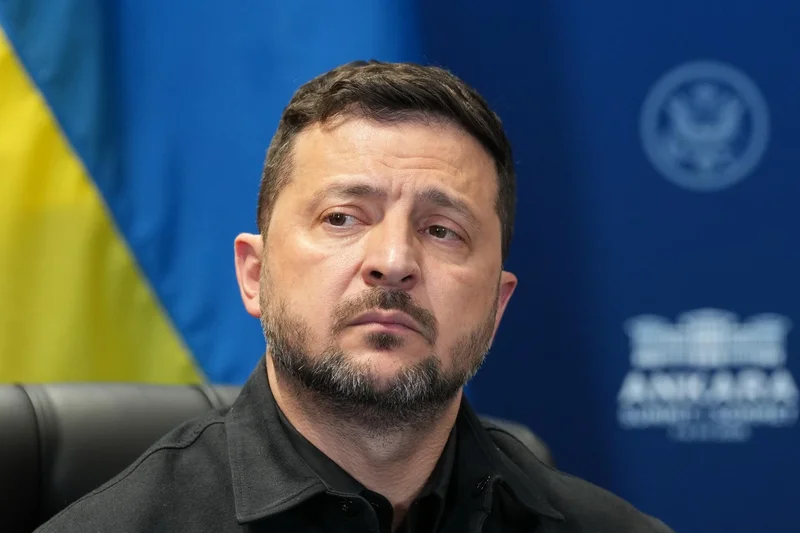
Ukrainian President Volodymyr Zelenskyy is asking South Korea for weapons and air defense systems as North Korea deepens its military support for Russia’s war in Ukraine. Seoul should listen carefully — but it still should not say yes.
South Korea has every reason to be alarmed by the expanding military partnership between Pyongyang and Moscow. North Korean troops have been deployed to Russia, while North Korean ballistic missiles and other weapons are reportedly being used on the battlefield. In return, Pyongyang stands to gain things it has long sought: combat experience, military know-how and advanced Russian technology. The prospect that North Korean forces could return from Ukraine better trained in modern warfare is a direct security concern for Seoul.
That does not mean South Korea should cross the line into supplying lethal weapons or sophisticated air defense systems to Ukraine. Seoul’s restraint is not indifference toward Ukraine. It is a sober calculation of its own survival.
Zelenskyy’s appeal is understandable. Ukraine is fighting for its territory and sovereignty, and South Korea has both the industrial capacity and advanced defense technology to make a meaningful contribution. But supplying systems such as air defense interceptors would be qualitatively different from humanitarian assistance or non-lethal support. It would place South Korean military capabilities directly into an active war against Russia and could lead Moscow to regard Seoul as a direct participant in the conflict.
That risk cannot be considered in isolation.
South Korea already faces a nuclear-armed North Korea. If Seoul becomes a direct military supplier to Ukraine, Russia could respond by deepening its military cooperation with Pyongyang or providing North Korea with capabilities that would make the security environment on the peninsula even more dangerous. Moscow would also have a stronger political rationale for taking a more active role in a future Korean crisis.
This is why Seoul’s refusal to provide lethal weapons should not be portrayed as weakness or a failure of solidarity. South Korea can continue substantial humanitarian assistance, support reconstruction, provide non-lethal equipment and work with allies to uphold international law. It can also press Russia and North Korea diplomatically over their expanding military cooperation. But there is a defensible and necessary distinction between supporting Ukraine and becoming a military participant in its defense.
The timing makes that distinction even more important. South Korea and the United States are preparing for the Ulchi Freedom Shield exercise, a critical test of combined readiness and of the capabilities required for a future combined command led by Seoul. The exercise comes ahead of discussions over the timetable for transferring wartime operational control to South Korea.
The central question is whether South Korea can assume greater responsibility for its own defense while maintaining the alliance with Washington. That requires concentrating resources and strategic attention on the threats facing the peninsula — not opening another military front elsewhere.
North Korea’s cooperation with Russia makes the challenge more urgent. Pyongyang’s battlefield experience in Ukraine, combined with Russian military assistance, could eventually alter the balance of the peninsula. That is precisely why Seoul must strengthen deterrence and improve intelligence and missile defense coordination with Washington to eliminate operational gaps within the alliance.
The lesson from Ukraine is not that every threatened democracy must enter every conflict. It is that wars can generate consequences far beyond their original battlefield.
South Korea should stand with Ukraine but it must also stand guard over itself. Humanitarian solidarity does not require military intervention. Supplying lethal weapons is not the only way to support international efforts to end Russia's invasion. Refusing to cross that line is not abandonment of an ally; it is the basic responsibility of a government toward its own citizens.
For Seoul, the ultimate red line must remain clear. It must help Ukraine where it can, but do nothing that could turn Russia’s war in Europe into a new security crisis on the Korean Peninsula.