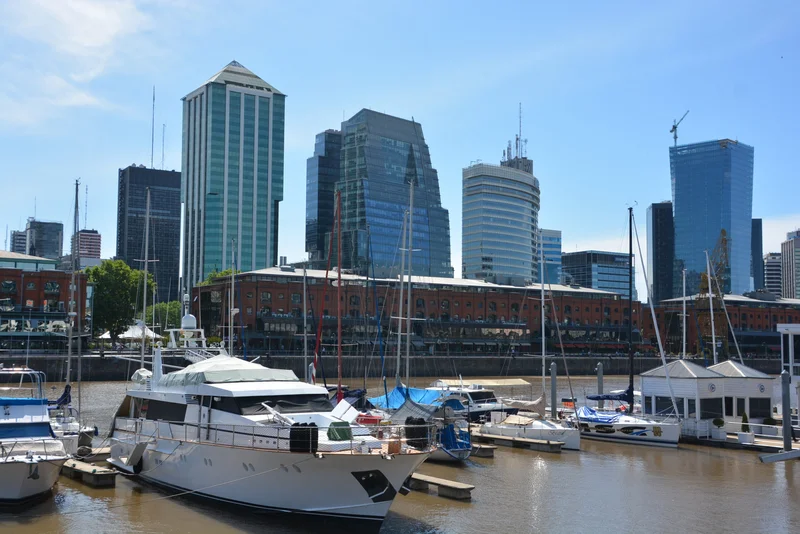
IRSA Pushes Ahead With Ramblas del Plata, Buenos Aires’s US$1.8 Billion Riverfront District
Argentina · Real Estate
Key Facts
- Project scaleRamblas del Plata spans 71 hectares on Buenos Aires’s southern waterfront, with up to 895,000 square metres of buildable area.
- Housing unitsMore than 10,000 homes are planned, alongside a 27.5-hectare public park, a school of more than 10,000 square metres, a health center, hotels, offices, coworking spaces, and about 36,000 square metres of commercial space.
- Investment sizeLa Nación reported on 12 August 2026 that the project involves close to US$1.8 billion in planned investment.
- Coastline recoveryThe scheme aims to reclaim nearly 4 kilometres of riverfront along the Río de la Plata.
- Barter dealOn 30 July 2026, IRSA announced a US$4 million barter exchange for a 2,360-square-metre lot, with roughly 4,500 square metres of saleable area.
- Land usePrivate development covers about 29% of the site, leaving the rest for public space, streets, and amenities.
- Previous nameThe project was formerly known as Costa Urbana, on the ex-Ciudad Deportiva de Boca Juniors land.
The real story here is not a ribbon-cutting — it’s the slow, deliberate machinery of land monetization and infrastructure work that will decide whether Buenos Aires’s southern edge becomes a livable neighborhood or just another speculative address.
If you’ve been tracking Buenos Aires real estate, you’ve probably heard the name Ramblas del Plata floating around. It’s the rebranded version of the old Costa Urbana project, sitting on 71 hectares of what used to be Boca Juniors’s sports club land along the southern waterfront. And while there’s no groundbreaking ceremony to report — despite what you might have seen elsewhere — the project is very much moving forward. IRSA is advancing Ramblas del Plata through infrastructure works and commercialization deals, and the latest numbers give you a clearer picture of what’s actually being built, and how much it will cost.
What’s Actually Happening on the Ground
Let’s be precise about the timeline. On 30 July 2026, IRSA announced a barter deal for a 2,360-square-metre lot within the first extended stage of the project. The deal was valued at about US$4 million, and it gives the buyer roughly 4,500 square metres of saleable area. IRSA said the deal fits its strategy of continuing infrastructure works and advancing the commercialization of the project. By the August reporting, IRSA had sold around 19 lots for more than US$100 million, committing about 170,000 square metres. That is not a construction kickoff — it’s a land transaction that helps fund and de-risk the urbanization phase.
Then, on 12 August 2026, La Nación published a detailed report on the project’s scope. The headline numbers: close to US$1.8 billion in planned investment, and nearly 4 kilometres of recovered coastline. The project will include more than 10,000 homes, a 27.5-hectare public park — one of the largest in the city — a school of more than 10,000 square metres, a health center, hotels, corporate offices, coworking spaces, and about 36,000 square metres of commercial premises. The buildable area tops out at 895,000 square metres of floor space. Private development occupies about 29% of the land; the rest, more than 70%, is ceded to the city for parks, public space, and streets.
Why This Matters for Buenos Aires
This is one of the largest riverfront transformations the city has seen in decades. For years, that stretch of the Río de la Plata shoreline was closed-off club land — a blank spot on the map between La Boca and Puerto Madero. Now it’s being turned into a mixed-use district that could house tens of thousands of residents. If you live in or invest in Latin America, this matters because it’s a test case for how a major city handles waterfront redevelopment: who gets access to the river, how much housing actually gets built, and whether the public realm survives contact with private capital.
The political groundwork goes back to a 2021 rezoning approved by the Buenos Aires city Legislature (Law 6476), which cleared the way for the current development concept after a contested, court-challenged vote. The effect is clear: this land is no longer zoned for sports or docks. It’s zoned for a new neighborhood. That shift took years of negotiation between the city, the club, and developers, and it sets a precedent for other underused waterfront parcels across Latin America.
The Business Model: Phased, Not Flashy
IRSA isn’t building this all at once. The barter deal in July is a good example of their approach: swap a lot for value, use that to fund infrastructure, then sell or develop the next phase. It’s a slow, deliberate strategy that prioritizes cash flow and risk management over dramatic announcements. If you’re watching from an investor’s perspective, the key metric isn’t a groundbreaking date — it’s how many of these barter and pre-sale deals get done, and at what prices per square metre.
One thing to keep in mind: the US$1.8 billion figure is the total planned investment, not what’s been spent so far. And the US$4 million barter deal is a small piece of that puzzle. The project is still in its early stages, with infrastructure and urbanization work happening on the ground, but the main building construction hasn’t been formally announced. So if you see headlines about a “groundbreaking,” treat them with caution. What’s confirmed is that IRSA is moving dirt, signing deals, and preparing the land for the next decade of development.
Ramblas del Plata and the Future of the Southern Shoreline
The southern edge of Buenos Aires has always been the working-class side of the river — docks, factories, and the gritty charm of La Boca. Ramblas del Plata is an attempt to graft a modern, mixed-use district onto that history. The project includes a health center, hotels, and offices, which suggests the developers are aiming for a 24-hour neighborhood, not just a bedroom community. The 36,000 square metres of commercial space will need tenants, and the 10,000 homes will need buyers or renters. That’s a lot of supply coming into a market that’s still recovering from years of economic instability.
For anyone living in or invested in Latin America, the lesson is simple: this is how large-scale urban redevelopment actually happens in the region. It’s not a single dramatic event. It’s a series of land swaps, infrastructure contracts, and phased sales that stretch over years. The 2021 Legislature rezoning gave it its legal footing. The 2026 barter deals give it financial momentum. And the La Nación report gives it public visibility. Whether it succeeds will depend on execution, market demand, and the city’s ability to keep the waterfront public. For now, Ramblas del Plata is advancing — one lot at a time.
Frequently Asked Questions
Is IRSA building homes right now at Ramblas del Plata?
No. The confirmed activity is infrastructure and urbanization work, plus commercialization deals like the July 2026 barter. No main construction start or groundbreaking ceremony has been officially announced.
How much will the whole project cost?
La Nación reported on 12 August 2026 that planned investment is close to US$1.8 billion. That’s the full-project figure, not what’s been spent so far.
What happened to the old Boca Juniors sports club land?
The 71-hectare site was formerly the Ciudad Deportiva de Boca Juniors. After a 2021 rezoning process, it was cleared for mixed-use development. IRSA’s project, formerly called Costa Urbana, is now branded as Ramblas del Plata.
Connected Coverage
Sources: La Nación (12 August 2026); IRSA regulatory disclosures (barter deal, 30 July 2026); Buenos Aires City Legislature (Law 6476, 2021).
This article was produced by The Rio Times’ automated newsroom system. How we use AI · Report an error