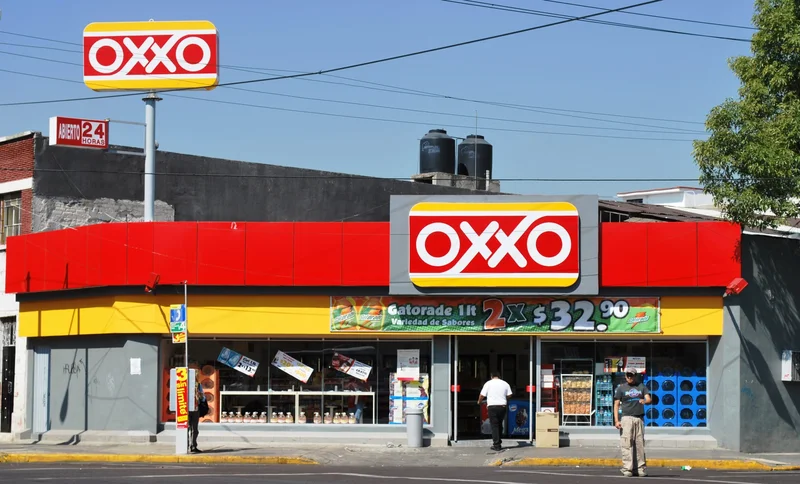
FEMSA Scales Bara, Its Discount Chain Growing Faster Than OXXO
Mexico · Retail
Key Facts
- Store countBara operates in 8 states with roughly 700 stores, about half concentrated in Guanajuato.
- Expansion plan100 new stores in Tamaulipas with investment up to 1,780 million Mexican pesos (about US$104 million) and 2,400 jobs.
- Growth rateBara is growing faster than OXXO, though OXXO remains far larger in total scale.
- New infrastructureA distribution center is part of the Tamaulipas expansion.
- Parent resultsFEMSA reported strong second-quarter 2026 results and a new reporting structure.
- Dual strategyOXXO targets high-frequency convenience; Bara targets price-sensitive value shoppers.
- CompetitionBara competes with municipal markets, grocers, and corner stores, not just other chains.
The real story isn’t just a new store format — it’s how FEMSA is hedging its bets between two very different kinds of shoppers, and what that says about where Mexican retail is heading.
If you’ve ever walked into an OXXO for a coffee or a charger, you know the brand. But FEMSA Bara is a different animal entirely — a hard-discount chain that’s quietly growing faster than its famous sibling, even though OXXO still dwarfs it in sheer size. For anyone living in Mexico or watching Latin American retail from abroad, this split strategy is worth understanding.
What Bara Actually Is
Bara is FEMSA’s hard-discount format, operating under the Proximidad Américas division. Unlike OXXO’s grab-and-go convenience model, Bara focuses on basic goods at low prices — think staples, household items, and the kind of everyday shopping you’d normally do at a municipal market or a corner store. The pitch is simple: no frills, low ticket, and a price point that competes directly with traditional trade.
Recent reporting puts Bara at roughly 700 to 705 stores across eight states — Jalisco, Querétaro, Guanajuato, Aguascalientes, San Luis Potosí, Hidalgo, Nuevo León and Michoacán — with about half concentrated in Guanajuato. In July it opened its first stores in the Huasteca Potosina, part of San Luis Potosí.
Live Company IntelligenceFomento Económico Mexicano S.A.B. de C.V — the full investor dossier
Valuation & profitability
Price & risk
$149.9052-wk high
$235.35
Revenue trend · 6y
MX$840.95B
Ownership
Dividend
What Fomento Económico Mexicano does.Fomento Económico Mexicano, S.A.B. de C.V., through its subsidiaries, operates as a franchise bottler of Coca-Cola trademark beverages worldwide. The company operates through Coca-Cola FEMSA, Proximity Americas Division, Proximity Europe Division, Health Division, Fuel Division, and Others segments. It produces, markets, and distributes Coca-Cola trademark beverages in Mexico, Guatemala, Nicaragua, Costa Rica,…
The Tamaulipas Push
The most concrete sign of Bara’s momentum is a plan to open 100 new stores in Tamaulipas. That expansion carries an investment of up to 1,780 million Mexican pesos (about US$104 million) and is expected to create 2,400 jobs. A distribution center is also part of the package, which suggests FEMSA is building serious infrastructure around this format, not just testing it.
That level of commitment matters. A distribution center means Bara is being treated as a long-term strategic bet, not a pilot project. And the job creation figure gives you a sense of the local economic impact — this isn’t just shelf space, it’s supply chains, logistics, and employment in markets that often get overlooked by big retail.
Why FEMSA Bara Grows Faster Than OXXO
The public narrative is that Bara is growing faster than OXXO, and that’s true — but only because OXXO is already everywhere. OXXO remains the dominant proximity business in Mexico by a wide margin. Bara is starting from a much smaller base, so percentage growth is easier to achieve. Still, the fact that FEMSA is pushing Bara aggressively while OXXO holds steady tells you something about where the company sees future demand.
FEMSA’s second-quarter 2026 results were described as strong, and the company introduced a new reporting structure that separates these two engines more clearly. The strategy is straightforward: OXXO for high-frequency convenience, Bara for price-sensitive value. That dual approach lets FEMSA capture both the quick-stop shopper and the budget-conscious household — two very different behaviors that increasingly define Mexican retail.
What This Means for You
If you live in Mexico — or anywhere in Latin America — this matters because hard discount is where the action is. With pressure on purchasing power and competition from traditional markets, the battle for the daily-spend consumer is intensifying. Bara isn’t just competing with other chains; it’s going after the abarrotes and municipal markets that have long been the default for basic goods. That changes the retail landscape in ways that affect prices, availability, and even employment in local communities.
For investors, the signal is about portfolio strategy. FEMSA is deliberately building two brands with different missions rather than trying to make one format do everything. That’s a mature approach to a market that’s becoming more segmented. It also means the company is betting that the value segment will keep growing — a bet that looks reasonable given current economic conditions, though nothing is guaranteed.
Frequently Asked Questions
What is FEMSA Bara?
Bara is FEMSA’s hard-discount store format in Mexico, focused on basic goods at low prices. It operates within the Proximidad Américas division and competes with municipal markets, grocers, and corner stores rather than just other convenience chains.
How big is Bara compared to OXXO?
OXXO is much larger in total scale. Bara is growing faster in percentage terms, but it starts from a far smaller base. Recent reports put Bara at roughly 700 stores, while OXXO has tens of thousands of locations across the region.
Where is Bara expanding?
The main announced expansion is 100 new stores in Tamaulipas, with investment of up to 1,780 million Mexican pesos (about US$104 million). The chain already operates in eight states, including Guanajuato, Michoacán, Hidalgo, Nuevo León and San Luis Potosí.
Connected Coverage
Sources: Milenio; FEMSA second-quarter 2026 results; El Economista; FEMSA press releases.
This article was produced by The Rio Times’ automated newsroom system. How we use AI · Report an error