The Supreme Court on Thursday agreed to hear a writ petition filed by Communist Party of India (Marxist) MP AA Rahim challenging the police’s use of facial recognition technology and other biometric surveillance measures at protest sites, Live Law reported.
A bench headed by Chief Justice of India Surya Kant tagged the petition with other pleas concerning the youth protests in Delhi.
The protests had taken place against the alleged mismanagement of several competitive examinations, including the undergraduate National Eligibility cum Entrance Test for admissions to medical courses.
The agitation, which culminated in the resignation of Bharatiya Janata Party leader Dharmendra Pradhan as the Union education minister, was led by the Cockroach Janta Party political campaign.
The protests had escalated on July 20, after the police forcibly took activist Sonam Wangchuk, who had been on a three-week hunger strike, to hospital.
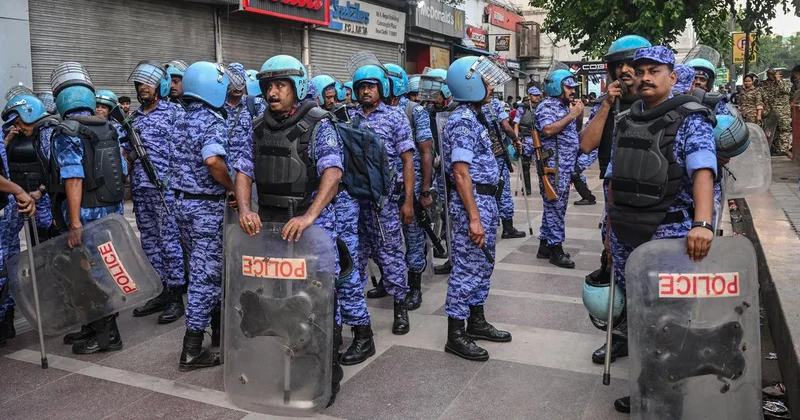
The demonstrators’ march to Parliament was met with a police crackdown. Dozens were injured as the police used lathis, tear gas shells and pellet guns against the demonstrators. The police action intensified the agitation, which spread to other parts of the country.
On Thursday, advocate Menaka Guruswamy, appearing for Rahim, said that the petition was related to the Delhi Police’s use of digital tools to surveil protesters at Jantar Mantar.
She submitted that the police had used the services of two private entities, Aditya Infotech Limited and Dimension NXG Private Limited, Live Law reported.
The lawyer added that the data was being processed and stored in violation of the Digital Personal Data Protection Act.
“One maps your face, and the other is a vehicle…” the legal news outlet quoted Guruswamy as submitting before the court. “And that data is all taken without permission. These private entities host the data in violation of the DPDP Act.”
The bench agreed to consider the matter.
The petition has alleged that the Delhi Police carried out biometric surveillance at the protest site without a clear legal basis. It argued that neither the Delhi Police standing orders governing protests nor 2022 Criminal Procedure Identification Act authorises the biometric surveillance of people at a civilian assembly.
Edited by Neerad Pandharipande.
We welcome your comments at letters@scroll.in.