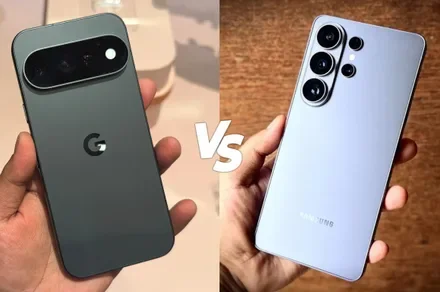
Google and Samsung aren’t just creating flagship smartphones. They’re building different philosophies for what “flagship” means, how “smart” a smartphone should actually be, and what cost you should pay for a top-tier experience. That would be the major theme in this comparison between the newly-launched Pixel 11 Pro XL, which goes on sale from August 20, 2026, and Samsung’s Galaxy S26 Ultra, which is already available in the market.
While Google’s new software and AI-based features seem all about killing third-party apps for specific use cases, the Galaxy S26 Ultra leans into raw hardware power and productivity tools to assert its dominance. The reason to choose one, in my opinion, has nothing to do with the difference in the specifications, and everything to do with the type of flagship experience you value more.
Google Pixel 11 Pro XL vs. Samsung Galaxy S26 Ultra: Specs at a glance
| Pixel 11 Pro XL | Galaxy S26 Ultra | |
| Price | $1,299 (12GB/256GB) | $1,299 (12GB/256GB) |
| Dimensions / Weight | 162.7 × 76.5 × 8.5mm, 226g | 163.6 × 78.1 × 7.9mm, 214g |
| IP rating | IP68 | IP68 (1.5 meters for 30 minutes) |
| Display | 6.8″, LTPO OLED, 1344 × 2992 (486ppi), 120Hz, up to 3,600 nits peak | 6.9″, Dynamic AMOLED 2X, 3120×1440 (500ppi), 120Hz, up to 2,600 nits, S Pen support |
| Chipset | Google Tensor G6 + Titan M3 (seven-core, up to 4.11GHz) | Snapdragon 8 Elite Gen 5 for Galaxy (Octa-core, up to 4.74GHz) |
| RAM / Storage | 12GB/256GB, 16GB/512GB (Zoned UFS) | 12GB/256GB, 12GB/512GB, 16GB.1TB (UFS 4.X) |
| Rear cameras | 50MP wide (f/1.68, 1/1.3″) + 48MP ultrawide (f/1.7) + 48MP 5x telephoto (f/2.8, 1/1.95″) | 200MP wide (f/1.4, 1/1.3”) + 50MP ultrawide (f/1.9) + 50MP 3x tele (f/2.9) + 10MP 5x tele (f/2.4, 1/2.52”) |
| Front camera | 42MP, f/2.2, 103° FOV | 12MP, f/2.2 |
| Zoom | Optical 5x, up to 120x (software) | Optical 3x & 5x, up to 100x digital |
| Battery | 5,115mAh typical, 30+ hours | 5,000mAh typical, up to 31 hours video playback |
| Charging | 45W wired (75% in 30 min), 25W Pixelsnap wireless | 60W wired (75% in 30 minutes), 25W wireless Qi 2.2-ready |
| OS / Updates | Android 17, 7 years OS/security + quarterly Pixel Drops | Android 16 (One UI 8.5), transitioning to One UI 9 |
Where the Pixel 11 Pro XL pulls ahead
Design and display
The first and the most obvious difference between the smartphones is design, and it’s the horizontal camera bar and the new colors (especially the Canyon and Olive finishes) that hold my gaze for longer. Speaking of gaze, the Pro XL’s screen, with a higher-rated peak brightness, should stay legible under harsh midday sun without you cupping your hand over it.
Cameras
Next up, the 48MP 5x telephoto camera sits on a 1/1.95-inch sensor, which is substantially larger than the 1/2.52” zoom sensor on the S26 Ultra. The difference in size simply means that the Pixel’s sensor will retain more detail, especially in poorly lit environments, resulting in clearer zoom or portrait shots with less noise, if you’re into that at all.
Even though the Pro XL gets Video Boost for 8K 30 fps videos, the feature is handled through a cloud-assisted pipeline. While the results could be better in terms of upscaling and tone-mapping, the S26 Ultra can record 8K 30 fps video natively, on-device.
Wireless charging
The wired charging speed on the Pixel 11 Pro XL trails behind the S26 Ultra. However, what amazes me is that this is the second year a major Android smartphone maker is providing built-in magnetic wireless charging — Pixelsnap charging (25W) — on its handsets, and how Samsung is still skimping in that regard.
Google AI
Remember how I was talking about different flagship philosophies? Google’s approach has always been to build a CPU, GPU, and TPU combination powerful enough to power its unique on-device AI experience, and that’s exactly what sets the Pixel 11 Pro XL apart from other Android flagships.
At the core of Pixel’s AI features is Gemini, the all-purpose AI model now woven across Google’s products and services. On the Pro XL, Gemini powers everything from multi-step task automation across more than 40 apps and proactive suggestions to unique Camera features like Magic Capture.
Sign Language to Text, built directly into Gboard, is another accessibility feature with no Samsung equivalent right now. Add the clean Android experience, seven years of OS and security updates, and quarterly Pixel Drops with new features on the same hardware, and the difference becomes clear.
For me, that’s the difference between a phone I use happily for a year and drag along for the next few, and one that keeps unlocking new conveniences every few months.
Where the Galaxy S26 Ultra truly redeems itself
While the Pixel 11 Pro XL’s pitch is a clean software experience with deeply integrated Gemini AI, Samsung’s flagship philosophy leans more toward choosing the best possible hardware and building software experiences around it.
Chipset
That’s a major theme throughout this comparison. Take the silicon, for example. Samsung didn’t just choose the best chip available; it also worked with Qualcomm on a slightly overclocked version exclusively for the Galaxy S26 Ultra. The Snapdragon 8 Elite Gen 5 for Galaxy’s raw CPU and GPU performance is leagues ahead of the Tensor G6 in the Pixel 11 Pro XL.
If you’re buying a flagship for heavy multitasking, say, switching between multiple photo and video editing apps, or you want to push your favorite games at the highest graphics settings, the S26 Ultra has a clear and substantial performance advantage. All this while the chip features a capable NPU for on-device AI workflows makes it hard to argue with the S26 Ultra.
Cameras
The S26 Ultra has one of the most versatile camera systems on a smartphone in 2026, period. While the 200MP main sensor gives you enormous cropping flexibility. For anyone who actually shoots at varying zoom distances rather than defaulting to software upscaling, that dual-optical setup, including a dedicated 3x and 5x telephoto camera, adds to the flexibility and gives better results.
S Pen
One of the most obvious advantages of choosing the S26 Ultra is the S Pen, a productivity tool that unlocks a level of functionality no other flagship can quite match. Whether you need to sign documents, take notes on the go, jot down an urgent shopping list, or simply doodle and sketch, the S Pen puts the phone in a league of its own, with no real level playing field.
One UI
Samsung doesn’t pull back the AI-based features either. Features like Now Brief and Now Nudge have been around for longer than on the Pixel lineup. If you prioritize productivity over everything else, you’d also appreciate how Samsung DeX lets you transform the smartphone into a genuine desktop replacement.
Speaking from experience, One UI provides many more customization and personalization features than Google’s stock Android. Its Galaxy AI suite is much more extensive as well. Ultimately, it comes down to which type of OS or UI experience you’re familiar with.
Which one should you choose?
If you want Google’s AI doing genuine cognitive work in the background, the brightest screen in this comparison, and a promise of updates that outlasts most people’s ownership cycle, the Pixel 11 Pro XL is the smarter long-term bet.
If you want raw horsepower, a stylus that unlocks real productivity, and a versatile zoom system built for photographers who actually zoom, the Galaxy S26 Ultra remains the more complete flagship experience.
Buy based on which of those two sentences mirrors the majority of your smartphone usage.