Forty-five years ago, the reappearance of the Asian elephant near Kuppam in Chittoor district would have been seen as a miracle. Today, more than 140 resident and migratory Asian elephants crisscross the migratory path through Chittoor, making it the only landscape in Andhra Pradesh where wild elephants have established a sustained presence.
The jumbo saga unfolded in the 1980s, when elephants reappeared near Kuppam after a hiatus of more than two centuries. Their return finally led to the creation and strengthening of the Koundinya Wildlife Sanctuary, which spans Palamaner and Kuppam Assembly constituencies, the focal zone for elephant conservation in the State.
However, what began as a conservation success has evolved into a complex situation involving human-elephant conflict.
The wild elephants slowly defied their confinement within the sanctuary in Chittoor district. Their instinctual movements take them through forests, mango and banana plantations, and agricultural fields. Every harvest season, several herds from as far as Mudumalai and Bannerghatta join the migratory path towards Koundinya sanctuary and Rayala Elephant Corridor, close to the Seshachalam ranges.
In Rajampeta division of Kadapa district alone, around 45 elephants are currently moving through the Seshachalam landscape. These elephants were originally part of the herd that migrated from Kuppam but have, over the years, established a presence in their new habitat.
Meanwhile, electrocution in the fields continues to be one of the most tragic causes of elephant mortality in Chittoor district. As elephants move through agricultural areas, power lines and electrical installations can become deadly obstacles. Over the last decade, more than 20 elephants have been reported electrocuted, along with a dozen human casualties. Every year, crop losses have continued to mount, leaving farmers in misery.
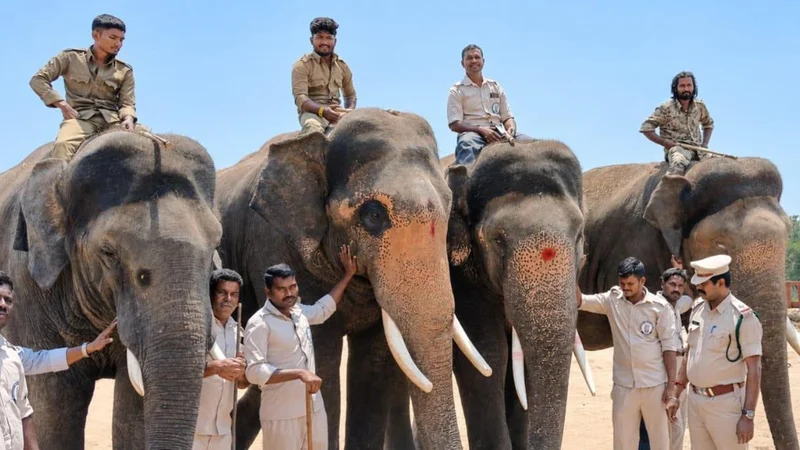
During the last five years, the Forest department has increasingly resorted to Kumki elephants (trained elephants) to address the human-elephant conflict. At present, six Kumkis have been stationed at the Musallamadugu forest camp in Palamaner. More than a dozen Kumki operations have been carried out over the past five years. The latest operation, which took place in July, involved the capture of a wild tusker near Palamaner, which was found to be risking its life by repeatedly crossing the Chittoor-Bengaluru national highway.
Forest officials in Chittoor take pride in the fact that Chittoor’s elephant population has grown phenomenally as the landscape still offers a degree of ecological connectivity. “Protecting that connectivity while keeping farms and villages safe is now the real conservation challenge for us,” said a senior Forest official in Chittoor. The elevated Chennai-Bengaluru Expressway corridor through Koundinya sanctuary is considered a marvel in the conservation of wild elephants, the officials said.
The Forest personnel, meanwhile, celebrated the World Elephant Day at the elephant camp in Palamaner by offering the Kumkis their favourite dishes like ragi balls, jaggery and sugarcane.
Published - August 13, 2026 07:28 pm IST