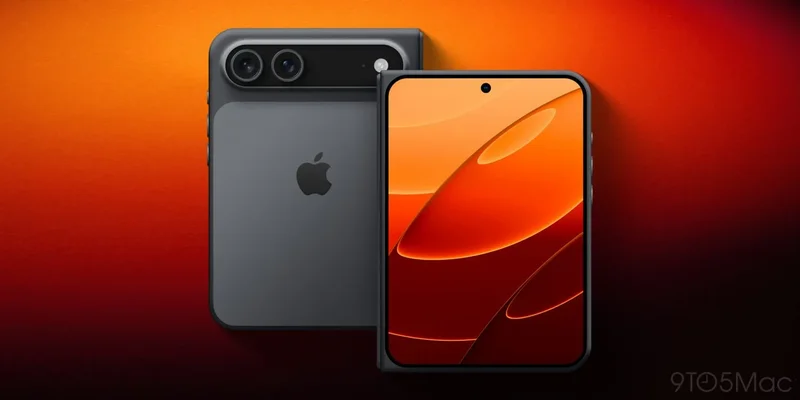
The very first Samsung Galaxy Fold launched back in 2019 proved so vulnerable to screen damage by dust and dirt ingress that the company cancelled all pre-orders for the device. Eight generations later, we’re today learning that the issue still hasn’t been fixed.
Ensuring that the iPhone Ultra did not share this vulnerability has reportedly been one of the reasons Apple waited so long before launching its own folding phone. We should know how well Apple has succeeded within minutes of next month’s launch …
The problem with Samsung’s folding phones
The problem that literally killed first-generation Galaxy Fold devices was dirt and dust getting trapped within the fold when the phone was closed. This damaged the display, requiring replacement of the entire module.
The Verge says iFixit’s teardown of the 8th-generation model, the Galaxy Z Fold 8, reveals that it still has exactly the same problem.
iFixit found that because it carries an IP48 ingress rating – meaning it isn’t protected against particles under 1 millimeter – dust and sand could make its way into the hinge mechanism, a component that’s difficult to repair or replace.
“After working the Fold 8 open and closed, the hinge started making truly awful crunching and grinding noises, and the phone stopped opening normally,” iFixit said.
The two reasons Apple waited
Apple has waited more than seven years to launch its own folding phone, and there were reportedly two key reasons the company was in no hurry.
First, the iPhone maker wasn’t happy with a visible crease when the device was unfolded. Eliminating this was so challenging that the company apparently had to get its own engineers involved in working with Samsung to address it.
Second, Apple was said to have been concerned about the questionable robustness of the hinge mechanism put forward by Samsung. That issue was reportedly only fully resolved back in June.
Will the iPhone Ultra avoid these problems?
So far as the crease is concerned, we can be confident the answer is yes. Samsung likely used a near-identical display in the Fold 8, and our sister site 9to5Google reports that it is indeed barely visible.
While the robustness of the hinge mechanism in terms of its ability to withstand repeated folding and unfolding over years is something that may take time to assess, we should get a very good clue about its vulnerability to damage by dust and dirt through its IP rating.
Ingress Protection (IP) ratings are used to determine how well a device keeps out dust and dirt. Scores range from zero, offering no protection whatsoever, up to six, meaning they’re completely dustproof. iFixit notes that the Fold 8 only scores four on this scale, meaning that there’s no protection against any foreign debris below 1mm in size.
We should only have to wait for the iPhone Ultra specs to appear on Apple’s website to know how dust-resistant the device will be. For example, the iPhone 17 Pro is listed on Apple’s website as having an IP68 rating. The first digit refers to its dust protection, meaning that it is completely dustproof (scoring 6 out of 6).
We’ll be looking to see the iPhone Ultra have an IP rating of at least 5, and ideally 6. We should have our answer as soon as the device goes up on Apple’s website after next month’s launch. Indeed, if the device scores six, then we won’t even have to wait that long as Apple is sure to mention it during the keynote presentation. Watch this space.
- Certified refurbished Apple products 15% off at apple.com
- Official Apple Store on Amazon
- Discounted AirPods Pro 3
- Wireless CarPlay adapter
- 10-year AirTag battery case
- Logitech MX Master 4 for Mac