About 133 million Nigerians are multidimensionally poor, with the majority living in rural and hard-to-reach communities, raising concerns that development policies and innovations may continue to leave millions behind.
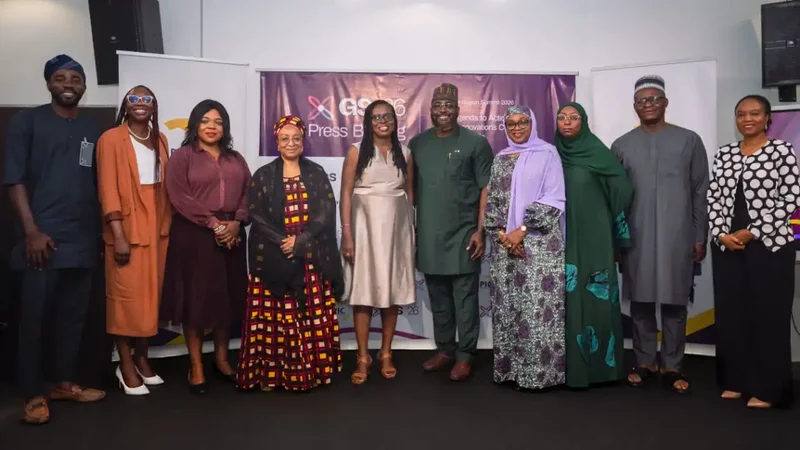
Experts raised the concern at a press briefing ahead of the 2026 Gender and Inclusion Summit (GS26) organised by the Policy Innovation Centre (PIC) in Abuja.
The summit, scheduled for September, is themed, “From Agenda to Action: Making Innovations Count for the Last Mile.”
The speakers said Nigeria’s challenge was no longer simply developing policies or creating innovative solutions, but ensuring that those solutions reached the people for whom they were intended.
| | |
|---|
Speaking at the briefing, the Executive Director of PIC, Osasuyi Dirisu, said the 2022 Multidimensional Poverty Index showed that 63 per cent of Nigerians, representing about 133 million people, were multidimensionally poor.
She said multidimensional poverty went beyond income to include deprivation in health, education, and living standards, with the majority of affected Nigerians living in rural and hard-to-reach areas.
According to her, this makes the “last mile” critical to any conversation about development and inclusion.
Mrs Dirisu explained that the term, commonly used in sectors such as logistics and telecommunications, refers to the final stage through which a product or service reaches its end user.
In development, however, she said it represents the gap between an innovation and the person who needs it most.
‘Beautiful innovations can become elitist’
Mrs Dirisu said innovations could fail when they were developed without understanding the realities of vulnerable communities.
“Many times when we develop without really understanding the felt needs of those who are at the last mile, we develop products that are good, we develop services that are beautiful, but they are not really of relevance,” She said.
She said this was evident in the growing focus on digital solutions, which could have limited impact in communities without reliable internet connectivity or access to smartphones.
Mrs Dirisu therefore urged innovators to consider simpler solutions, including unstructured supplementary service data (USSD) and non-digital approaches, where they were more suitable.
She said GS26 would focus on how policies, innovations and commitments could move from agenda setting to measurable improvements in people’s lives.
Why women and children matter
Building on the argument, the Chief Executive Officer of the Nigerian Economic Summit Group, Tayo Aduloju, said the last mile was where many of Nigeria’s forgotten, disconnected and unseen populations were concentrated.
Mr Aduloju said 79 per cent of the 133 million multidimensionally poor Nigerians lived in rural areas, describing the figure as evidence of a major geographical dimension to exclusion.
He said women and children were particularly important to the last-mile conversation because the exclusion of mothers often translated into poor outcomes for children.
According to him, children who are missed at birth registration may subsequently be missed by vaccination, nutrition and education interventions.
He linked this cycle of exclusion to the country’s large population of out-of-school children.
Mr Aduloju also warned that the consequences could become more severe as Nigeria’s population grows.
He said Africa’s under-35 population could reach about 900 million by 2050, with about 320 million Nigerians within that age group.
In addition, he said Nigeria therefore needed solutions that matched the scale of its problems.
“It’s not just solutions. It’s solutions at scale. Because our problem is already at scale”.
He called on innovators, investors, philanthropic organisations, businesses and government institutions to bring scalable ideas to the summit.
From ideas to measurable impact
The Chairperson of the GS26 Technical Advisory Committee, Amina Dorayi, said the summit was designed to push the conversation beyond discussions about gender and inclusion to practical action.
Ms Dorayi, who is also the Regional Portfolio Director for Pathfinder International, West and Central Africa, said Nigeria had no shortage of ideas or innovators.
The challenge, she said, was ensuring that evidence and technology were translated into solutions that were accessible, affordable, inclusive and sustainable.
“The real test of any innovation is how it reaches that woman in rural Abarma, in Zamfara State, that young person who is often left behind in a place like Ipapo in Oyo State, the health worker working with limited resources in Udi in Enugu State,” she said.
Ms Dorayi said GS26 would bring government, civil society, the private sector, development partners, academia, young people, and communities together to examine what had worked, what the evidence showed and what was preventing successful solutions from being scaled.
She added that the summit’s Purple Book would also help preserve recommendations from the conversations and translate them into policy and programme solutions.
Government’s response
The concerns raised at the briefing came as the Federal Ministry of Women Affairs outlined some of its efforts to strengthen interventions for women, children, families and vulnerable groups.
Hadiza Gamawa, a Special Adviser to the Minister of Women Affairs, said the ministry had developed 33 policies, standard operating procedures, implementation frameworks, national guidelines and codes of conduct across four areas.
She said the documents covered child development and protection, women and gender, family development, and vulnerable groups and social protection.
According to her, nine policies were developed under women and gender, while six new policies were developed for families.
Ms Gamawa said the work was partly influenced by discussions at the 2025 Gender and Inclusion Summit, particularly a session on the family.
She added that the ministry had commenced a review of the National Gender Policy, with a new policy expected to cover 2027 to 2032.
The ministry, she said, had also introduced the Social Impact Intervention programme, known as SII 774, to take interventions to Nigeria’s 774 local government areas.
The programme covers areas including energy access, agriculture and food security, digital inclusion, health protection and wellbeing, financial inclusion, women’s creativity and innovation, leadership, education, child development and family support.
The different interventions, Ms Gamawa said, were intended to address the structural barriers that prevent vulnerable Nigerians from accessing opportunities and essential services.
About the summit
The summit organised by the PIC, brings together stakeholders from government, the private sector, development organisations, academia, civil society and communities to discuss issues around gender, inclusion and development.
The summit began in 2022 and focuses on sharing evidence, examining policies and identifying practical ways to address barriers to inclusion.
About the PIC
PIC is an initiative of the Nigeria Economic Summit Group that uses behavioural research and evidence to support policy and development interventions. It works with government and other stakeholders on issues including gender, inclusion and other areas of social and economic development.