Dead autumn leaves have begun their great disappearing act. Even if the rot isn’t yet sinking in, they have already turned into the perfectly padded homes of moths, spiders and beetles. They are being worked into the soil by worms and sprawled upon by fungal threads. Microbes are starting to make a meal of them.
Within months, they will be unrecognisable. The remnants of these fallen leaves will be loosening and aerating soil and making plant roots breathe easier.
As a lesson in reusing what your garden has to offer, it can’t get simpler. Our growing embrace of fallen leaves is just part of our evolving relationship with the plant world.
Finding ways to reuse lawn clippings, plant trimmings, old potting mixes and all the other materials that our gardens produce has become part and parcel of creating rich and biodiverse surroundings.
An art and design exhibition opening later this month takes things a step further and looks at how banksia seed pods, palm fronds and other materials that plants repeatedly produce can help build a more regenerative future outside our gardens as well.
One of the themes tackled by Plant Life: The Nature of Design, which will be at the Ian Potter Centre: NGV Australia from 28 August, is our shifting approach to plants, including those we tend at home.
The exhibition’s curator Ewan McEoin says that “for millennia” humans and plants have enjoyed an interrelationship, with the behaviour of plants affecting people and vice versa.
“But at a certain point, we started to industrialise plants for our own benefit,” he said. “We started seeing plants as passive objects, as a resource, and we forgot about the fact that they are also living beings.”
But now the tide is turning once more.
McEoin says that the more we know about how sophisticated plants are – such as by forming underground connections with each other by networks of fungi and roots – and the more “there is shift in our headspace”.
Not only gardeners, but also scientists and designers are getting on board.
Dutch designer Joris Laarman is, for example, using the fibrous pulp left after the crushing of sugar beet to make a resin that can bind timber into a new form of Plywood. Unlike a conventional engineered wood product, this Ply contains no petrochemical industry adhesives and is biodegradable.
Leave Laarman’s chairs and other objects outside and, given enough time, and they will break down as surely as autumn leaves.
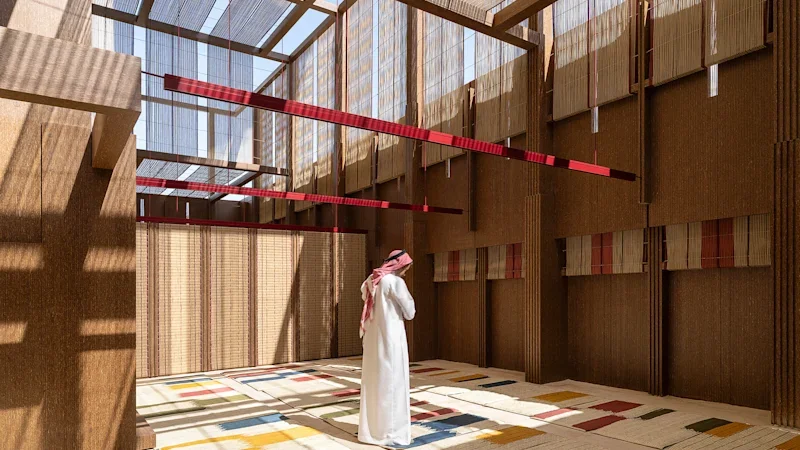
So will the prayer space that was designed by the Beirut-based EAST Architecture Studio and constructed from the prunings of date palms. Fibres from the fronds were solidified with biodegradable PVC and woven into 12.5-metre-high, durable walls for the award-winning project, which was first unveiled in Saudi Arabia last year.
And then in Western Australia, furniture maker Mark Lilly has turned to Banksia grandis (Bull banksia) seed pods as a sustainable construction material for his innovative chairs and, in Melbourne, a team of designers and microbiologists are using fungi-grown mycelium leather to make protective clothing.
McEoin says the more he looked into what designers were doing with plants, the more diverse projects he found.
While many of these projects are outside the realm of home gardeners – the prayer space alone used the prunings of 150 palms – others are readily translatable even for those of us with only small outdoor spaces.
Take plant-based textile dyeing. While the exhibition will feature historical processes, such as the blue long derived from Indigofera tinctoria leaves and the jet black from Diospyros mollis fruits – McEoin looks at recent experiments too.
The Mexican designer Fernando Laposse has, for example, been colouring fabrics with avocado pips while the Australian Tapestry Workshop has been working with common Australian natives.
By dyeing yarns with the Argyle apple, narrow-leaved peppermint and silver wattle – each tree sourced within 100 kilometres of the National Gallery of Victoria – the workshop is highlighting another way of engaging with the plants around us.
For all the time we spend controlling our plants and shaping our gardens, this exhibition looks at how plants can shape our lives too.
**‘Plant Life: The Nature of Design’ is at The Ian Potter Centre: NGV Australia, Fed Square from 28 August 2026 to 7 February 2027. **
Make the most of your health, relationships, fitness and nutrition with our Live Well newsletter. Get it in your inbox every Monday.