Sign in. It’s quick, free and it’s up to you.
An account is an optional way to support the work we do. Find out more.
Politics by Numbers is a new series for The Journal where broadcaster, author and spreadsheet stan Gavan Reilly takes a data deep dive into a political point of the week.
IT WAS HARD not to get swept up in the sense of euphoria in Belfast for the last couple of weeks. The inaugural hosting of the Fleadh Ceoil na hÉireann coincided with the annual Féile an Phobail, the music and performing arts festival based around The Falls Road in Belfast, which claims to be the island’s biggest community event.
As a panellist at a couple of Féiles it is self-evident how the nationalist parts of the city feel empowered and invigorated by having such a proud display of their community’s best qualities. Throwing the Fleadh on top of it this year compounded it, and felt like a tangible display of how Irishness and Irishism are flourishing north of the border.
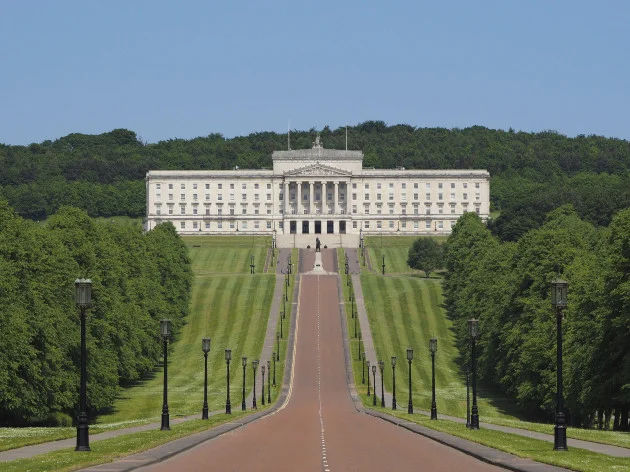
But that didn’t quite match the tone of the discussions in Féile. As a community, nationalism has never felt so vibrant, but politically the community does not feel on the front foot – despite Stormont having a republican First Minister for the first time. This feeling is so acute that the Belfast commentariat are increasingly fixated on the idea that Stormont might collapse again for little reason other than electoral gain.
That’s both an awful reflection on the state of affairs, and a natural prospect for a statelet whose government has been non-functional for almost 10 cumulative years since 1998. When you’ve spent 37% of your existence not actually existing, it’s easy to build up an appetite for inaction.
The current malaise is the downstream consequence of the Rubicon being crossed in 2017, when the Executive collapsed not because of any major crossroads on power-sharing, but rather through pure political opposition. When Martin McGuinness – frail, hoarse, battling amyloidosis that would take his life two months later – announced Sinn Féin was withdrawing from power-sharing because of Arlene Foster’s prior role in the cash-for-ash scandal, Sinn Féin opened a Pandora’s Box from which Stormont has never recovered.
No longer did the institutions have to collapse merely because of some strategic crossroads or diplomatic impasse; from 2017, mandatory coalitions could collapse for the same everyday political reasons as any coalition anywhere. For better or worse, a Rubicon was crossed.
Those actions brought a snap election, and an electoral bounty. Voters had already elected a 108-seat Assembly only eight months before McGuinness pulled that plug; Sinn Féin had won 24% and 28 seats. In the fresh election caused by cash-for-ash, when only 90 seats were up for grabs in a slimmed-down Assembly, Sinn Féin won 27.9% and 27 seats.
That electoralism works both ways. In 2022 the DUP’s rating in opinion polls was ebbing; its powerbroking role with Theresa May long expired and its apparent influence on Westminster politics was waning amid the angst of the special post-Brexit trading arrangements. Paul Givan, as First Minister, pulled the plug as a nuclear option to oppose the very principle of Stormont having the right to pull the North away from mainland Britain’s trading rules. Lo and behold, although Sinn Féin emerged as the largest party in the subsequent election, the DUP nonetheless outperformed the polls and ate into the share of both its unionist rivals.
When both of the last elections were caused by one or other of the main parties pulling the plug on power-sharing, it’s hardly any wonder that the same thought might enter people’s minds for the next one. And so here we are, nine months out from the next election, with the question being raised again… but with a crucial difference that both of the lead parties in the Executive have seen their fortunes wane.
Sinn Féin has lost a quarter of its electoral support, going from 29% at the last election to 22% in the most recent poll, though it does have a history of outperforming polls on election day. Having previously referred to the roles of McGuinness and Michelle O’Neill as ‘joint first minister’ – which is an accurate portrayal of the role – the bauble of being actual First Minister has proven superficial at best. Nationalist voters simply don’t feel Stormont has delivered for them: Lough Neagh remains an ecological disaster, Casement Park remains unbuilt, and short of tackling these electoral priorities, the Sinn Féin-run Department of Finance cannot get a budget adopted to even fund a response.
As is so often the case on matters northern, the most typical form of defence is attack. When Westminster’s new Secretary of State flew in to meet the parties, Senator Conor Murphy suddenly opined that devolution was somehow precarious and in danger of collapsing again due to perceived intransigence within the unionist parties. The DUP insisted, for its own sake, that it had no such plans. The denials from Sinn Féin minister John O’Dowd might be seen as putting the idea to bed… or merely to portray a future collapse as principled rather than premeditated.
The difficulty is that the DUP has much to gain with this intransigence. The fallout from Jeffrey Donaldson’s conviction – and the accusations that the party had contrived to cover up other transgressions – has seen its own ratings take a hit. The TUV has successfully sewn a seed of doubt over the timing of Jeffrey Donaldson’s acceptance of the same Brexit arrangements the DUP once opposed. The UUP’s simultaneous change of leadership now challenges the sense of dominance that the DUP has enjoyed since the days of Ian Paisley.
The panel I was on, at Féile an Phobail, found itself spending a lot of time discussing the prospects of a referendum on a United Ireland. As we teased out how this might go, one attendee asked: who is the leader of unionism? The most salient answer I could offer was, whoever books the guests for Stephen Nolan’s bombastic-but-influential morning programme on BBC Radio Ulster.
It is not surprising that parties would be upping the ante in their electioneering given there’s literally an election coming. But while mutual suspicion between nationalist and unionist politicians is hardly new, the real fears (contrived or not) of the Executive being collapsed on intangible flimsy pretences is a sign of a greater rot.
The institutions created by Good Friday were designed specifically to avoid what political scientists call ‘the tyranny of the majority’, where the majority community wields absolute power to the detriment of others. But those structures appear objectively not to work any more: either the requirement of universal agreement is unworkable, or the political class(es) dysfunctional. Which of those two buckles first, will be fascinating to watch.
Gavan Reilly is the Political Correspondent for Virgin Media News and the host of Monday with Gavan Reilly, which airs every Monday at 10 pm on Virgin Media Play and Virgin Media One.
To embed this post, copy the code below on your site