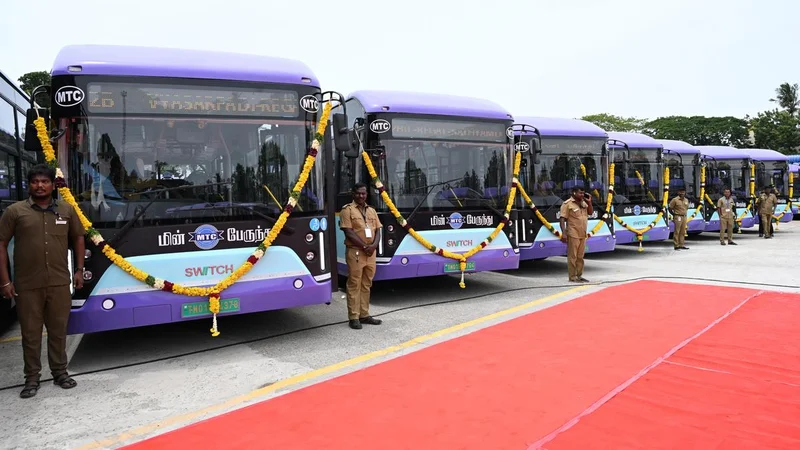
The Metropolitan Transport Corporation (MTC) marked a milestone on Wednesday with the electric buses running for three crore kilometres thereby making a huge savings in fuel bills as well as showcasing the successful implementation of sustainable mobility model in the city. The milestone has been achieved by the MTC through the private operator, Switch Mobility, in 14 months time since the launch of electric bus services in the city in June last year.
Since the first phase of the launch of 120 electric buses along with the electric charging depot at Vyasarpadi in the city last year, the MTC operates 625 electric through the five depots of Vyasarpadi, Perumbakkam, Poonamallee, Central workshop and Tondiarpet.
D. Mohan, Managing Director of MTC, sharing the details of the achievement said the transport corporation has saved more than one-crore litres of diesel saved as also preventing nearly 25,000 metric tonnes of carbon dioxide emissions. The prevention of 25,000 metric tonnes of emissions equates to nearly 15 lakh trees planted, he added.
The MTC MD said the huge savings in fuel footprint has boosted the State government’s road map for sustainable transportation model in the city to announce the purchase of 1,000 more air-conditioned electric buses in the financial budget 2026-27. The State government has planned to operate a total of 3,000 air conditioned electric buses to replace the ageing fleet in the future, he added.
While the MTC has shown the way forward in sustainable mobility model using electric buses within the city, transport operators are sceptical that the operation of electric buses for long distance destinations is not feasible in the present situation due to absence of charging infrastructure, route planning, battery management, turnaround time, maintenance and reliable power availability. However, a few private bus operators are operating long distance services using electric buses from the city to other parts of the State.
Manish Rathi, CEO of Intrcity SmartBus, which is one of the largest private long distance bus operations in the State, said that comparing the urban electric buses which operate on predictable routes and return to a depot where they have the cushion to charge for several hours, long distance buses on the other hand, may travel hundreds of kilometres in a day, often across multiple cities and highways. He said ‘A bus cannot afford to spend significant time waiting for a charge because every additional hour affects utilisation, schedules and passenger experience.’
Mr. Rathi accepting that electric buses are the future for economic and sustainable bus operations said the country’s highway charging ecosystem is developing rapidly, but it still needs to become more widespread, standardised and dependable for large-scale intercity electric vehicle adoption.
The long distance transport operators do not see electric bus adoption just as replacing diesel engines with batteries, but as an ecosystem upgrade of technology integration, EV charging alliance and a phased transition strategy.
Published - August 14, 2026 12:31 am IST