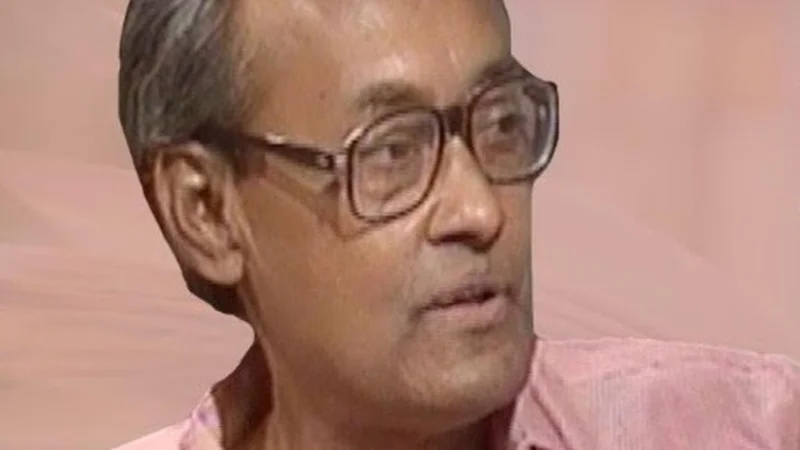
Eminent Marxist historian and scholar of modern Indian history, Sumit Sarkar, died at a private hospital in New Delhi on Thursday (August 13, 2026). He was 87.
He spent several years teaching History at the University of Delhi, and was a Fellow of Wolfson College, Oxford. He had also been a visiting professor at several prestigious universities in the United States and Europe.
His works include Swadeshi Movement in Bengal, 1903-1908 (1973), Modern India (1989), and Writing Social History (1998), among others. He also co-edited Women and Social Reform in Modern India (2007) and Caste in Modern India (2013) with his wife, Tanika Sarkar.
He completed his BA (Honours) in History at Presidency College in Kolkata before going on to do his Master’s and Ph.D. at the University of Calcutta.
His former students and colleagues remembered him not only as a “doyen of historians”, but also as the “kindest of human beings”.
Ravikant, a professor at the Centre for the Study of Developing Societies, and Mr. Sarkar’s student from 1988 to 1991, recalled his “scintillating” lectures, saying, “He would look at one word and speak a full paragraph at one go. That was how succinct his summaries were,” he said.
Anirban Bandyopadhyay, a professor of History at the Kalinga Institute of Social Sciences, described Mr. Sarkar as “one of the rare Marxist historians to delve deeply into culture and emotions as opposed to the economy”.
“With regard to 19th and 20th-century Bengal, there was nothing that he did not write about,” said Mr. Bandyopadhyay, who was closely acquainted with Mr. Sarkar and his wife and described the death as a “personal loss”, in addition to being a loss to all history students. “From 2005, I met him on numerous occasions, went to their place in Delhi, and read to him. He always listened to younger people, and always had a smile,” Mr. Bandyopadhyay said.
Published - August 14, 2026 12:39 am IST